
One bite of turkish sweets can take you to bustling bazaars and cozy cafes. You might wander through vibrant streets, drawn by the aroma of freshly prepared treats. Each dessert tells a story, and you become part of it.
You might encounter aşure more than once during your travels. Many people call it Noah’s Pudding. Its hearty blend of grains, nuts, and dried fruits speaks to the comforting spirit of hospitality. Every spoonful offers a chance to taste the kindness shared among friends and family. You might notice aşure served during festive days, reminding everyone of unity and tradition.
These turkish sweets inspire you to explore further. You begin to appreciate the artistry involved in creating each dessert. Your appetite grows as you learn about different sweet offerings that reflect Turkey’s culinary heritage.
Baklava – The Most Iconic Turkish Dessert
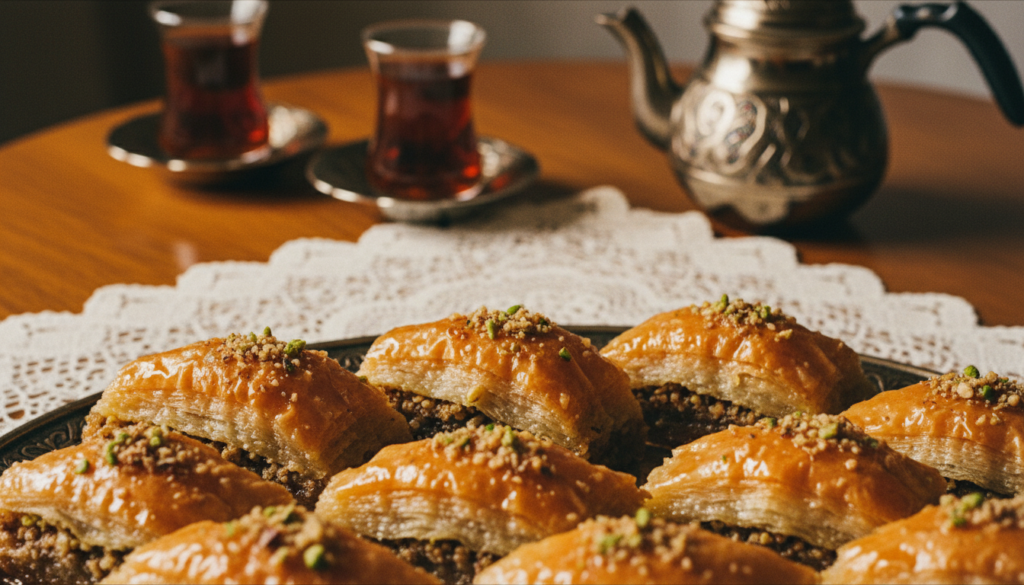
This treat is a classic that wins over many. It’s made with layers of flaky phyllo dough, butter, and syrup. The addition of pistachios or walnuts gives it a nice crunch.
Baklava is a favorite at celebrations. You’ll find it at weddings and family gatherings. Each slice shows the effort put into making it. Some use honey, others sugar syrup, but both are delicious.
Baklava is a perfect example of how simple can be amazing. Its making follows old traditions. Every bite is a taste of history.
Güllaç – Layered Milk Dessert
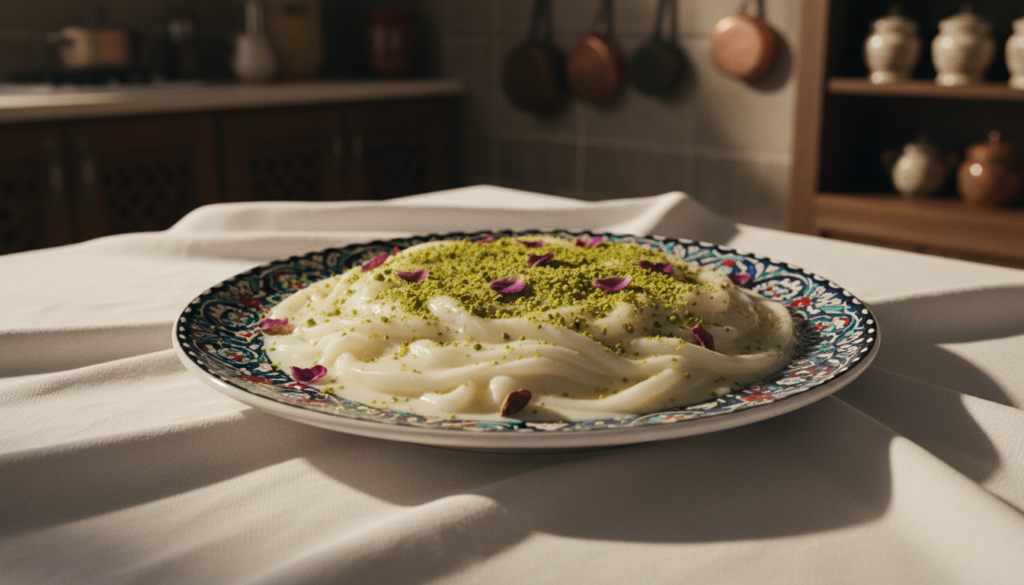
When you taste güllaç, you feel a mix of sweetness and comfort. It’s a must-have for those who love authentic Turkish sweets. The dessert has thin layers in sweetened milk, giving a cool feeling with each bite.
The cornstarch wafers become soft when soaked. You can enjoy them with pomegranate seeds or pistachios. It’s surprisingly light, so you’ll want more. Adding crushed nuts brings out its mild taste, perfect for those who like gentle sweets.
Try different toppings like fruits or rosewater for a unique twist. Making güllaç at home is easy, just be patient with the layering. Here’s a quick look at what you need:
| Layer | Main Component | Flavor Note |
|---|---|---|
| Base Wafers | Cornstarch Sheets | Light and Airy |
| Soaking Liquid | Sweetened Milk | Creamy Sweetness |
| Garnish | Pomegranate or Nuts | Crisp Tang or Nutty Crunch |
Kazandibi – The Caramelized Milk Pudding
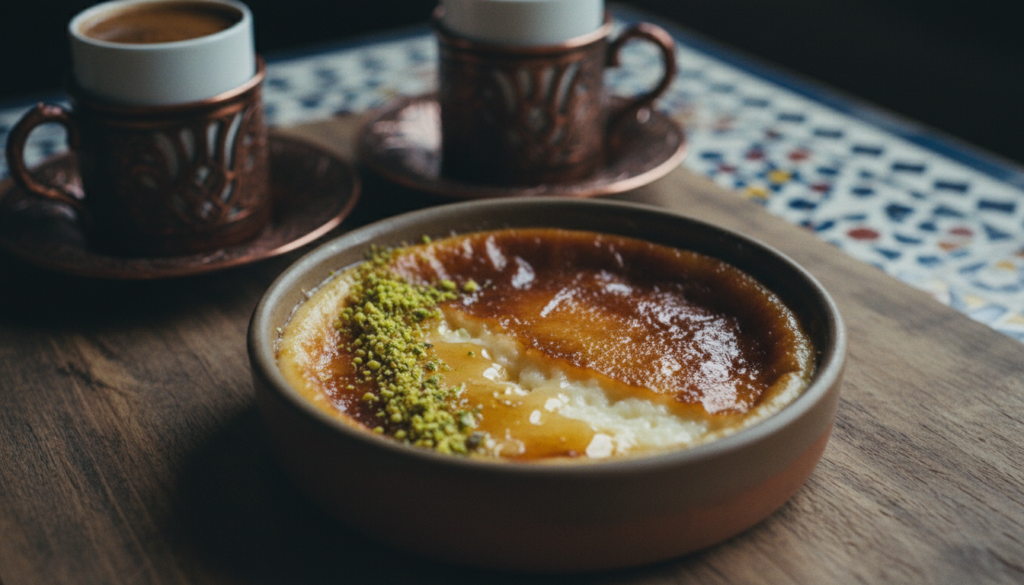
You come across a dessert that catches your eye. It has a lightly scorched base. This is kazandibi, made by mixing sweetened milk with gentle heat. It turns the bottom into a smoky caramel.
For a homemade touch, check out this milk pudding tutorial. It shows how to cook it slowly and stir constantly. Each bite is creamy on top and caramelized on the bottom.
Bolulu Hasan Usta, famous in Eminönü, has been serving this pudding for over a century. They are known for their skill in making kazandibi, as mentioned here.
- You enjoy the aroma that comes when the sugar browns.
- You love the mix of cool pudding and toasted edges.
| Feature | Description | Tip |
|---|---|---|
| Scorched Layer | Thin bottom with a caramel finish | Control heat to prevent burning |
| Creamy Center | Soft milk pudding consistency | Stir well for an even texture |
| Serving Style | Rolled or sliced rectangles | Chill before cutting for clean edges |
Keşkül – The Almond Pudding
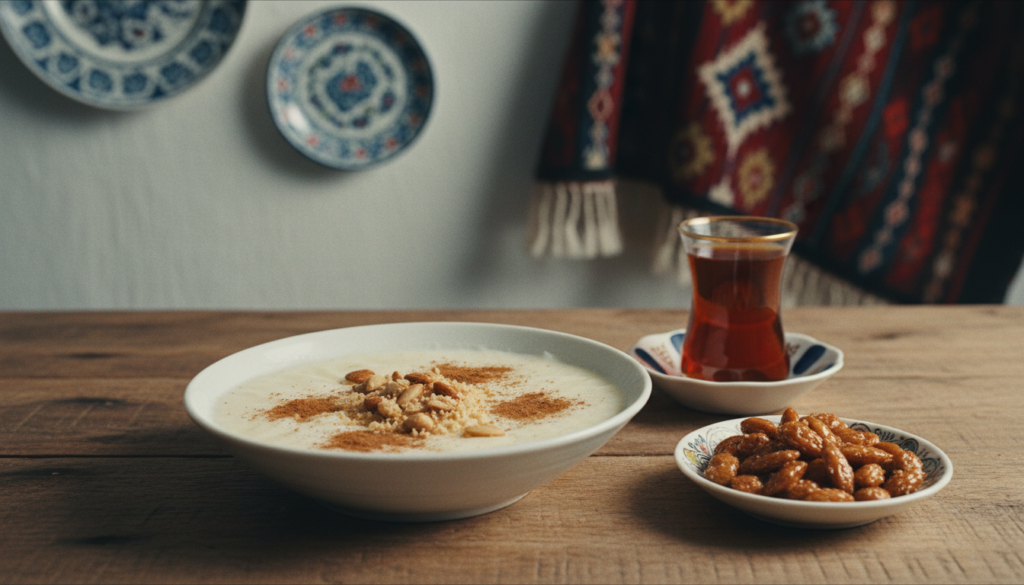
Keşkül is a creamy delight that will make your taste buds happy. It has a smooth base with a hint of almond flavor. Every spoonful is smooth and sweet, making you want more.
This Turkish dessert is comforting and has a mild taste. It’s topped with nuts or coconut flakes for a nice crunch. The aroma of almonds adds to its soothing charm.
Key ingredients can vary, yet the primary focus on almonds remains the star of the show.
| Ingredient | Description | Typical Toppings |
|---|---|---|
| Almond Flour | Provides a rich, nutty base | Crushed Pistachios |
| Milk | Gives the pudding its creamy texture | Shredded Coconut |
| Sugar | Offers sweetness to balance almond flavor | Chopped Hazelnuts |
Künefe – The Perfect Combination of Cheese and Syrup
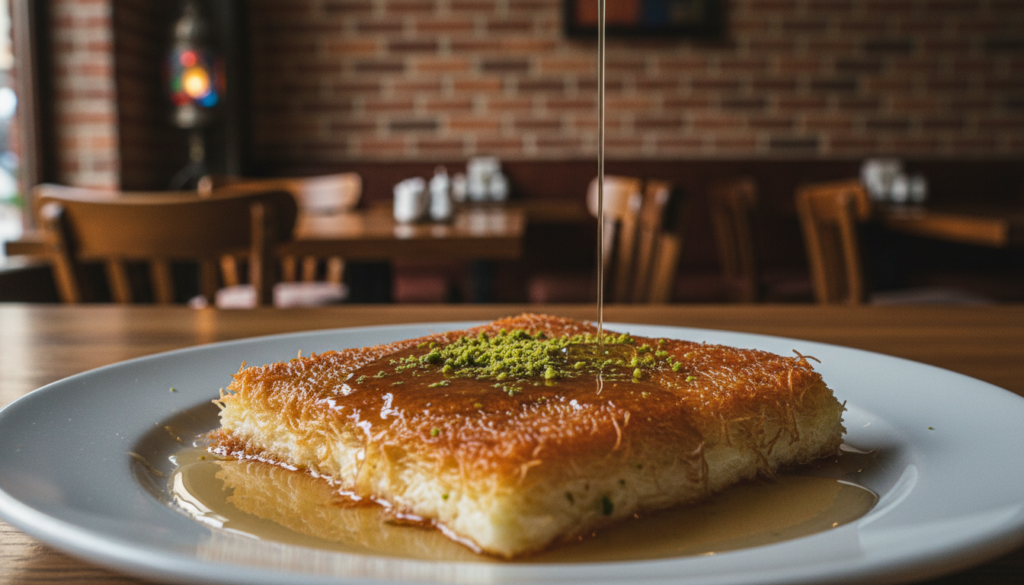
It’s hard to resist the warm, melting cheese and golden dough strands. Every bite of künefe has crisp kadayıf wrapped around smooth, fresh cheese. It toasts to a light crunch.
Sticky syrup adds sweetness, creating a contrast of textures. Its flavor shows the artistry of Turkish confectionery. Shredded pastry and creamy goodness come together in a sizzling dessert, making you want more.
You can find künefe in many cafés and pastry shops. Skilled hands keep its tradition alive. Fresh cheese melts as the syrup seeps in, filling each serving with aroma. It’s a delightful mix of taste and texture, perfect for ending any meal.
Revani – A Sweet and Moist Semolina Cake
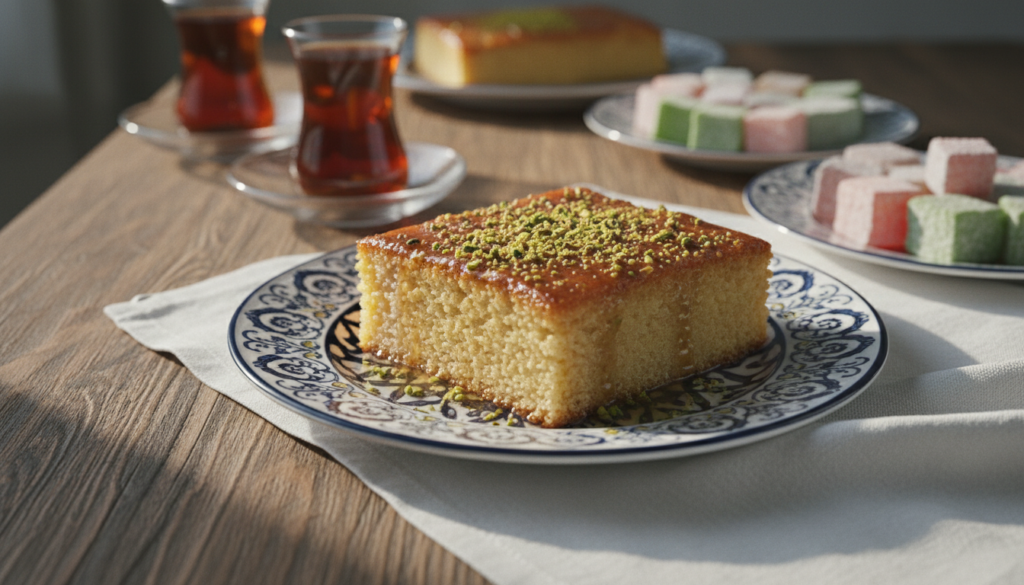
This semolina-based treat has a delightful balance of flavors. Each slice of revani soaks up a fragrant syrup. This leaves you with a moist bite every time. Coconut flakes or a spoonful of cream add extra richness, making it a favorite at bakeries and family gatherings.
The recipe starts with mixing semolina and yogurt. Then, it’s baked until golden. A warm syrup bath is the final step, keeping each piece tender. Serve it with a fresh cup of tea or coffee for a satisfying treat that feels both light and lavish.
| Ingredient | Purpose |
|---|---|
| Semolina | Adds signature grainy texture |
| Sugar Syrup | Provides moisture and sweetness |
Sütlaç – Creamy Turkish Rice Pudding
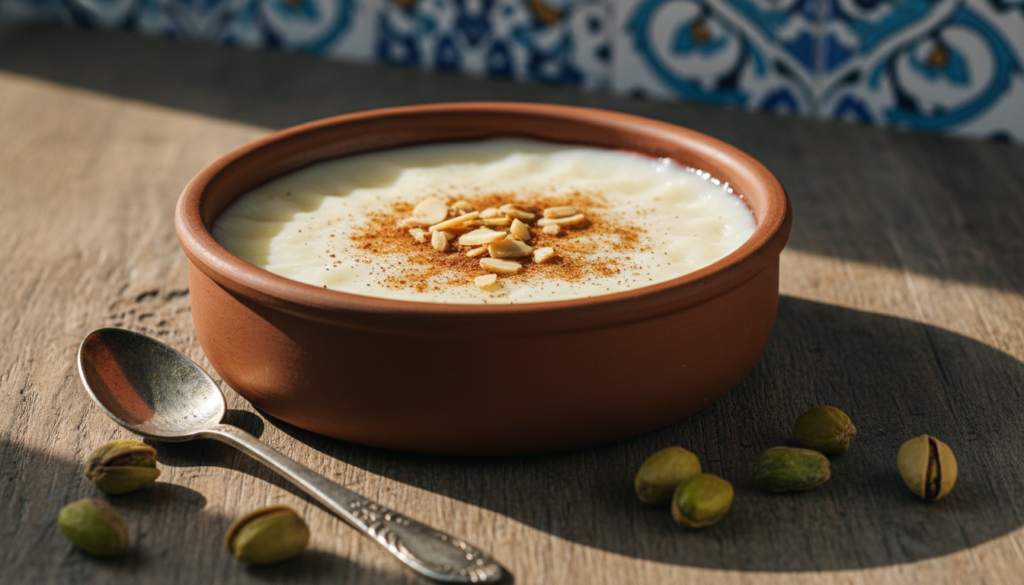
Your first spoonful of sütlaç welcomes you with a mix of milk, sugar, and soft rice. It’s a comforting classic that’s simple yet sweet. It fills your mouth with a gentle sweetness.
Some recipes add an oven step called fırın sütlaç. This gives it a golden crust. You might also find it with rosewater or mastic gum for extra flavors. It’s perfect for when you want a light dessert.
Try pairing sütlaç with Turkish coffee for a nice contrast. Or enjoy it with lokum for a special treat. Its soft texture is a nice change from richer desserts. You can have it warm or cold, whichever you prefer. It’s a delightful way to end your meal.
Tavuk Göğsü – The Chicken Breast Pudding
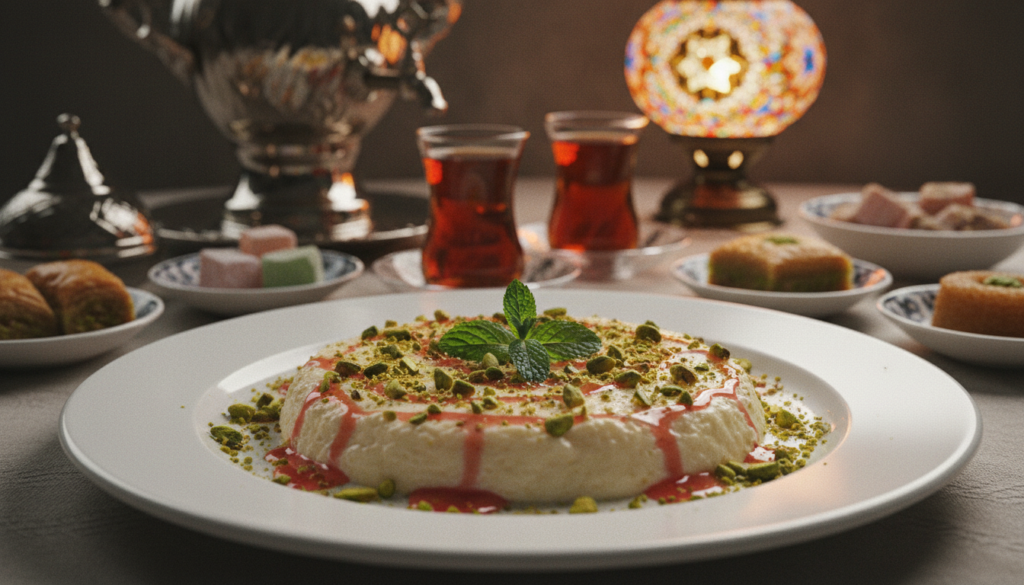
This dessert might sound unusual, but it’s a favorite. Tavuk göğsü is made with finely pulled chicken breast. It creates a creamy base that’s smooth and tasty.
In Istanbul, you can find this sweet treat in many patisseries. It’s a true traditional turkish sweet. The secret is in cooking milk, sugar, and flour until it turns into a velvety pudding. The tender chicken adds a mild flavor that makes it special.
- Stir pudding gently to keep the texture light.
- Chill in a shallow dish for a silky finish.
- Sprinkle cinnamon on top before serving.
The pudding is often cut into squares or rolls. Some like it warm, while others prefer it chilled. Either way, it offers a unique taste experience that makes tavuk göğsü stand out.
| Key Features | Details |
|---|---|
| Main Ingredients | Milk, sugar, shredded chicken breast |
| Consistent Flavor | Sweet and light, mild chicken tone |
| Serving Suggestion | Chilled with a dusting of cinnamon |
Turkish Delight (Lokum) – A Timeless Sweet Treat

Explore this iconic candy across Türkiye. In Selçuk, visit Kafkasli, founded in 1955. Watch candymakers create unique delights with rosewater, fruit, or nuts.
This sweet treat’s history goes back to Haci Bekir Effendi in 1777. He became Sultan Mahmud II’s chief confectioner. His recipe spread far and wide. In some places, it’s mixed with kaymak for a rich texture.
Enjoy it as a sweet treat or give it as a special gift. Turkish delight is a treasure of Turkish cuisine, waiting for you to try it.
FAQ
What makes Aşure such a meaningful part of traditional Turkish sweets?
Aşure, or Noah’s Pudding, is a mix of grains, legumes, dried fruits, and nuts. It symbolizes community and sharing. It’s a favorite during religious festivals, where neighbors and friends share bowls to celebrate unity.
Which nuts are commonly used in authentic Turkish baklava?
In Türkiye, pistachios are the go-to for baklava. But, you might also find it with walnuts or hazelnuts. This flaky pastry is a symbol of Turkish desserts, enjoyed at festive events.
Why is Güllaç strongly associated with the month of Ramadan?
Güllaç is a staple at Iftar tables. Its thin wafers soaked in sweet milk make for a light dessert. It’s loved for its delicate layers and creamy texture, ideal for breaking the fast.
How does Kazandibi get its distinctive caramelized layer?
Kazandibi, or “bottom of the pot,” gets its caramelized crust from slow cooking. This method creates a silky pudding with a sweet, scorched exterior. It’s a unique feature of Turkish sweets.
What defines Keşkül as a staple Turkish dessert?
Keşkül is a rich almond pudding, often topped with crushed nuts or coconut. Its smooth texture and nutty aroma make it a comforting Turkish treat.
Which type of cheese is typically used in Künefe?
Künefe uses fresh, unsalted cheese between shredded phyllo. The cheese melts beautifully, paired with sweet syrup for a perfect contrast of sweet and savory.
What makes Revani a favorite among Turkish pastries?
Revani uses semolina flour for its texture, then soaks in sugar syrup. It’s often served with cream or coconut flakes, making it a highlight in Turkish desserts.
How is Sütlaç typically served in Turkish cuisine?
Sütlaç is a comforting rice pudding, sometimes baked for a caramelized top. Classic versions use milk, sugar, and rice, with some adding rosewater or mastic gum.
Why is Tavuk Göğsü considered an intriguing Turkish dessert?
Tavuk Göğsü is a sweet milk pudding made with shredded chicken breast. The chicken’s flavor disappears, leaving a smooth pudding that’s unique among Turkish desserts.
Where can you watch Turkish Delight (Lokum) being made?
In Selçuk, Türkiye, visit Kafkasli to see Turkish Delight made. It’s a tradition started by Haci Bekir Effendi in 1777. You’ll find flavors like rosewater, fruits, and nuts, with local twists like Afyon’s kaymak blend.