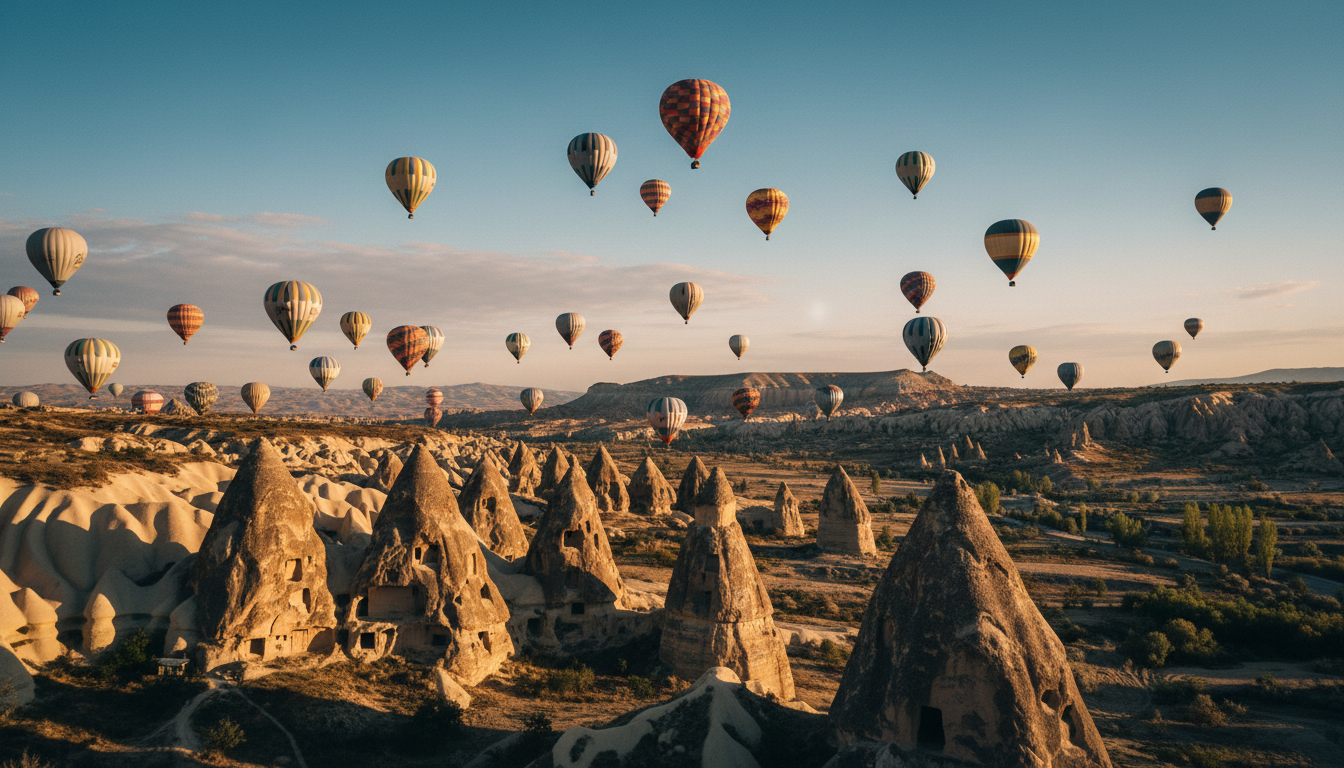
How can one small corner of Turkey look like another planet—without any Hollywood set or special effects?
That’s the pull behind the best attractions in cappadocia: volcanic stone shaped by wind and water into towers, ridges, and “questionably shaped” cliffs you have to see to believe.
Even better, the valleys can feel wildly different from each other, even when they’re only minutes apart, which is what makes cappadocia sightseeing so addictive.
If you want an easy base, stay in Göreme. It puts you close to the main valleys, viewpoints, and museums, and it’s often what people mean when they say “Cappadocia.” In practice, the region also includes Nevşehir, Uçhisar, Ürgüp, Ortahisar, and smaller towns that link your route together.
Plan on three days to hit the core must-see places in cappadocia. If you can swing four or five, you’ll move at a calmer pace and still have time for a long hike, an underground city, and a museum morning that doesn’t feel rushed.
Give yourself extra breathing room if hot air balloons are high on your list. Flights only go up in safe weather, so a backup sunrise can save your trip—and you’ll still get the classic vibe: cave hotels carved into rock, open-air museums cut into soft stone, and skies that turn into a balloon parade.
For practical passes and up-to-date details you can check before you go, Museum Pass Istanbul is a helpful place to start while you map out your days.
Key Takeaways
- Cappadocia’s landscapes are surreal, volcanic, and surprisingly varied at short distances.
- Göreme is the most practical hub for cappadocia sightseeing and quick access to major sites.
- “Cappadocia” often includes Göreme, Nevşehir, Uçhisar, Ürgüp, and Ortahisar, plus nearby villages.
- Three days covers the main must-see places in cappadocia, but 4–5 days feels far more relaxed.
- Balloon flights depend on weather, so an extra morning gives you a smart backup.
- The best attractions in cappadocia pair natural valleys with cave hotels, rock-cut museums, and big viewpoints.
Iconic Rock Formations and Valleys
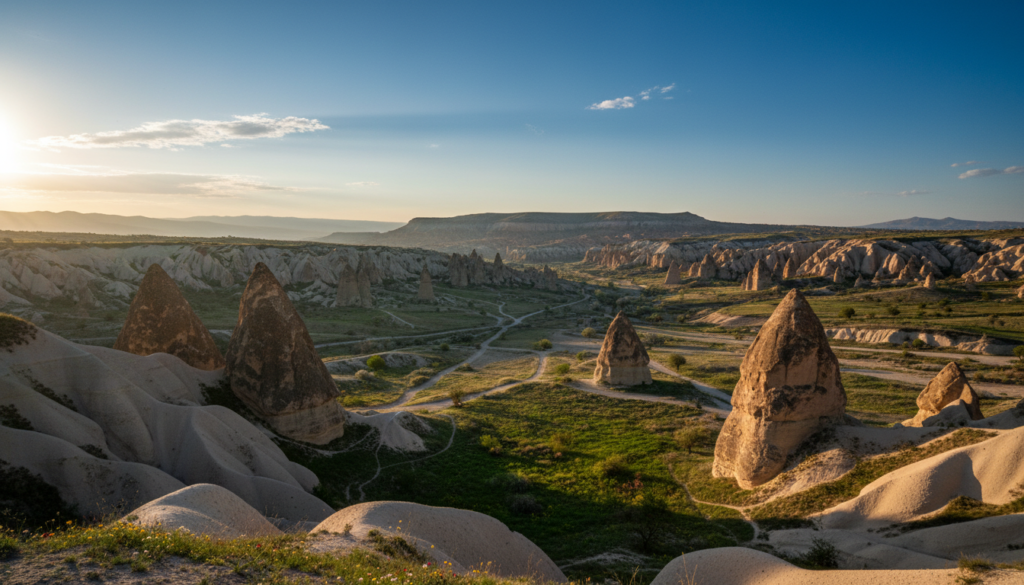
Cappadocia feels like a patchwork of valleys, each with its own color, texture, and mood. Because many trailheads sit close together, you can “valley-hop” on foot and cover a lot in a single day. For many travelers, this is one of the top things to do in cappadocia because the scenery changes fast, even on short walks.
If you want a simple plan, pick two valleys and go slow. You’ll spot cave-cut ridges, wind-sculpted towers, and quiet paths that dip out of sight. These landscapes are cappadocia landmarks in the most natural sense—shaped by time, weather, and the soft volcanic rock under your feet.
Expect dust, sun, and big skies. A light jacket can still help in the shade, and sturdy shoes make the loose gravel feel easier. You’ll quickly see why these routes rank among the must-see places in cappadocia for hikers and photographers alike.
Fairy Chimneys of Göreme
The Fairy Chimneys around Göreme show Cappadocia’s signature look: tall cones capped by harder stone. The best part is noticing how people used the soft rock for real life—carving rooms, storage spaces, and sheltered corners right into the cliffs. That tradition of carving into stone is part of what makes these formations enduring cappadocia landmarks.
You don’t need a long hike to appreciate them, but walking a little farther from the busiest viewpoints helps. In quieter pockets, you can take in the scale and hear the wind moving through the gullies. It’s an easy way to add one more of the top things to do in cappadocia to a packed day.
Love Valley
Love Valley is one of the most photographed spots in the region, known for tall rock pillars with an unmistakable shape. The viewpoints are popular, but it’s worth hiking into the valley so you can see the formations from below. Many visitors can walk here from Göreme, which makes it one of the most practical must-see places in cappadocia.
Go earlier in the day if you want softer light and fewer crowds. Down in the valley, the pillars feel closer and more dramatic, and the trail bends through orchards and sandy stretches. It’s a classic stop for anyone chasing the most striking cappadocia landmarks.
Devrent Valley (Imagination Valley)
Devrent Valley stands out because it doesn’t have cave homes, churches, or the classic fairy chimneys you’ll see elsewhere. Instead, the terrain looks almost lunar, with smooth slopes and strange rock lumps. People come here to spot shapes that resemble a camel, snake, seal, dolphin, dragon, and even figures some interpret as Jesus.
This valley really does stimulate your imagination, especially if you pause and look from different angles. It’s a top stop on many itineraries because the scenery is so different from nearby trails. If you’re collecting top things to do in cappadocia, this one adds variety fast.
Pigeon Valley
Pigeon Valley gets its name from the dovecotes you can see carved into the rock. Most were built between the 19th and 20th centuries, when pigeons mattered for messages and for droppings used to fertilize fields. Those small openings dot the cliffs and turn a walk into a history lesson, which is why it’s one of the quiet must-see places in cappadocia.
A classic hike links Love Valley and Pigeon Valley in a 3–4 hour loop, depending on your pace and photo stops. You can also pair the walk with a visit to Uçhisar Castle for a higher viewpoint and a change of perspective. It’s an efficient way to see multiple cappadocia landmarks without spending the whole day in a car.
| Valley | What you’ll notice first | Best way to experience it | Time you’ll want | Quick tip |
|---|---|---|---|---|
| Göreme Fairy Chimneys | Cones and caps in soft tuff, plus carved spaces | Short walks between ridges and chimneys, then linger in quieter side paths | 60–120 minutes | Look for cut doorways and niches to understand how the rock was used |
| Love Valley | Tall, narrow pillars with dramatic shapes | Start at a viewpoint, then hike down to see the pillars from below | 90–150 minutes | Bring water; shade is limited once you’re in the valley |
| Devrent (Imagination Valley) | Animal-like rock forms on a bare, otherworldly slope | Slow stroll with frequent stops to spot shapes from different angles | 30–60 minutes | Move a few steps left or right; the “animals” appear and disappear |
| Pigeon Valley | Dovecotes carved into cliff faces | Hike the trail and scan the rock walls for openings and painted marks | 90–150 minutes | Combine it with Love Valley for a satisfying half-day loop |
Ancient Underground Cities
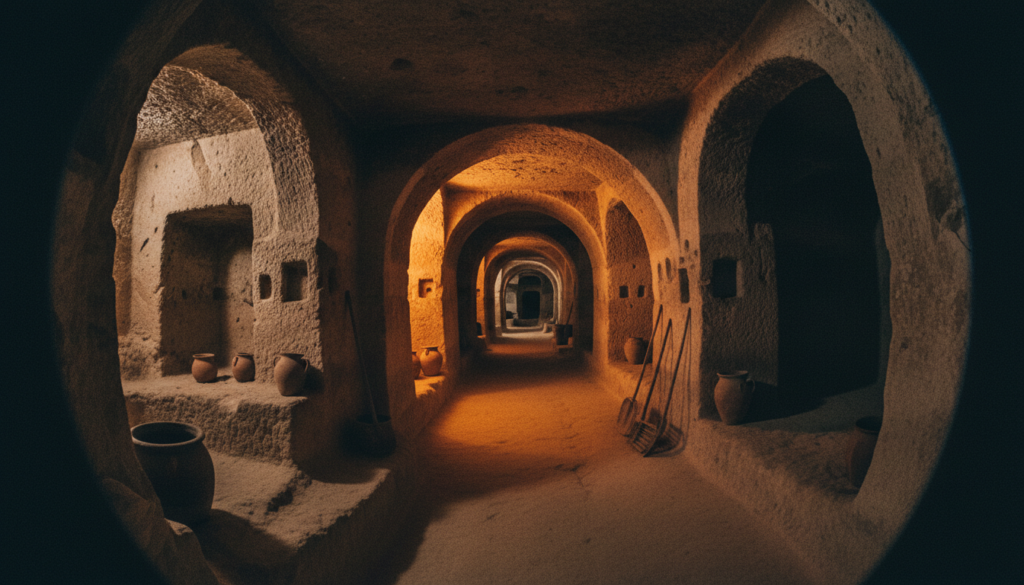
When you’re done with ridge walks and wide views, go below ground for Cappadocia’s “other world.” These tunnels and rooms flip your sense of space and time, making cappadocia sightseeing feel brand new. Many visitors reach them on cappadocia tours that run along popular Green Tour routes, but you can also drive if you’re comfortable going farther out than central villages.
Expect a tight, slow-moving visit. The corridors can feel like a shared “flow” of people, especially at midday. If you want a calmer pace, aim for early morning or late afternoon after larger groups move on to other cappadocia landmarks.
Derinkuyu Underground City
Derinkuyu Underground City sits about 30 km south of Nevşehir and is often described as the largest underground city in the world. Work likely began around the 8th century BC, and today only about 10% is open to the public. You descend to roughly 85 meters underground, with air moving through 52 ventilation chimneys.
As you pass through carved chambers and narrow passages, it’s easy to see why it served as refuge for persecuted people, particularly Greek Christians. Wear shoes with good grip and take your time on the steeper sections. If the entrance area feels packed, come back later in the day to keep your cappadocia sightseeing more comfortable.
Kaymakli Underground City
Kaymakli Underground City gives you another deep look at daily life below the valleys, with a layout that can feel more spread out in places. It’s a smart swap when Derinkuyu is busy, and it helps you build a wider day of cappadocia landmarks without repeating the same path. Many cappadocia tours pair it with nearby stops, so check timing if you’re going on your own.
Ozkonak Underground City
Ozkonak Underground City is a good pick if you want a shorter visit with a different feel. It can be easier to fit into an afternoon drive, especially if you’re planning cappadocia sightseeing across several valleys. Going independent here often means fewer large groups at once, which can make the narrow points less stressful.
Mazi Underground City
Mazi Underground City is smaller and can feel more off-the-radar. It works well when you want a quieter stop and a flexible schedule, away from the busiest cappadocia tours. If you’re building a multi-day plan, it’s one more way to balance famous cappadocia landmarks with places that feel less rushed.
| Underground City | Why You’d Choose It | Best Time to Go | Trip Style Fit |
|---|---|---|---|
| Derinkuyu | Flagship depth and scale; about 85 meters down; 52 ventilation chimneys; only ~10% open to visitors | Early morning or late day to avoid the tight “flow” in narrow corridors | Works well on Green Tour-style routes or as a dedicated drive from central Cappadocia |
| Kaymakli | Strong alternative when you want another major underground option beyond the most famous stop | Morning for smoother entry and easier pacing through tighter areas | Great as a backup plan on cappadocia tours or for independent day planning |
| Ozkonak | Often simpler to fit into a shorter day, with a different route feel than the biggest sites | Mid-morning or mid-afternoon when your schedule is between valley stops | Good for DIY routing if you’re mixing underground visits with cappadocia sightseeing above ground |
| Mazi | Quieter, smaller-scale visit that adds variety to a multi-day itinerary | Late afternoon for a calmer, less hurried walkthrough | Ideal for travelers who want less-crowded cappadocia landmarks and a flexible pace |
Historic Cave Churches and Museums
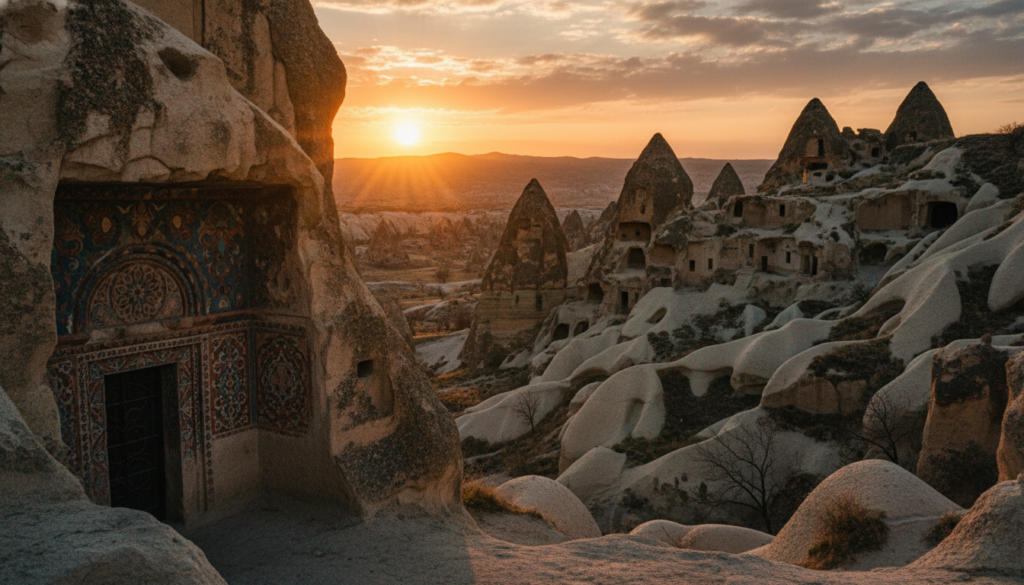
Step into Cappadocia’s carved-rock past, where homes, chapels, and monasteries were cut straight into soft tuff. Many of these spaces were shaped by Christian communities in the Byzantine era and later used by Ottoman and Turkish residents. In 1984, key heritage areas joined the UNESCO World Heritage List, marking these sites as major cappadocia landmarks.
You’re not just looking at ruins. This is living history: some families stayed in rock-cut rooms until the 1950s, when the Turkish government relocated residents due to safety risks. With around 600 churches uncovered in the region, it’s easy to see why these are must-see places in cappadocia for art, faith, and daily life—still visible on the walls.
Göreme Open-Air Museum
For many travelers, this is the headline stop among the best attractions in cappadocia. Minutes from Göreme’s center, you’ll walk through a dense complex of monasteries and churches, largely dated to the 10th–12th centuries.
The real draw is the fresco work—painted into carved rock, with color that can feel surprisingly fresh. You’ll get more out of it with a licensed guide, since the scenes, symbols, and monastery layout make more sense with context. Plan for heavy crowds, especially late morning.
Zelve Open-Air Museum
Zelve makes a smart complement to Göreme, or a calmer swap if you want more space. A signed walking path and clear panels help you follow the settlement story without guesswork, making it one of the most approachable cappadocia landmarks.
A typical visit runs about an hour. Some cave dwellings are open to enter, while others are blocked off for preservation. The price was 65 TL (August 2022), but fees can shift by day or season.
Dark Church (Karanlık Kilise)
Dark Church is a standout for fresco viewing, and it earns its reputation on a simple advantage: less light can mean better-preserved pigments. When you step inside, you’ll notice richer tones and sharper detail than you might expect from stone walls.
Work it into your cave-church circuit when you want a focused, art-first stop among must-see places in cappadocia. It’s also a good pick when you’re short on time but still want a memorable interior.
Çavuşin Church
Çavuşin Church delivers big atmosphere, with a rugged setting and a strong sense of how worship fit into the landscape. The approach and the rock-cut structure help you picture the daily rhythm of a cliffside community.
If you’re building a route of cappadocia landmarks, pair it with nearby valley walks so you can see how churches, dwellings, and paths connect. It’s a practical reminder that these weren’t isolated monuments—they were part of a working neighborhood.
| Stop | What you’ll see | Why it stands out | Time to plan | Crowd tip |
|---|---|---|---|---|
| Göreme Open-Air Museum | Rock-cut monasteries and churches with frescoes (10th–12th centuries) | Most famous complex; dense concentration of painted interiors | 1.5–2.5 hours | Go early to avoid peak tour groups |
| Zelve Open-Air Museum | Signed walking route, panels, and preserved cave dwellings | Easy to follow; strong “settlement” feel beyond single churches | About 1 hour | Early morning is quieter; some areas may be restricted |
| Dark Church (Karanlık Kilise) | Fresco-rich interior with deeper colors | Low-light setting can help preserve pigments and detail | 20–40 minutes | Visit mid-afternoon if mornings are packed |
| Çavuşin Church | Cliffside rock-cut church and village context | Strong sense of place; pairs well with nearby walks | 30–60 minutes | Combine with a valley stroll to spread out your time |
| Fee planning (general) | Open-air museum tickets and add-ons | Prices can change; some sources cite roughly 15–50 TL ranges | Budget about ~50 TL per person as a ballpark | Carry extra cash in case the rate differs that day |
Stunning Viewpoints and Panoramas
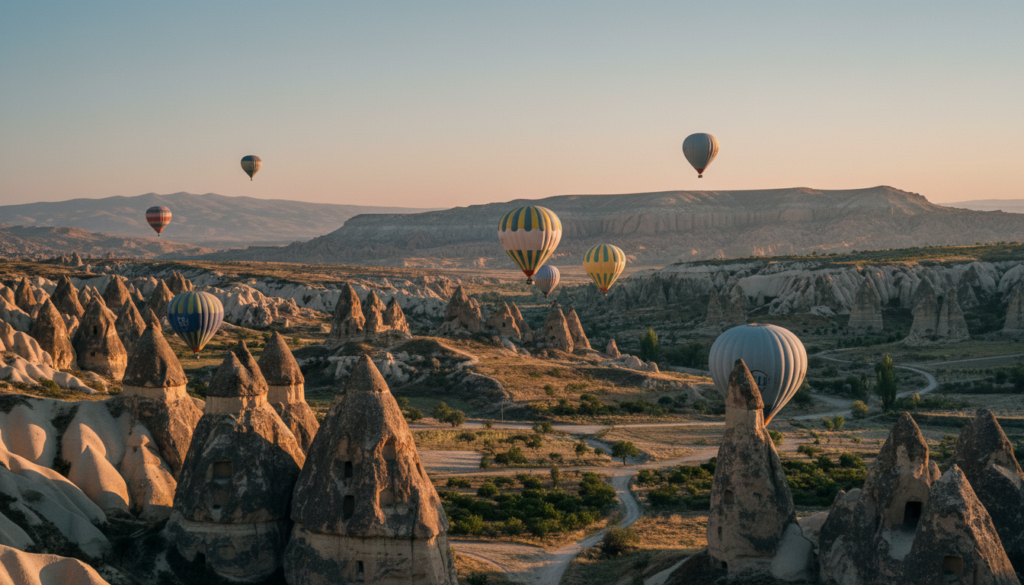
Cappadocia was built for big skies and wide horizons. With the right stops, cappadocia sightseeing can feel almost like you’re floating, even when your feet stay on the ground. These high lookouts also help you read the landscape, so cappadocia landmarks make more sense once you see how the valleys and ridgelines connect.
When you plan your route, mix one fortress-style peak with one valley edge and one town viewpoint. That variety keeps your photo roll fresh and adds range to your list of top things to do in cappadocia.
Quick comparison for planning your panorama day
| Viewpoint | What you’ll see | Best time | Helpful tip |
|---|---|---|---|
| Uçhisar Castle | High, sweeping views over valleys and towns from the region’s highest point | Morning for clear air | Buses between Göreme and Nevşehir pass through about every 30 minutes |
| Ortahisar Castle | A bold rock citadel with a different angle that complements Uçhisar | Late afternoon | Pair it with Uçhisar so your cappadocia sightseeing doesn’t feel repetitive |
| Sunset Point at Love Valley | Roadside overlook of Love Valley’s tall, distinctive towers | Golden hour | For the most immersive view, hike down into the valley after photos |
| Göreme Panoramic Viewpoint | Wide view over Göreme that works for balloons and evening light | Sunrise or sunset | Paid entry near the top of Aydan Kiragi; bring Turkish lira for cash collection |
Uçhisar Castle
Uçhisar feels like a small village wrapped around a single giant rock. The castle is the highest point in the area, so you get one of the most panoramic views among cappadocia landmarks.
As you climb, you’ll notice carved rooms and passages from old cave homes, many long deserted. It turns the walk into a quick history lesson, not just a viewpoint. Admission was 50 TL (August 2022).
Getting there is simple: buses between Göreme and Nevşehir run often, pass through Uçhisar roughly every 30 minutes, and can drop you off cheaply. If you want a bigger day on foot, a 3–4 hour loop links Love Valley and Pigeon Valley with Uçhisar Castle, blending scenery with classic cappadocia sightseeing.
Ortahisar Castle
Ortahisar Castle gives you another dramatic rock citadel, but the vibe is different. It’s a smart add-on when you’re mapping top things to do in cappadocia, because the angles shift and the scenery doesn’t feel like a repeat.
From up high, you can spot farm fields, ridges, and the layered stone that makes the region look otherworldly. It’s a strong place to slow down, take in the wind, and let the landscape settle in.
Sunset Point at Love Valley
This is the popular roadside stop where you look out over Love Valley’s towers. The golden-hour light can turn the rock into warm shades that look great in photos, especially when shadows stretch across the valley floor.
Still, the best way to feel the scale is to hike down into the valley. Up top, you get the postcard view; down below, you get the sound, texture, and depth that make cappadocia landmarks feel real.
Göreme Panoramic Viewpoint
For a classic overlook, head toward the busy, paid viewpoint near the top of Aydan Kiragi. Cash is collected at the entry, so you’ll want Turkish lira in your pocket before you arrive.
It works well for sunrise balloon-watching and for sunset when the town glows and the ridgelines darken. If you’re building a short list of top things to do in cappadocia, this is an easy win for reliable cappadocia sightseeing with minimal planning.
Unique Experiences and Activities
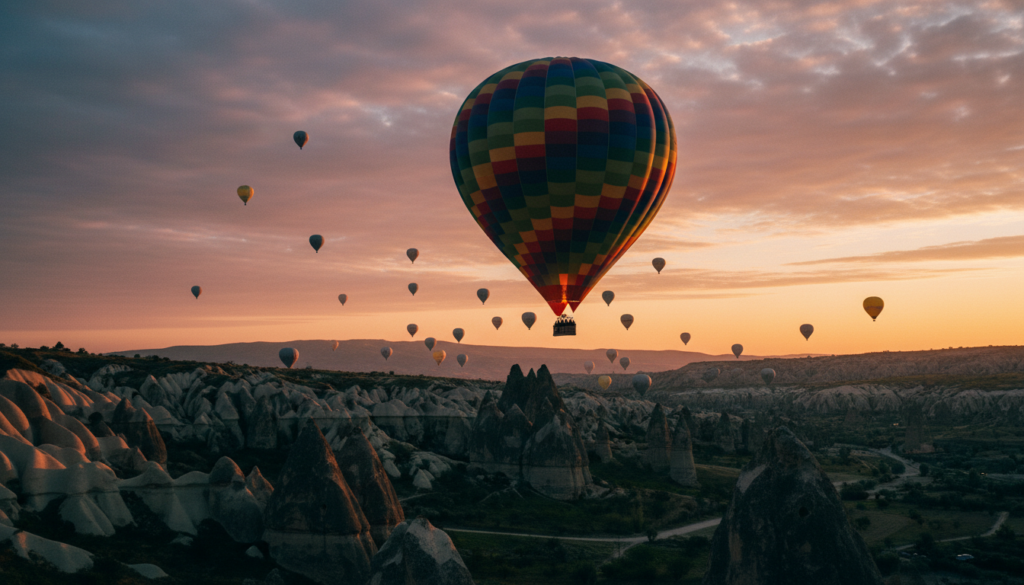
If you want stories you’ll retell back home, build your days around hands-on adventures. Many cappadocia tours mix air, land, and trail time, so you can match your pace and still see a lot.
For many travelers, the top things to do in cappadocia come down to four choices: a sunrise flight, a fast valley ride, a saddle at sunset, and a long walk in a green canyon.
Hot Air Balloon Rides at Sunrise
A cappadocia hot air balloon flight is the classic bucket-list moment, and for some people it’s the whole reason they visit. On many mornings, you’ll watch roughly 150–200 balloons lift off and drift across the ridgelines.
Flights only happen when conditions are safe, so patience matters. Summer weather is often more stable, which can make scheduling easier, but winter can feel like a quiet wonderland when the landscape is dusted in snow.
Most rides last about one hour. Pilots may climb to around 1,000 meters, then glide low into valleys for close views of rock spires and folds in the terrain.
Turquaz Balloons is known for hotel pickup and drop-off, plus pre-flight coffee, tea, and breakfast, followed by champagne and snacks after landing. Kapadokya Balloons is often praised for faultless service and a champagne toast, which adds a polished finish to the morning.
Prices commonly land around €150–€250 per person, depending on the season and package. You may also see online listings that start around £79 (about USD 108), and booking ahead through platforms like GetYourGuide can help if your dates are tight.
ATV Tours Through the Valleys
If you want speed and dust, ATV rides are a popular way to cover several valleys in a short window. Many cappadocia tours offer time slots throughout the day, so you can fit one between a museum stop and dinner.
This option is best if you feel steady on a motorized quad. If you’re uneasy with throttle control or bumpy tracks, a slower ride may suit you better.
Some packages advertise ultra-low starting rates from about £6 (around USD 8), though the final cost depends on duration, route, and whether you ride solo or share.
Horseback Riding Adventures
After a cappadocia hot air balloon morning, horseback riding gives you a grounded, quieter view of the same shapes. Many rides last about two hours, which is long enough to feel the rhythm of the trails without taking over your day.
Sunset outings often end at a lookout, where you can watch the light turn warm across the valleys. For travelers deciding on the top things to do in cappadocia, this is an easy pick if you want photos without the crowds.
You’ll see entry-level prices starting around £16 (about USD 22), with totals changing by route length and timing.
Hiking the Ihlara Valley
Ihlara Valley is a strong counterbalance to vehicle-based activities. The trail follows a river corridor with shade, cliff walls, and a calmer feel than the central viewpoints.
It also makes sense if you’re staying longer or want variety beyond Göreme and the core valleys. Many cappadocia tours bundle Ihlara into “Green Tour” style day trips, which can simplify transport and timing while you focus on the walk.
| Experience | What you’ll feel | Typical duration | Common starting price | Best timing |
|---|---|---|---|---|
| cappadocia hot air balloon | Quiet, panoramic views with a big group sky scene | About 1 hour in the air | €150–€250 per person (some listings from ~£79/USD108) | Sunrise; weather-dependent |
| ATV valley ride | Fast, dusty, higher-adrenaline route hopping | Varies by package | From ~£6/USD8 (package-dependent) | Flexible time slots |
| Horseback riding | Relaxed pace with a close-up trail perspective | Often about 2 hours | From ~£16/USD22 (varies) | Late afternoon and sunset |
| Ihlara Valley hike | Nature-forward, scenic walking with river views | Longer half-day feel | Often bundled within cappadocia tours like Green Tour day trips | Morning through early afternoon |
When you map your days, rotate these activities to keep your energy up. That mix is what makes the top things to do in cappadocia feel varied instead of rushed, even if your trip is short.
Traditional Towns and Villages
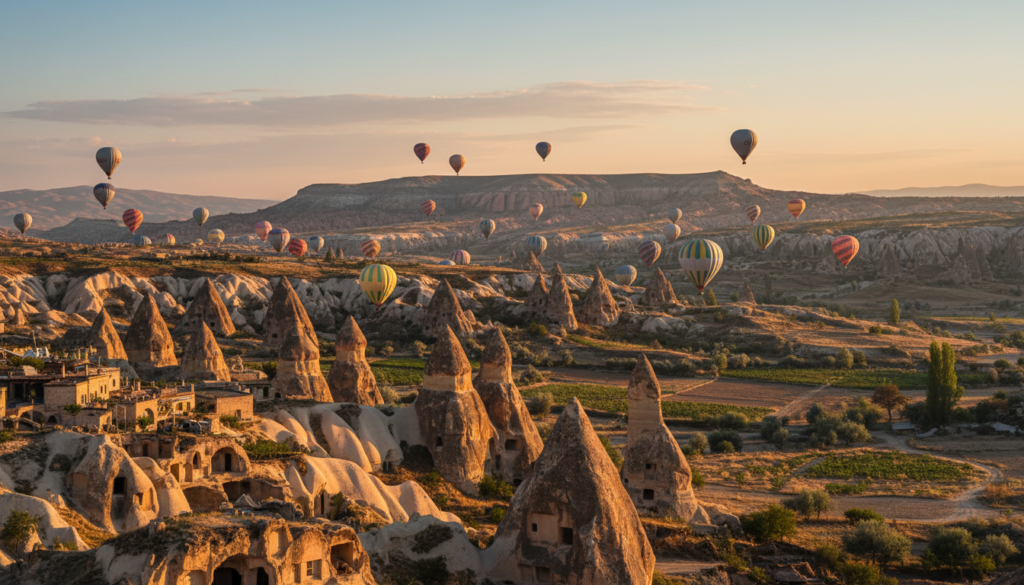
For cappadocia sightseeing that feels easy to plan, focus on the towns that anchor the valleys. You can mix quick walks, café stops, and short minibus rides without losing time. Many cappadocia travel tips come down to choosing a base that matches your pace and your budget.
Göreme Town Center
Göreme is the most touristic hub, but it’s also the most convenient. You’ll find hotels, guesthouses, restaurants, small shops, and supermarkets for simple picnic supplies. The local bus network is well set up, and many trailheads start close enough to reach on foot.
It’s not the best place for “local life,” yet it works when your goal is to cover more ground fast. For food, Turkish classics are a safe bet; try Organic Cave Kitchen, Hopper Coffee House, Büyük Adana Kebab near the bus station, or Viewpoint Cafe for a roof setting and clay-pot kebab. Prices can run higher here than in other parts of Turkey, so plan a few low-key meals.
Ürgüp
Ürgüp gives you a wider slice of the region and a break from the Göreme crowds. It’s one of the main towns people mean when they say “Cappadocia,” with more dining and lodging variety. If you want to spread out your cappadocia sightseeing, it’s a strong add-on for an extra evening.
Vineyards dot the landscape around town, and local pours can surprise you. The wines won’t claim Bordeaux status, but they pair well with hearty plates after a long day. For more planning ideas across nearby stops, use this guide to places to visit in as a quick reference between routes.
Avanos Pottery Town
Avanos is your cultural reset button, centered on clay, kilns, and hands-on workshops. Artisans often show the full process, and you can sometimes try the wheel yourself. It’s an easy way to add craft to your cappadocia sightseeing without needing a full-day tour.
Don’t skip Chez Galip and the Hair Museum, known for its walls covered with tens of thousands of donated hair strands over time. Entry is free, and the stop is as memorable as it is strange. Keep your cappadocia travel tips simple here: go earlier in the day if you want a quieter studio visit.
Mustafapaşa (Sinasos)
Mustafapaşa, also called Sinasos, feels more like a lived-in village than a tourist crossroads. It’s often included on Blue Tour-style routes, so it fits well when you want architecture, old stone houses, and a slower rhythm. Come for a change of scene and a calmer walk between details.
Wherever you sleep, try the signature stay: cappadocia cave hotels. Popular picks include Sultan Cave Suites for its famous sunrise terrace (often around £250+), Aza Cave Cappadocia Adult Hotel, Divan Cave House, and Cave Hotel Saksagan, plus options like Grand Cappadocia Hotel, Anatolian Houses Cave Hotel & SPA, Roma Cave Suite, and Local Cave House Hotel. A good rule for cappadocia travel tips is to book early if you want a cave room in peak season, then keep your days flexible for weather and balloon schedules.
| Place | Best for | What you’ll notice | Quick planning note |
|---|---|---|---|
| Göreme | Easy access and central routes | Restaurants, shops, supermarkets, strong minibus links | Convenient for walkers; costs can be higher |
| Ürgüp | More town variety | Broader dining, vineyard feel, extra lodging options | Good for a second base to spread out your days |
| Avanos | Craft and culture | Pottery studios, demos, hands-on workshops, Hair Museum | Go earlier for calmer studios and better photos |
| Mustafapaşa (Sinasos) | Village atmosphere | Historic streets, stone architecture, quieter pace | Pairs well with Blue Tour-style routes |
Natural Wonders and Landmarks
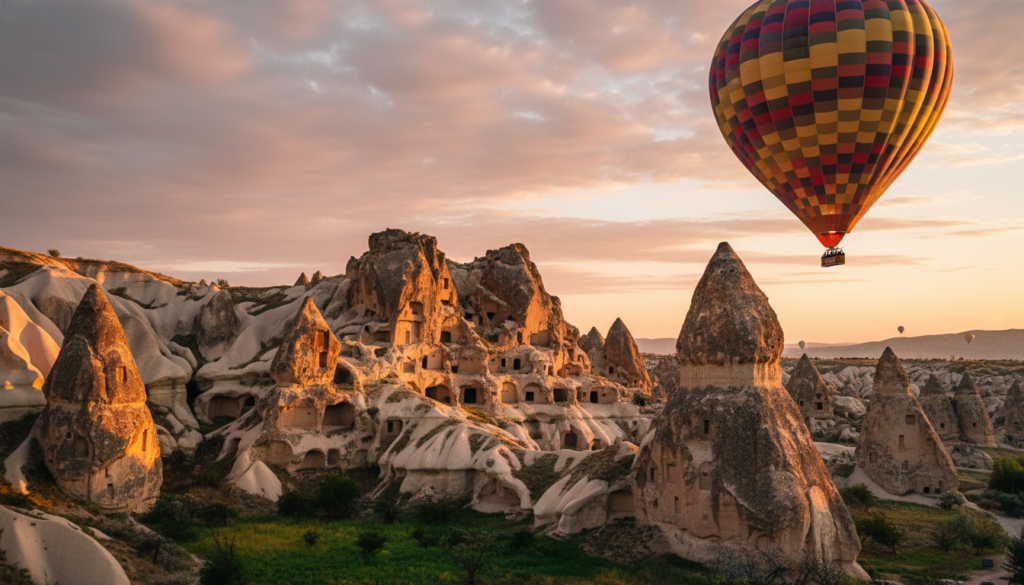
Some of the most rewarding cappadocia landmarks sit a bit farther from the busiest valleys. If you want must-see places in cappadocia that feel more spacious, build in extra time and keep your route flexible.
These stops also rank among the top things to do in cappadocia when you’re ready to mix geology, views, and quieter trails. A longer stay helps, but you can also group them into one full day with smart pacing.
Pasabag (Monks Valley)
Pasabag is one of the most striking fairy-chimney areas you’ll see, with twin and even triple rock caps stacked like natural sculptures. Look closely and you’ll notice carved spaces placed high on the formations, about 10–15 meters above the valley floor, instead of at ground level.
Go early, because afternoons can get packed with tour groups. Budget 1–2 hours so you can wander the paths, take photos from different angles, and climb around safely.
Selime Monastery
Selime Monastery feels bold and cinematic, with rooms and passages cut straight into the rock. It’s a strong pick if you want cappadocia landmarks that show the region’s monastic past beyond the main museum sites.
Pair it with a longer outing so you’re not rushing the drive or the walk through the complex. You’ll get more out of it when you have time to pause and take in the scale.
Narlı Göl (Crater Lake)
Narlı Göl is a refreshing counterpoint to stone valleys: a crater lake that adds color and open sky to your day. It’s one of those must-see places in cappadocia that works well when you want a scenic drive and a change of texture from caves and cliffs.
Plan for weather shifts, since wind and clouds can change the views fast. Bring water and give yourself time for a calm shoreline walk.
Soğanlı Valley
Soğanlı Valley is a quieter alternative when you want space to breathe without skipping the rock-cut history. You’ll find trails, carved sites, and broad views that still feel rooted in the classic landscape.
For many travelers, it’s one of the top things to do in cappadocia when the central valleys feel crowded. Go at a relaxed pace and listen for the hush that makes this valley stand out.
| Landmark | Why you’ll want to go | Time to plan | Best approach |
|---|---|---|---|
| Pasabag (Monks Valley) | Fairy chimneys with twin and triple caps; high carved rooms | 1–2 hours | Arrive early for lighter crowds and better photos |
| Selime Monastery | Dramatic rock-cut complex that highlights religious heritage | 1–2 hours plus drive time | Combine with a longer excursion day |
| Narlı Göl (Crater Lake) | Scenic lake views that diversify your itinerary beyond valleys | 45–90 minutes plus drive time | Use it as a scenic break on a loop route |
| Soğanlı Valley | Quieter trails with rock-carved history and wide landscapes | 2–3 hours | Go slow and aim for off-peak hours |
Because these cappadocia landmarks are spread out, your best options are a rental car, a private driver, or a day tour that matches your pace. If you’re mapping must-see places in cappadocia, check drive times and opening hours so you can keep your days smooth and realistic.
This planning style also helps you fit more top things to do in cappadocia into your trip without feeling like you’re always racing the clock.
Tips for Visiting Cappadocia Attractions
For the best attractions in cappadocia, give yourself time. Plan at least 3 days and 2 nights, and aim for 4–5 days if you want a steady pace. If you love hiking, 6–7 days lets you explore more valleys on foot without rushing.
Book your hot air balloon ride for your first or second morning. Wind can ground flights, so early scheduling gives you more chances. Even if you skip it, sunrise balloon-watching from a Göreme terrace is still one of the most memorable cappadocia travel tips.
Flying from Istanbul is fastest, and Kayseri Airport is a common gateway with Turkish Airlines and Pegasus Airlines. From Kayseri, you can use a hotel transfer to Göreme, or take a taxi or bus. If you go by road, Flixbus is a solid pick; some routes can take about 13 hours from Istanbul, so an overnight bus can save your daytime.
Base yourself in Göreme if you want simple logistics without a car, since it’s central and easy for walks and transit. You can also try Uçhisar, Avanos, or Çavuşin for a quieter feel, but getting to trailheads may take more planning. For cappadocia tours, local agencies sell Red and Green day trips; Red covers many central stops you can copy on your own, while Green goes farther and is harder without a car. Bring Turkish lira for small viewpoint entries and variable museum fees, go early or late to dodge crowds, and use this Cappadocia guide to sanity-check prices and timing.
FAQ
What are the best attractions in Cappadocia for first-time visitors?
Your best attractions in Cappadocia are the valleys and rock formations around Göreme, plus one underground city and at least one open-air museum. Start with the Fairy Chimneys of Göreme, Love Valley, Devrent Valley (Imagination Valley), and Pigeon Valley. Then add Göreme Open-Air Museum, Uçhisar Castle, and a sunrise Cappadocia hot air balloon flight if weather allows.
What exactly does “Cappadocia” refer to on maps and itineraries?
“Cappadocia” commonly refers to a cluster of towns and landscapes centered on Göreme, Nevşehir, Uçhisar, Ürgüp, and Ortahisar, plus smaller nearby villages. You’ll be moving through a tight, highly visual region where valleys can look wildly different even when they’re only minutes apart.
Where should you stay for Cappadocia sightseeing without a rental car?
Göreme is the most practical home base for Cappadocia sightseeing. It sits close to major valleys and museums, and it’s easy to get around on foot or by local minibuses. Göreme is also the simplest place to book Cappadocia tours, transfers, and early morning activities.
How many days do you need to see the top things to do in Cappadocia?
Three days covers the main highlights and must-see places in Cappadocia. Four to five days gives you breathing room for viewpoints, valleys, museums, and day trips. If you love hiking, six to seven days lets you explore valley networks without rushing—and helps you stay flexible because balloons only fly in safe weather.
Why are valleys considered core must-dos in Cappadocia?
Valleys are the heart of the region because Cappadocia is a patchwork of landscapes that are close together but visually distinct. Valley-hopping is one of the best ways to experience Cappadocia landmarks on foot, from smooth ridgelines to “questionably shaped” rock pillars and hidden cave-carved spaces.
What should you know about the Fairy Chimneys of Göreme?
The Fairy Chimneys of Göreme connect directly to a region-wide tradition of carving into soft volcanic rock. They’re part of the same landscape that created cave dwellings, rock-cut rooms, and carved religious spaces. This rock-carved identity is a big part of the signature Cappadocia vibe you’ll feel all over the region.
Is Love Valley worth hiking, or is the viewpoint enough?
Love Valley is one of the most photographed valleys in the region, known for tall, overtly phallic stone pillars. The viewpoints are popular, especially at golden hour, but hiking into the valley is the most immersive way to see the formations from below. Many visitors can walk to the trail from Göreme.
What makes Devrent Valley (Imagination Valley) different from other valleys?
Devrent Valley is unlike other valleys because you won’t see cave homes, churches, or classic fairy chimneys. Instead, it’s known for a lunar-like terrain where rock shapes resemble animals and figures—people often point out a camel, snake, seal, dolphin, dragon, and even shapes some interpret as Jesus. It’s a top stop on many itineraries because it truly “stimulates your imagination.”
Why is it called Pigeon Valley, and what will you see there?
Pigeon Valley gets its name from the visible dovecotes carved into the rock, built mainly between the 19th and 20th centuries. Pigeons were valued as messengers and for droppings used to fertilize fields. As you hike, look for the carved openings and clusters of holes in the cliff faces.
What’s a classic hike that links Love Valley, Pigeon Valley, and Uçhisar?
A classic 3–4 hour loop pairs Love Valley and Pigeon Valley and can be combined with a stop at Uçhisar Castle. It’s one of the best ways to stitch together scenery, local history, and viewpoints in a single half-day on foot.
Which underground city should you visit in Cappadocia?
Derinkuyu Underground City is the flagship choice and one of the most unforgettable Cappadocia landmarks. It’s located about 30 km south of Nevşehir and is described as the largest underground city in the world, with construction likely beginning around the 8th century BC.
What are the key facts to know before visiting Derinkuyu Underground City?
Only about 10% of Derinkuyu is accessible to the public, but you still descend to roughly 85 meters underground. The complex is ventilated by 52 ventilation chimneys and was used as refuge for persecuted people, particularly Greek Christians. Expect narrow corridors and a “flow” of visitors—go early morning or late day after organized groups leave.
How do you get to Derinkuyu—independently or by tour?
Many travelers visit via day tours, often sold as Green Tour routes, because Derinkuyu is farther from central Cappadocia than the main valleys. You can still go independently, but you’ll need more planning for transport and timing compared to sites around Göreme.
What are good alternatives to Derinkuyu if you want a different underground city?
Kaymakli, Ozkonak, and Mazi are strong underground-city options that can broaden your itinerary beyond Derinkuyu. They’re also useful backups if one site feels too crowded on the day you visit.
What makes the Göreme Open-Air Museum a must-see place in Cappadocia?
Göreme Open-Air Museum is the region’s most popular rock-cut museum complex, located minutes from the town center. Dating largely to the 10th–12th centuries, it’s packed with monasteries and churches with well-preserved frescoes painted directly onto carved stone. Crowds can be heavy, so going early and visiting with a guide can help you understand what you’re seeing.
Is Zelve Open-Air Museum worth visiting if you’ve already done Göreme?
Yes—Zelve Open-Air Museum is an excellent complement, with a signed walking path and clear explanatory panels. A typical visit takes about one hour, and some dwellings can be entered while others are restricted for preservation. The cited price was 65 TL (August 2022), and early morning is best for a quieter experience.
How much should you budget for open-air museums and cultural sites in Cappadocia?
Entrance fees can change by season and year, and one source noted a rough range of about 15–50 TL for some sites. As a simple ballpark, budget around 50 TL per person for popular museums, then check current prices when you arrive. Zelve was cited at 65 TL (Aug 2022) and Uçhisar Castle at 50 TL (Aug 2022).
Which cave churches are most worth adding to your Cappadocia circuit?
Dark Church (Karanlık Kilise) and Çavuşin Church are standout stops if you care about cave-church architecture and fresco viewing. They fit naturally into a broader day of Cappadocia sightseeing focused on rock-cut religious sites.
Why do viewpoints matter so much in Cappadocia?
Cappadocia’s terrain is made for panoramas, and you can get “balloon-like” views even if you never leave the ground. Viewpoints also help you read the geography—how ridges, valleys, and rock pinnacles connect across the landscape.
What should you expect at Uçhisar Castle?
Uçhisar is a small village that’s essentially a giant rock, and it’s the highest point in Cappadocia. From the top, you get one of the region’s most panoramic views, and you’ll notice many cave homes that are long deserted. The cited admission was 50 TL (August 2022).
What’s the easiest way to reach Uçhisar from Göreme?
Buses between Göreme and Nevşehir pass through Uçhisar about every 30 minutes and can drop you off cheaply. If you prefer walking, the 3–4 hour loop that links Love Valley, Pigeon Valley, and Uçhisar Castle is one of the best on-foot routes in central Cappadocia.
Where is the Sunset Point at Love Valley, and what’s best about it?
Sunset Point at Love Valley is a popular roadside viewpoint overlooking Love Valley’s distinctive towers. It’s a prime spot for golden-hour light and photos, but the most immersive experience is still hiking down into the valley for close-up views.
What’s the practical tip for the Göreme Panoramic Viewpoint?
The busy, paid access point sits near the top of a road called Aydan Kiragi. Cash is collected at entry, so carry Turkish lira. It’s popular for both sunrise balloon-watching and sunset views over Göreme.
Is Ortahisar Castle worth it if you’ve already visited Uçhisar?
Yes—Ortahisar Castle gives you a different angle and helps keep your panorama itinerary from feeling repetitive. It’s another dramatic rock citadel and pairs well with valley days when you want a strong viewpoint without a long drive.
What should you know about Cappadocia hot air balloon rides at sunrise?
A Cappadocia hot air balloon flight is the iconic bucket-list experience and a main reason many people visit. Balloons only take off when conditions are safe; summer often has more stable weather, but Cappadocia is a year-round destination, including winter “wonderland” mornings. On many days, you’ll see roughly 150–200 balloons in the sky.
How long is a balloon flight, and how high do you go?
A typical ride lasts about one hour. Pilots can ascend to around 1,000 meters, then dip into valleys close to rock formations for dramatic, low-level views you can’t get from the ground.
Which balloon companies are known in Cappadocia, and what do they include?
Turquaz Balloons is known for hotel pickup and drop-off, pre-flight coffee/tea/breakfast, and a post-landing champagne and snacks setup. Kapadokya Balloons is often praised for faultless service and a champagne toast. Many travelers book in advance through GetYourGuide to lock in a morning slot.
How much do Cappadocia hot air balloon rides cost?
Many rides commonly run about €150–€250 per person, depending on operator, season, and package. One referenced online tour price starts around £79/USD108 per person, but pricing can shift quickly during peak travel periods.
When should you schedule your balloon ride during your trip?
Plan your balloon ride for your first or second morning. That gives you backup days in case of wind or weather cancellations. Even if you don’t fly, sunrise balloon-watching from a viewpoint or your hotel terrace is still one of the top things to do in Cappadocia.
Are ATV tours a good way to see Cappadocia valleys?
ATV tours are a fast, high-adrenaline way to cover multiple valleys, and they’re easy to fit around museum visits and sunset viewpoints. They’re not ideal if you’re uncomfortable on an ATV or prefer quiet trails. Some listings show prices starting from about £6/USD8, depending on what’s included.
What’s horseback riding like in Cappadocia?
Horseback rides give you a new perspective after seeing the region from above or from viewpoints. Many rides last about two hours, and sunset rides often end at a lookout for golden-hour views. Some tours are listed from about £16/USD22, with final cost varying by operator and route.
Is hiking the Ihlara Valley worth adding to your itinerary?
Yes if you extend your trip or want a nature-forward day that balances vehicle-based activities. Ihlara Valley works well as part of longer-distance day trips, which is why it often appears on Green Tour-style itineraries.
What is Göreme Town Center like for travelers?
Göreme Town Center is the most touristic, but also the most convenient base. You’ll find hotels, guesthouses, restaurants, small shops, and supermarkets for picnic supplies, plus a well-developed local bus network. It has less “local life,” but it’s at the crossroads of the valleys and makes independent exploration easier.
Which Cappadocia cave hotels are worth considering?
For the classic Cappadocia cave hotels experience, Sultan Cave Suites is a luxury favorite known for its sunrise terrace photo spot, with rates mentioned around £250+. Other real options include Aza Cave Cappadocia Adult Hotel, Divan Cave House, Cave Hotel Saksagan, Grand Cappadocia Hotel, Anatolian Houses Cave Hotel & SPA, Roma Cave Suite, and Local Cave House Hotel.
Is Ürgüp worth visiting if you’re staying in Göreme?
Yes—Ürgüp is one of the major towns that many people mean when they say “Cappadocia.” It’s a good way to add variety beyond Göreme, especially if you want more dining and lodging options and a slightly different town feel.
What should you do in Avanos besides walking around?
Avanos is a pottery and ceramics town where artisans demonstrate their craft, and you can sometimes try it yourself. A quirky stop is Chez Galip / the Hair Museum, which is free to enter and known for its unusual collection of tens of thousands of hair strands donated over time.
Why visit Mustafapaşa (Sinasos)?
Mustafapaşa (Sinasos) is a traditional village often tied to more historical routes and Blue Tour-style itineraries. It’s ideal when you want architecture, a calmer village atmosphere, and a break from the densest central valley crowds.
Where should you eat and drink in Göreme?
In Göreme, Turkish cuisine is usually your best bet. Popular picks include Organic Cave Kitchen and Hopper Coffee House, plus Büyük Adana Kebab near the bus station and Viewpoint Cafe for a roof setting and clay-pot kebab. Expect Göreme to feel relatively expensive compared to other parts of Turkey, and consider trying local Cappadocia wines from the surrounding vineyards.
What makes Pasabag (Monks Valley) a top Cappadocia landmark?
Pasabag is one of the most striking fairy-chimney areas in the region, famous for twin and even triple rock caps. Historically, people carved rooms 10–15 meters above the valley floor rather than at ground level. Visit earlier in the day because afternoons get busy, and budget at least 1–2 hours to wander and climb around.
What other landmarks should you add if you have extra time?
If you can extend your trip, add Selime Monastery for dramatic rock-cut monastic heritage, Narli Göl (Crater Lake) for a natural counterpoint to the stone valleys, and Soğanlı Valley for a quieter, less crowded valley experience. These often work best with a longer stay, a rental car, or a day-tour format.
Are Cappadocia open-air museums and churches connected to UNESCO history?
Yes—Cappadocia’s key heritage areas were listed as a UNESCO World Heritage site in 1984. Around 600 churches have been uncovered in the region, with more suspected undiscovered. Many carved-rock communities were settled by Christians in the Byzantine era and later used by Ottomans and Turks, and people lived in rock caves up until the 1950s before relocation due to safety concerns.
How do you get to Cappadocia from Istanbul, and what are your transport options?
Flying is the fastest option, with Kayseri Airport as a major gateway. Airlines often used include Turkish Airlines and Pegasus Airlines. From Kayseri, you can take a hotel-arranged transfer to Göreme, a taxi, or a bus. Intercity buses are also common; one source cites about 13 hours from Istanbul to Göreme and about 9 hours from Antalya to Göreme, with overnight buses saving daytime, and Flixbus noted as a solid option.
Should you do Cappadocia tours or travel independently?
You can do many central highlights independently on foot and by public transportation, especially around Göreme. Local agencies also sell color-coded Cappadocia tours (Red/Blue/Green). Red Tour covers many central sites and is often easy to replicate on your own, while Green Tour typically goes farther out—underground cities and Ihlara Valley distances—making it harder without a car.
What are the most important Cappadocia travel tips for money, crowds, and timing?
Carry Turkish lira for small cash-only entries, like the paid Göreme panoramic access point on Aydan Kiragi. Visit peak sites early morning or late afternoon to avoid crowds—Zelve can be nearly empty early, and Derinkuyu’s narrow corridors can bottleneck. Plan at least 3 days/2 nights, book your balloon early in your stay for flexibility, and prioritize at least one night in a cave hotel to get the full Cappadocia vibe.
What’s the “Cappadocia vibe” you should expect throughout your trip?
You’ll see cave hotels built into rock, open-air museums carved into soft stone, and sunrise skies filled with balloons when weather cooperates. The region feels highly visual and geographically unique, with surreal volcanic landscapes and rock formations that can look “questionably shaped,” especially in valleys like Love Valley.