
Curious which sites give the city its bridge-between-worlds magic? I ask that because the best moments here are both big-name sights and the small pauses between them.
I write this as a quick, honest roadmap for a first time visit — the stops I think are worth your limited hours and how to avoid wasting them. I’ll group the main attractions by neighborhood so you won’t zigzag across town.
Expect tradeoffs: some places are jaw-dropping but crowded; others are quieter and need extra effort. I’ll flag where crowds and ticket costs can surprise you, and point out the moments that make the city feel alive.
Key Takeaways
- Plan by neighborhood: saves time and energy.
- Pick a mix: iconic sights plus quieter stops for balance.
- Expect crowds: mornings and late afternoons differ a lot.
- Watch costs: tickets and lines can add up fast.
- Travel smart: this guide is built to help a first time traveler enjoy the city, not speed-run it.
How to Plan Your First Time Visiting Istanbul
Your choice of neighborhood will quietly shape how much you see and how you feel each day. Pick a base that matches your rhythm and you’ll save transit time and fatigue.
Choosing where to stay for quick access to main attractions
I usually recommend Sultanahmet if you want to wake up steps from the big monuments. Choose Beyoğlu for evening energy and restaurants. For a more local pace and often cheaper stays, Kadıköy on the asian side is smart.
Best times of year to visit for comfortable sightseeing
Plan spring or fall for mild weather. Summers can hit about 82°F (28°C), which feels hotter when you’re moving between stone courtyards and museum lines.
European side vs. Asian side: how to split your days
Start most mornings on the european side for the largest monuments, then cross over in the afternoon if you want a calmer vibe. Splitting days this way keeps travel time low and your energy up.
What to know about tickets, lines, and guided tours
Arrive early—hours shift around prayer times and lines form fast. Weigh a Museum Pass only if you’ll visit many sites; some tickets now list euro prices. A guided tour pays off when lines are brutal or the history is layered, but skip it if you prefer slow wandering.
“Arrive early and plan one major sight per morning—that’s the single best trick for beating crowds.”
| Base | Best for | Vibe | Transit |
|---|---|---|---|
| Sultanahmet | First-time monuments | Historic, busy | Low to major sites |
| Beyoğlu | Nightlife & dining | Energetic, modern | Good tram links |
| Kadıköy | Local life, longer stays | Laid-back, affordable | Ferry to Europe |
| Split strategy | Max sight-seeing | Balanced | Cross by ferry or bridge |
Famous attractions in Istanbul you can’t miss in Sultanahmet
This compact neighborhood stacks major sites so you spend time looking, not commuting. Walkable blocks mean you can cover a lot without a taxi or ferry.
Hagia Sophia: layered Byzantine and Ottoman history
Hagia Sophia stands as a living timeline. The mosaics, domes, and restored galleries show how one building held power for many years.
Blue Mosque: what to expect during prayer times
The Blue Mosque is free to enter but watch prayer times. Bags and shoes are checked; plan your visit between services for clearer photos.
Sultanahmet Square (Hippodrome)
The square is more than a pass-through. Look for the obelisks and the German Fountain and imagine the chariot crowds that gave the place life.
Basilica Cistern: Medusa heads and the coolest stop in summer
Descend for dim light, echoing water, and the famous Medusa heads. It’s a perfect museum-like break on a hot afternoon.
- Tip: Start at Hagia Sophia, then the mosque, pause for photos by the obelisks, and finish cooled by the cistern.
Hagia Sophia: the landmark that defines Istanbul’s skyline
Step through the doors and the scale hits you first—vaulted domes, soft shafts of light, and layered craft that asks you to slow down.
What makes the interior stand out for photos and history lovers
The vast nave pairs Byzantine mosaics with sweeping Islamic calligraphy. That tension is the visual story; it’s why photographers pause, and why I still find new details on return visits.
Photo tip: aim low-angle shots toward the central dome at golden hour. Details in the galleries pop when crowds thin.
Visitor access basics and seasonal changes
As of 2025, many foreign visitors pay a ticket (about €25) and upper-level access can be limited. Entrance rules, hours, and what areas open may shift with prayer times and seasons.
Smart ways to avoid long waits
- Arrive early for quieter moments and better light.
- Book a timed entry or skip-the-line option when available.
- Use a short guided tour if you want context without queueing—tour groups often move faster through lines.
Expectation reset: this building is iconic and busy; plan for crowds and you’ll enjoy the depth more.
Blue Mosque and other must-see mosques for architecture lovers
Mosques cut the city skyline with quiet authority, and each one tells a different design story. I like to treat a morning as a short walking study: one major mosque, then a quieter site to compare scale and detail.
Blue Mosque: İznik tiles, courtyard, and etiquette tips
The blue mosque is a working place of worship. Entry is free, but it closes to tourists during the five daily prayers—plan to visit between services.
Look for İznik-style tile panels, the sweeping courtyard, and perfect symmetry that makes strong photos almost effortless. For etiquette: remove shoes, cover shoulders and knees, and carry a scarf if you’re a visitor who prefers extra modesty.
Süleymaniye and terrace views over the Golden Horn
Süleymaniye feels calmer than the Sultanahmet cluster. I go there for the terrace view: the sweep of the Golden Horn and the layered roofs below feel earned after the climb.
Sokollu Mehmet Pasha and Zeyrek: quiet gems
Sokollu Mehmet Pasha Mosque is an interior treat—rich tilework and few tour groups make it a photographer’s favorite. It’s the kind of mosque where you can linger without being in anyone’s way.
Nearby, the Zeyrek area offers a less-crowded viewpoint over the Golden Horn. It’s a simple detour that gives you a more everyday sense of the city and fewer tourists on the steps.
Topkapi Palace: stepping into the Ottoman Empire
Topkapi Palace unfolds slowly — a series of courtyards and rooms that reveal how power worked inside the ottoman empire.
What to see inside: courtyards, treasury, and imperial collections
Move at a calm pace. The complex is a set of courtyards, each with a different mood.
Don’t miss the treasury and the imperial collections; they show daily tools of statecraft and the luxury that marked palace life.
Harem highlights and why it’s a must for history fans
The Harem is more than gossip. It reveals architecture, hierarchy, and how the court organized itself.
Seeing it adds depth to your sense of the Ottoman Empire.
Hours and planning details
Typical hours are 9 a.m.–6 p.m. The complex is closed one day a week—Tuesday—so plan around that.
Arrive early in peak season to beat crowds. Ticket prices can change; a 2025 combined ticket (Palace + Harem + Hagia Irene) was about 2000 lira. Check rates before you go.
Gülhane Park next door: a classic break between museums
Step into Gülhane Park for shade and a slow snack. It’s free and feels like a pause between one museum and the next.
Dolmabahçe Palace: Istanbul’s most lavish European-style residence
Dolmabahçe opens like a stage set—glittering, ornate, and sharply different from older Ottoman compounds. After touring Topkapi Palace, the shift is obvious: this palace favors marble, mirrors, and a kind of European-side glamour that feels theatrical.
The visit goes beyond a single grand hall. Walk the gardens and the shoreline pavilions for quieter views. Those smaller rooms and the coastal terraces give the building balance; they show why the place doesn’t feel like a sprawling court but a curated residence and museum of taste.
How entry works and practical tips
Entry is usually managed like a guided experience—many people move in timed groups. Typical hours run on most days from about 9 a.m. to 4 p.m., so plan an early slot if you want room to breathe after another major visit.
Photography rules and flow can be strict; prioritize what you want to see. If over-the-top interiors appeal to you, this palace is a yes. If you prefer layered history and older ruins, Topkapi Palace will still feel more your style.
Underground and after-dark favorites for a different side of the city
When the sun dips and the crowds thin, the city reveals quieter corners that feel cinematic and cool. I like these stops when I want fewer sunburned sightseeing vibes and more mood.
Basilica Cistern: cinematic lighting and column forest vibes
The basilica cistern is a perfect evening stop. Low light and reflected water make the columns look like a forest; it almost feels like a film set.
It doubled as a James Bond backdrop and, as of 2025, some sources listed entry near 1300 lira. Prices change fast—check fees at the time you travel.
“The cistern’s atmosphere rewards slow walking and quiet photos.”
Tünel: the historic ride linking Beyoğlu’s hills
Tünel is a tiny funicular with big character. It saves your legs on the climb from lower Galata up toward İstiklal Street and connects well with the energy around Galata Tower.
Worth it if you like transport history and short, charming rides; skip it if you’re rushing and would rather wander the streets.
Grand Bazaar and Spice Bazaar: iconic markets to experience, not just shop
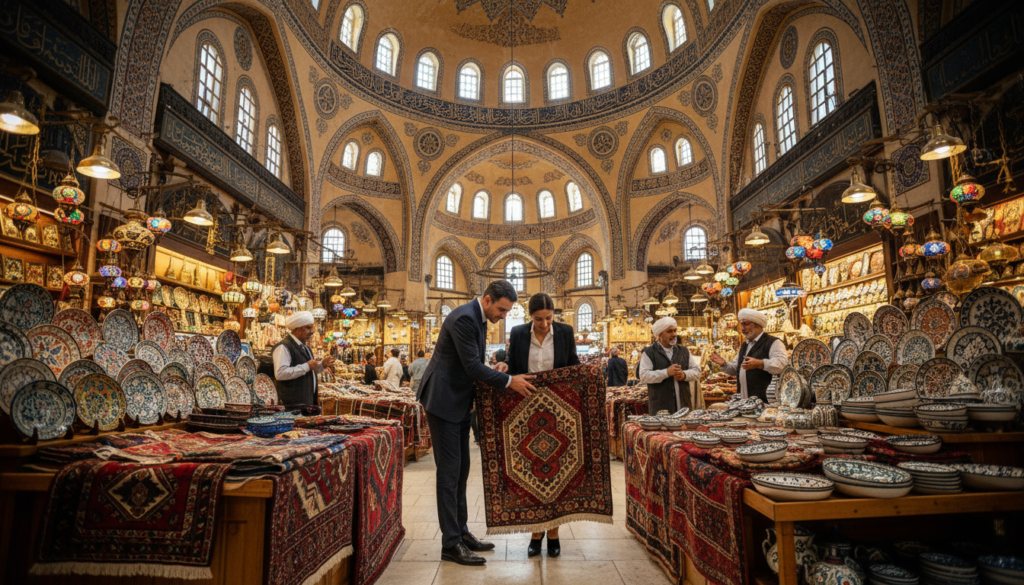
The bazaars are less about ticking boxes and more about soaking up a local rhythm that lasts an hour or a day. Treat this as a cultural stop first—shopping is secondary. That mindset makes the whole visit calmer and more memorable.
How to navigate a maze that feels like its own neighborhood
Grand Bazaar really is a small city under a roof: hundreds of shops, cafés, and fountains. Start at one of the main gates, pick a landmark (a cafe or a fountain), and use it as your anchor.
Walk a loop: follow one arcade until it meets a main corridor, then turn and keep that pattern. If you get turned around, head to your anchor, rest, and then pick a new route.
What to buy at the market known for spice displays
The Spice Bazaar shines for edible souvenirs—small bags of spices, lokum (Turkish delight), and loose teas travel well. Buy modest quantities that fit a carry-on and save space for gifts.
Sample before you buy. Friendly sellers often offer tastes; use that time to compare aroma and quality.
Haggling tips and common pricing pitfalls
Prices near the busiest lanes are set high for the tourist eye. Start lower than you expect to pay, but stay polite—haggling is a social dance, not a fight.
“Decide before you enter what you actually want to get; sensory overload is the bazaar’s strongest tactic.”
If you feel tired, hungry, or rushed, you’re likely to overpay. Walk away when a deal feels wrong; often the seller will call you back with a better offer.
Galata Tower and the Beyoğlu skyline viewpoints
From the narrow street below, the tower suddenly feels like the city’s compass needle. I find this is the moment Beyoğlu clicks: rooftops, waterways, and neighborhoods begin to line up for you.
History quick-take and why the view matters
The tower dates back centuries and served many roles—watchtower, lighthouse, and landmark. But what most visitors want is simple: the view. Stand on the observation deck and the layout of the city becomes clear.
Timing, tickets, and crowd tips
Hours commonly run early to late (roughly 8:30 a.m.–10 p.m.). Go at first light for clean light and fewer people, or near dusk for moodier shots if you don’t mind queues. Ticket prices can feel steep and entry sometimes feels rushed—budget your time.
Rooftop “Kubbe” spots and choosing one experience
Nearby rooftop restaurants and small terraces advertise the Kubbe look you see on social feeds. Some are staged for photos more than view. Pick one viewpoint and enjoy it fully—better fewer great moments than many staged ones.
“The observation deck turns a confusing map into a neighborhood portrait.”
İstiklal Street: Istanbul’s most famous walk for nightlife, culture, and people-watching
İstiklal street pulses like a stage: shopfronts glow, live music drifts, and the crowd moves as one. It’s loud and packed, but oddly energizing—like the city is performing right in front of you.
Best stretches to walk between Galata and Taksim Square
Start near Taksim and drift down toward Galata Tower. Going downhill saves your legs and reveals facades slowly, one block at a time.
Watch side streets for old churches, tiny galleries, and quieter cafes away from the main flow.
Çiçek Pasajı: architecture, restaurants, and atmosphere
Slip into Çiçek Pasajı for a breath of stained glass and woodwork. The small restaurants here buzz with chatter and plate clatter—perfect for a mid-walk pause.
Nostalgic red tram: when it’s worth the ride vs. when to skip
The tram is charming and photo-ready, but it fills fast. Take it once for the memory; skip it if you’re short on time or hate shoulder-to-shoulder rides. Remember: payment usually needs an Istanbulkart.
- People-watch: pick a café terrace near side streets for better views and fewer crowds.
- If you want get quieter moments: detour early morning or after midnight.
Taksim Square: modern Istanbul’s hub on the European side
When your schedule is tight, I treat Taksim as a practical springboard rather than a sight to linger over.
Why it matters: Taksim is a major transit node and the endpoint of İstiklal—perfect when you have limited time and want to pivot fast to other places.
What to do nearby when you only have a few hours
Grab a quick coffee on İstiklal, walk a short stretch of the street for atmosphere, or choose one targeted stop—a small museum or a rooftop view—depending on your mood and available hours.
Transit tip: Use Taksim to change lines or catch buses and metros; it saves walking time and keeps your day moving.
“Taksim feels more modern and local—commuter energy rather than postcard perfection.”
- Short coffee + people-watching: 20–30 minutes.
- Quick museum or rooftop: 45–90 minutes.
- Transit connection: factor 15–30 minutes for transfers.
| Use | Typical time | Best next move |
|---|---|---|
| Coffee & walk | 20–30 min | Stroll İstiklal |
| Culture stop | 45–90 min | Small museum or gallery |
| Viewpoint | 30–60 min | Rooftop for photos |
Safety note: keep bags close in dense crowds and expect busy periods; Taksim is about movement. Decide quickly and enjoy the flexibility this neighborhood gives your day.
Galata Bridge and the Golden Horn waterfront
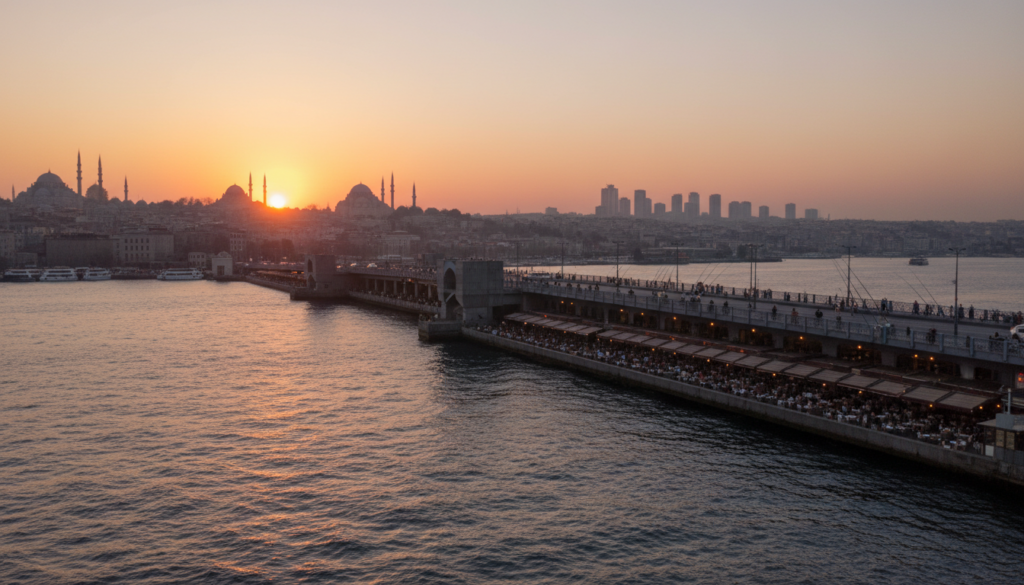
The Galata Bridge hums with life—part crossing, part stage where the city performs its waterfront rituals.
I like to stand near the middle, facing the water, when the light slides warm across the Golden Horn. Above you’ll see fishermen; below, the lower deck cafés and small restaurants move at their own rhythm.
Where to pause for the best sunset
Step slightly toward the Eminönü side to avoid the busiest flow. Pick a spot near a railing, but not in the main footpath—this place gives a clear view without being shoved along by people.
What to eat on the lower deck
Below the bridge, cafés and small restaurants serve classic fish sandwiches—simple, smoky, and local. Grab one to go and eat while you watch the skyline shift.
Quick photo tips and when to go
- Keep shots wide; use the bridge lines to frame minarets and water for better photos.
- Shoot while walking slowly—movement helps catch candid moments.
- Best time: late afternoon into dusk, when commuters thin and the light turns theatrical.
| Spot | Why go | Best time |
|---|---|---|
| Middle, Eminönü side | Clear Golden Horn view; fewer passersby | Dusk |
| Upper walkway | Fishermen and panorama | Sunset start |
| Lower deck cafés | Fish sandwich and local vibe | Late afternoon |
“The bridge feels like a short show—arrive early, pick a spot, and let the waterfront theater begin.”
Bosphorus ferry rides and cruises: the must-do water experience
Nothing shows the city’s shape like a trip on the water—take a ride and the neighborhoods align before your eyes.
Commuter ferry: the budget-friendly crossing between Europe and Asia
The commuter ferry from Eminönü (european side) to Kadıköy (asian side) takes about 20 minutes and costs roughly 38.11 lira. It’s quick, cheap, and used by locals, so you’ll share the crossing with real daily life rather than tourists.
Where to sit for the best views and photos
Race for the upper deck as boats fill fast—those seats give the clearest sightlines along the shoreline. Face outward for palace facades, bridges, and waterfront neighborhoods as they slide by.
Buy a ticket at the dock or tap an Istanbulkart if you have one. Boats fill during rush hour, so allow extra time to find a good spot.
Bosphorus dinner cruise: what you get (and who it’s best for)
A dinner cruise (often around €40) packages food, music, and city lights. It’s a relaxed night out that suits couples, groups, and first-timers who want an easy evening on the water.
The commuter ferry often feels more like the real city—simple, busy, and alive—while the dinner cruise sells a polished show.
Asian side highlights: Kadıköy and Maiden’s Tower views
Crossing the water to the asian side feels like opening a quieter chapter of the city. A quick ferry from the European docks drops you into a lively, local rhythm with fewer tourists and more cafés.
Kadıköy: the easiest neighborhood to add to your itinerary
I pick Kadıköy when I want a simple reset. It’s easy to reach, walkable, and full of bakeries, bars, and street art.
Try a half-day: ferry over, wander the market, sit for lunch, and stroll the seaside before you head back. It takes little time but changes how you see the town.
Maiden’s Tower (Kız Kulesi): legends, museum visit, and boat transfer basics
The Maiden’s Tower is one of those postcard places best viewed from the shore. You can take a short boat transfer for a close look; schedules and access vary, so check ahead.
The on-site experience is museum-style—short, scenic, and more about atmosphere than long exhibits. Budget-wise, this is a high-reward stop that won’t gobble major fees.
If your European-side day feels full, hop the ferry for a calm afternoon on the other shore.
Fortresses and city defenses worth the detour
If you have extra days, these fortresses repay the walk with views and stories that reach the water. They require a bit more transit and a slower pace, but the payoff is clear: wide panoramas and a hands-on sense of strategy.
Rumeli Hisarı: Bosphorus control point and panoramic overlooks
I like Rumeli Hisarı for its dramatic siting above the strait. Built to control ships, the fortress was a literal choke point on the waterway. Today, terraces and towers give one of the best overlooks in the city.
Note: some sources listed a roughly €7 entrance fee and said the small fortress museum was under reconstruction in 2025. Check status before you go.
Theodosian Walls and Yedikule: Constantinople’s legendary defenses
The Theodosian Walls feel raw and atmospheric—far from polished tourist loops. Walkable stretches and crenellated towers show defensive design that held for many years.
Yedikule (the Fortress of the Seven Towers) anchors that system. Climb and explore to see how strategy was written into the land, not just carved in stone.
“Extra effort, extra reward—these sites shine when you have time to wander and a plan to get there.”
Planning tip: consider a short tour or a planned transit route. These places reward curiosity but are less wander-friendly than the main loop.
More museums and unique attractions for extra days in Istanbul
When the main loop is done, a second day of museums reveals quieter layers of the city. Think of this as a bonus round: deeper context without the biggest crowds.
Istanbul Archaeological Museum: standout artifacts and how long to budget
The Archaeological museum spans three buildings and holds major sarcophagi from Sidon, including one tied to Alexander the Great. Give yourself at least two hours of time; it’s easy to rush and miss the best objects. If you love large, show-stopping pieces, prioritize this place.
Great Palace Mosaics: an under-the-radar historic stop
The Museum of Great Palace Mosaics is quieter and compact. It’s a calm place to see late antique floor art and feel the imperial city’s texture without the crowds.
Military Museum and Miniaturk: different moods
The Military museum offers uniforms, maps, and occasional Janissary band performances—great if you’re curious about the ottoman empire’s later ceremony. Miniaturk is a playful, family-friendly museum that shows Turkey’s places in miniature and gives kids and adults a low-effort thrill.
Quick filter: for “wow” objects, pick Archaeology; for under-the-radar depth, choose mosaics; for variety, split two smaller places.
Conclusion
A simple loop works best: start with Sultanahmet icons, stop for a Beyoğlu skyline view, wander a market, and take time on the water for perspective.
I recommend pacing. Check hours and prayer times, expect changing entrance and ticket rules, and choose one or two core places per day so you actually feel them.
Pick your priorities: history lovers should favor Topkapi Palace and Hagia Sophia; skyline people head for Galata Tower; architecture fans will love the Blue Mosque; mood seekers should visit the Basilica Cistern and ride a ferry.
Tourists are part of the picture—learn when to go and when to pivot. Use this guide as a starting point, then leave room for unplanned moments; that’s the point of travel today.
FAQ
What should I know before my first time visiting Istanbul and its main landmarks?
I recommend planning at least three full days to see core sites like Hagia Sophia, the Blue Mosque, Topkapi Palace, and the Grand Bazaar. Split time between Sultanahmet (historic heart), Beyoğlu/Galata, and one day for a Bosphorus crossing or the Asian side. Buy timed-entry tickets where possible and start popular sights early to avoid long lines; weekday mornings are usually quieter. Pack comfortable shoes—the city is hilly and you’ll walk a lot.
Which neighborhood is best to stay in for quick access to the main sites?
For first-timers I often choose Sultanahmet for classic access to Hagia Sophia, the Blue Mosque, and Topkapi Palace. If you want more nightlife, cafes, and nightlife, stay around Beyoğlu or Taksim. Kadıköy on the Asian side is great if you prefer local markets and a younger scene—just factor in a 20–30 minute ferry or metro ride to reach Sultanahmet.
How should I split days between the European side and the Asian side?
Spend most of your time on the historic European side—Sultanahmet for Byzantine and Ottoman highlights, and Beyoğlu/Galata for viewpoints and nightlife. Reserve half a day or a full day for Kadıköy and the Maiden’s Tower on the Asian side to taste local markets and calmer waterfronts. A short Bosphorus ferry ride makes it easy to combine both in one day.
When’s the best time of year to visit for comfortable sightseeing?
Late spring (May–June) and early fall (September–October) offer mild weather and thinner crowds. Summers get hot and crowded, while winter can be chilly and rainy but offers lower prices and quieter museums. Shoulder seasons balance nicer weather and manageable visitor numbers.
What are smart ways to avoid long waits at Hagia Sophia and Topkapi Palace?
Book timed-entry tickets online when available, arrive right at opening, or join a reputable small-group tour that includes skip-the-line access. Visit Hagia Sophia early morning or late afternoon; for Topkapi, reserve the Harem add-on in advance since it has separate entry and limited capacity.
What should I know about mosque etiquette and visiting the Blue Mosque?
Dress modestly—cover shoulders and knees; women may need a headscarf (often available at the entrance). Remove shoes before entering prayer halls and avoid visiting during the five daily prayer times; the Blue Mosque closes to tourists briefly for worship, so check schedules posted onsite or online.
Is the Basilica Cistern worth a stop, and what makes it special?
Absolutely—it’s a cool, atmospheric break from the heat and crowds. The underground water chamber features a forest of columns, dramatic lighting, and the famous upside-down Medusa head. It’s compact, so you can add it to a morning in Sultanahmet without losing much time.
How do I navigate the Grand Bazaar without getting overwhelmed?
Treat the Grand Bazaar like a small neighborhood—focus on a few sectors (carpets, ceramics, jewelry), use main thoroughfares to orient yourself, and pick one or two trusted shops rather than impulse-buying everywhere. Haggling is normal, but do it politely and start around 30–40% below the asking price; walking away often works.
When is the best time to visit Galata Tower and where are the best rooftop photo spots?
Visit Galata Tower late afternoon to enjoy daylight views and stay for sunset if lines aren’t long. For rooftop photos, explore cafés and terraces around Galata and Karaköy—many offer unobstructed views of the Bosphorus and the “kubbe” (dome) silhouettes of Sultanahmet.
Are Bosphorus ferry rides worth it and how do they work?
Yes—ferries are a budget-friendly way to see the city from the water and to cross between Europe and Asia. Use public commuter ferries for short crossings; buy an Istanbulkart for easy boarding. For a scenic evening, consider a longer Bosphorus cruise or a dinner boat, but know those are tourist-focused and pricier.
What are the highlights inside Topkapi Palace and should I visit the Harem?
Topkapi’s courtyards, the imperial treasury, and the Ottoman collections are the main draws. The Harem reveals private royal life and ornate rooms—it’s worth the extra ticket if you love history. Plan time for both; lines and security checks can slow you down during peak months.
How do Dolmabahçe Palace and Topkapi Palace differ?
Dolmabahçe feels European in style—crystal chandeliers, marble, and imperial salons—reflecting 19th-century Ottoman tastes. Topkapi is older and more intimate, with layered courtyards and religious artifacts. If you have limited time, choose based on whether you prefer opulent 19th-century interiors (Dolmabahçe) or medieval-to-early modern Ottoman history (Topkapi).
What should I eat on the Galata Bridge and the Golden Horn waterfront?
Try a classic balik ekmek (fish sandwich) from the boats under the bridge for a tasty, local snack. Along the Golden Horn you’ll find seafood restaurants and meyhaneler (taverns) serving meze and grilled fish—great for sunset dining with a view.
What’s the easiest way to reach Kadıköy from central Europe-side neighborhoods?
Take a short ferry from Eminönü, Karaköy, or Beşiktaş—ferries are frequent and scenic. You can also use the Marmaray metro through the Bosphorus undersea tunnel for a faster, mostly indoor option; both take about 20–30 minutes depending on departure point.
Which lesser-known museums or spots should I save time for if I have extra days?
Consider the Istanbul Archaeological Museums for deep history, the Museum of the Great Palace Mosaics for Byzantine art, and the Military Museum for Ottoman military culture. Miniatürk is fun if you want a compact overview of Turkey’s landmarks, especially with family.
Are guided tours worth it for the Theodosian Walls or Rumeli Hisarı?
Guided tours add context—especially for the Theodosian Walls and Rumeli Hisarı—bringing legends, defensive strategy, and hidden details to life. If you prefer exploring solo, audio guides or a short guidebook can also enhance the visit.
How long should I budget for seeing the major museum sites each day?
Expect half a day for large sites like Topkapi Palace or the Istanbul Archaeological Museum, and 1–2 hours for focused visits to places like the Basilica Cistern or the Museum of Great Palace Mosaics. Factor in walking, security lines, and a coffee break—I always leave wiggle room in my schedule.