
Ever wondered how one city can feel like two continents at once? I did when I first set foot on these streets, and I still ask that question on return visits.
Istanbul is a bridge between Europe and Asia; its layers of Roman, Byzantine, and Ottoman history show up around every corner.
I’ll keep this short and practical: this list highlights the spots that give you the biggest “I get this city” payoff. Expect domes, courtyards, waterfront tea, and a ferry ride that ties it together.
This is a choose-your-own-adventure travel guide. I balance iconic stops with reality checks—crowds, lines, steep hills, and prayer closures—so you can plan smart, not just dream.
Key Takeaways
- You can feel European and Middle Eastern within a single morning.
- Focus on a walkable historic loop first for the best trip payoff.
- Expect crowds and plan around prayer times or seasons.
- A short ferry ride often changes how the whole city clicks.
- You don’t need to do everything to have a memorable visit.
How to Use This Guide for a First Time Visit to Istanbul
For a first-time visit, treat the historic core like a compact neighborhood you can cover in a single day. The Blue Mosque, Hagia Sophia, Basilica Cistern, and the Hippodrome are steps apart, so a tight itinerary that starts early is realistic and rewarding.
I’ll lay out a modular plan: pick a core loop for your first day, then add districts if you have 2–3 days or 5+ days. If you only have one day, stack the key sites before lunch. With more time, slow the pace and add neighborhoods.
Practical tips: check opening hours, note Friday mosque access, and share an Istanbulkart for transit. Trams are simple; remember the city is hilly so wear comfy shoes.
Expect crowds and heat—there will be many people around the historic core. Pace matters: build a loose plan that allows a rooftop tea or a stray photo stop without losing the backbone of your day.
- One day: core loop, early start, priority sites.
- Two–three days: add a neighborhood and a ferry ride.
- Five+ days: detours, slower mornings, deeper exploration.
Main attractions in Istanbul you shouldn’t miss
I’ve boiled the city down to the handful of places that give you the clearest sense of its soul. Below is a quick, scannable list of non-negotiable spots, what they feel like, and why they matter.
- Hagia Sophia — monumental history and jaw-dropping architecture; ticketed and often busy.
- Blue Mosque — reverent, serene; free to enter outside prayer times (modest dress required).
- Topkapi Palace — palace rooms and imperial collections; ticketed, expect lines for treasures.
- Basilica Cistern — cinematic, watery atmosphere; paid entry but compact and cool.
- Grand Bazaar — chaotic, commercial; free to browse, great for souvenirs and people-watching.
- Spice Bazaar & waterfront — fragrant and lively; easy to pair with a ferry hop.
- Galata Tower & Istiklal — panoramic views and lively streets; paid for tower access.
- Süleymaniye — peaceful rooftop views; free to enter mosque area.
- Bosphorus ferry/ cruise — cinematic waterfront experience; ferries are cheap, cruises cost more.
If you only do three things: pick one major museum/palace, one grand mosque, and a short ferry ride. That combo balances history, architecture, and the waterways that define the city.
| Place | Vibe | Cost | Line Magnet |
|---|---|---|---|
| Hagia Sophia | Historic, awe-inspiring | Ticketed | High |
| Blue Mosque | Quiet, reverent | Free | Medium |
| Topkapi Palace | Opulent, educational | Ticketed | High |
| Bosphorus ferry | Cinematic, breezy | Low (public ferry) | Low |
Sultanahmet’s Historic Core in One Walkable Loop
You can see world-class sites without a taxi — they sit a few minutes apart on a single loop.
Start at the earliest open point and follow a clockwise route to cut backtracking. I usually begin at Hagia Sophia, then cross to the Blue Mosque, drop down to the Basilica Cistern, and finish by the Hippodrome.
What to expect at each entrance: security checks, modest dress rules at mosques, and lines that swell late morning. A guided tour can skip lines and add context if you want faster access and clear stories.
Keep the pace relaxed. Take short rests on park benches or grab tea at a nearby vendor. The surrounding streets add flavor — vendors, the call to prayer, and layers of history underfoot.
- DIY works if you arrive early and accept some queueing.
- Guided tours pay off on busy days for skip-the-line access and deeper background.
Hagia Sophia
Stand inside the Hagia Sophia and you’ll feel a city’s entire story compressed into a single, vast room.
The Hagia Sophia is the defining building that explains much of this place’s identity. Built under Justinian I and completed in 537, it began as a Byzantine cathedral, became an Ottoman mosque after 1453, turned into a museum in 1935, and was reconverted to an active mosque in 2020.
When you step through the entrance you notice the dome’s scale first. Then the layered details: Christian mosaics peeking beside huge Islamic calligraphy. It’s a physical conversation between eras.
I’ll be blunt—crowds shape the visit. Go early, check changing hours on religious days, and consider a guided or VIP tour if context matters or lines are long.
“Standing here, you feel 1,500 years of history stacked above you.”
What not to miss:
- Upper-level views and the gallery perspective.
- Key mosaics that remain visible behind screens.
- The way morning light shifts the interior surfaces.
Dress respectfully and keep voices low; many people use the space for worship. If the place feels overwhelming, slow down: find a quiet corner, sit, and watch how the light and the crowd change over an hour.
Blue Mosque
Visiting the blue mosque means planning around its spiritual rhythm. It’s a working mosque, not a museum, so crowds shift with prayer times and Friday has extra restrictions.
The entrance is free, but expect security checks and a polite line. The line often looks long, yet it moves; many people find the wait worth the interior calm.
Dress simply: covered legs and shoulders; women should carry a headscarf. You’ll remove shoes at the door—there are shelves and helpers, so don’t stress that process.
The interior rewards patience. Look for soaring domes, six minarets, and the soft blue tilework that gives the mosque its name. The symmetry, filtered light, and carpeted hush create a very different style than a museum visit.
Keep cameras quiet—no flash, low voices. A short guided tour helps on busy days if you want context. Afterward, stand where I do for the classic pairing: the Blue Mosque framed beside Hagia Sophia for that postcard view.
| Feature | Practical Note | Why it matters |
|---|---|---|
| Entrance | Free, security checks | Accessible but expect queues |
| Prayer hours | Closed briefly five times daily | Plan visits around worship |
| Dress & shoes | Covered clothes; remove shoes | Respectful and simple to follow |
Basilica Cistern
Step down a narrow stair and the city’s noise fades into a dripping, columned hush.
The basilica cistern was built for Emperor Justinian in the 6th century. It holds an underground forest of 336 marble columns and two famous Medusa heads. The place feels cool and otherworldly—perfect for a quick escape from crowded streets.
Plan about 20–30 minutes here. It opens around 9am, so a morning visit beats the heaviest crowds and gives you the best light for reflections on the shallow water.
What to look for: the Medusa bases, the eerie reflections, and the scale of the Roman engineering. It’s easy to treat this as a selfie stop, but a short audio or guided tour adds context about how the city managed its water supply through sieges and droughts.
“A cool, quiet detour beneath the streets—short, atmospheric, and oddly satisfying.”
Notes on comfort: the floor can be slippery and lighting is dim. Wear sensible shoes and move slowly. Tickets and passes vary; if lines look long, decide if skip-the-line access or a guided route is worth the extra cost.
| Feature | Practical note | Why it matters |
|---|---|---|
| Opening time | About 9am | Best early for smaller crowds |
| Visit length | 20–30 minutes | Quick stop that fits a tight schedule |
| Highlights | 336 columns, Medusa heads, reflections | Unique visuals and engineering history |
| Accessibility | Stairs, dim paths, slippery spots | Not ideal for limited mobility |
Topkapi Palace
Topkapı Palace reads more like a series of working courtyards than a single showy palace. It was built after the 1453 conquest under Mehmed II and served as the Ottoman imperial residence for roughly 400 years.
The buildings are layered: pavilions, administrative wings, and the famed Harem added in the mid-16th century. It became a museum in 1923, so what you see mixes court life with curated displays.
Plan your visit around practical points. Check the hours and note the usual Tuesday closure. Lines form at the entrance, so arrive early or book a skip-the-line tour on peak days.
The best parts are the courtyards, the harbor views, and the small rooms that explain how the empire ran day to day. This is a commitment visit—give it time, pick priorities, and tuck a park break nearby so the whole experience doesn’t feel rushed.
“Arrive early, choose a few highlights, and let the courtyards tell the story.”
Sultanahmet Square and the Hippodrome Monuments
Sultanahmet Square is the easy anchor you keep returning to between bigger stops. It sits on the old Roman and Byzantine Hippodrome site, where chariot races and public spectacle once shaped civic life.
I treat the square as connective tissue: a useful meet-up spot and a short reset during your city loop. The stadium itself is gone, but a handful of upright stones and a fountain carry the story.
Monuments cheat sheet: the Egyptian Obelisk (Thutmose III/Obelisk of Theodosius), the Walled Obelisk, the Serpent Column, and the German Fountain. These buildings and markers are easy to spot and help you picture the old racecourse.
Honest take: this isn’t a long stop. Spend 10–20 minutes and imagine the crowd noise. Pass through early or at evening light when photos feel calm and the air cools.
How to use it: weave the square into your day between Hagia Sophia and the Blue Mosque. It’s simple, meaningful, and a clear place to reorient yourself as you move across the historic core.

Grand Bazaar
The Grand Bazaar is the classic “you were here” stop—massive, historic, and honestly a little overwhelming the first time.
Expect a dense market of narrow corridors and tourist-focused shops. Much of what you see repeats: lamps, textiles, ceramics, and carpets. That repetition is part of the charm and the chaos.
How to keep it fun: go with a short list, set a strict time cap, and pick one main corridor as your spine. Treat the visit as an experience, not a shopping sprint.
- Haggling tip: be friendly, firm, and ready to walk away—the best deals happen when you don’t look desperate.
- Worth buying: textiles and ceramics are reliable; carpets need comparison and patience.
- Navigation: don’t fear getting a bit lost; use a main corridor to reorient.
If markets stress you out, try the Spice Bazaar for a similar vibe with less intensity.
“Say you saw it, take a few photos, buy one small thing, and move on.”
Spice Bazaar and Eminönü Waterfront
Start with color and scent, then let the sea breeze reset your pace a block later.
The Spice Bazaar (Mısır Çarşısı) is a lively market where sacks of spices and trays of Turkish delight crowd narrow aisles. Plan around common hours: Mon–Sat about 8:00–19:30 and Sun 9:30–18:00 so you don’t arrive after shutters close.
Shop smart: buy small bags of spices, boxed teas, and travel-friendly sweets. Remember this is a working market—expect friendly sales pitches, samples, and a bit of price theater.
When you spill out toward Eminönü, the waterfront energy shifts the mood. Seagulls, vendors, and balık ekmek boats form a noisy, salty picture. Try a fish sandwich for the vibe; flavor can be modest, but the scene is worth it.
“The sandwich is more about the water, the gulls, and the moment than a culinary revelation.”
If you want a calmer meal, a short walk brings a reliable sit-down restaurant on the next side street. Ferries leave nearby, making this a perfect launch point for a quick hop to the Asian side or a longer Bosphorus ride.
Süleymaniye Mosque and Istanbul’s Seven Hills Views
Perched above the rooftops, Süleymaniye Mosque feels like the city’s breathing space.
Designed by Sinan in the 16th century, this place blends graceful architecture with a calm interior that rewards slow visits. Its history is visible in the proportions, the arches, and the quiet courtyards.
Plan your time for the uphill walk; give yourself extra minutes. Entry is free, but the mosque closes during prayer times, so check the hours before you go.
The real payoff is the patio behind the mosque. From there you get sweeping views over the city without paying for an observation deck. It’s my favorite mid-afternoon reset—sit, sip tea, and watch the light shift across the rooftops.
Quick etiquette: dress modestly, remove shoes, and be quiet during worship. These small gestures keep the visit respectful and simple.
“A calm pause on a hill — grand, but strangely private.”
After a slow visit here, you’re ready to stroll toward markets or cross the bridge to Beyoğlu; Süleymaniye gives you context, quiet, and one of the best views the city offers.
Galata Tower, Galata Bridge, and Beyoğlu Streets
Walk up toward the tower and you’ll watch the city trade empire-scale stone for lively neighborhood energy.
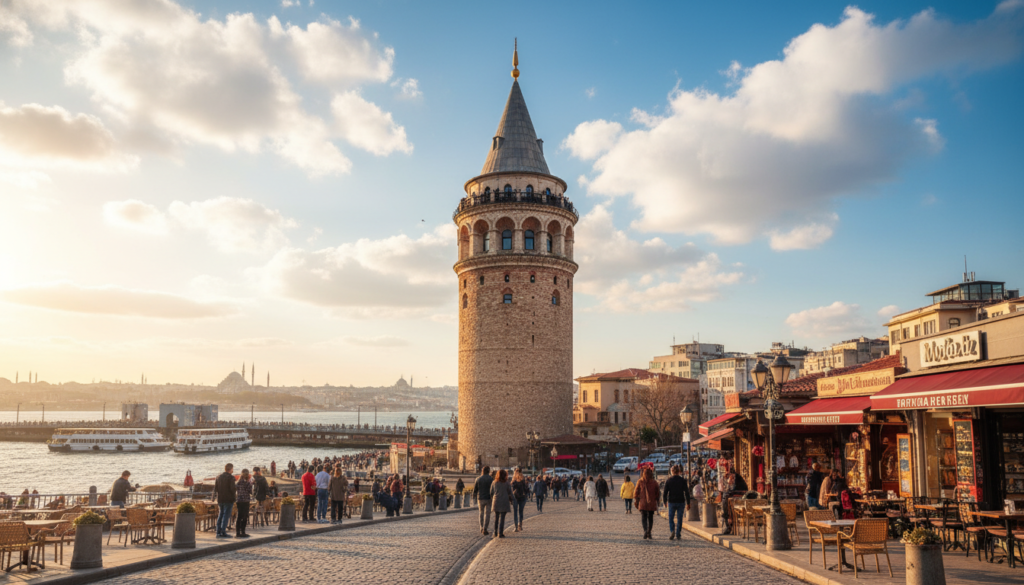
The galata tower is a handy landmark and an old Genoese watchpoint from 1348. It helps you orient, but if time is tight you can skip the climb and still get the vibe from nearby lanes.
Beyoğlu and its famous promenade offer a different rhythm: narrow streets filled with cafés, record stores, and small galleries. Istiklal Avenue hums; the side lanes feel quieter and more local.
Plan a late-afternoon cross over Galata Bridge for sunset. The light, the calls to prayer, and the fishing boats form one of those travel moments you remember.
“Cross the bridge late; linger for food and people-watching as the city softens.”
- Morning: historic core tour.
- Late afternoon: cross the bridge, walk toward Galata.
- Night: dine and stroll the lively streets.
| Spot | Why go | Tip |
|---|---|---|
| Galata Tower | Orientation & views | Skip if short on time |
| Galata Bridge | Top sunset view | Stand with fishermen, then walk east |
| Beyoğlu streets | Local nightlife & shops | Stay here for a less touristy base |
Safety note: busy areas are fine at night; keep valuables secure and stay aware like any big city side street.
Dolmabahçe Palace and Ortaköy on the Bosphorus
Dolmabahçe shows the Ottoman court trying on a full European wardrobe — crystal chandeliers, gilt rooms, and formal salons.
I find it very different from Topkapi: this building feels like a late-empire statement of taste rather than a working palace.
The visit is structured. Timed, guided entry is common, and the entrance process moves you through set rooms rather than letting you wander freely.
Practical heads-up: Dolmabahçe is typically closed Mondays and runs Tue–Sun with limited hours (often around 9:00–16:00). Check hours before you go so you don’t arrive on a closed day.
Pair the palace with Ortaköy on the same side of the Bosphorus. Stroll the waterfront, grab a kumpir or tea, and frame the mosque with the bridge behind it.
If you choose a hotel away from the historic core, these sites feel easier to reach; they reward a slower, shoreline-paced day rather than a tight museum sprint.
“A palace for show, a square for breathing — do both and let the water tie them together.”
| Feature | Practical note | Tip |
|---|---|---|
| Style | European-influenced Ottoman decor | Expect lavish rooms and strict photography rules |
| Access | Timed/group entries; security at entrance | Buy tickets in advance on busy days |
| Pairing | Short walk to Ortaköy waterfront | Finish with snacks and the mosque-by-bridge photo |
Take a Ferry or Bosphorus Cruise for the Full Istanbul Experience
Hop on a public ferry and suddenly the layers of the city click into place. I say this bluntly: if you choose one non-negotiable thing, get on the water.
The options fit any schedule. For a tight day, do a quick round-trip ferry hop across to the Asian side and come back. For more atmosphere, book a sunset ride. If you want panorama, pick a longer Bosphorus cruise that stretches toward the Black Sea.
What you’ll see matters: skyline silhouettes, mosque domes, shoreline palaces, and small neighborhood docks that feel alive from the water. The ride turns separate sights into a single, readable experience.
“Everything about the city makes more sense from a boat — it’s the best short course in local geography.”
- Quick hop: 30–60 minutes, cheap, great for orientation.
- Sunset ride: moodiest light, best photos.
- Long cruise: full shoreline panorama and forts.
| Option | Approx. Duration | Why pick it |
|---|---|---|
| Public ferry | 30–60 min | Cheap, crosses to the other side, perfect short trip |
| Sunset ferry | 1–2 hours | Golden light and calm photos |
| Bosphorus cruise | 2–4 hours | Full shoreline views and historic buildings |
Schedules and times vary, so stay flexible and treat the ride as a scenic break that also saves your legs. If you follow one tip: go late afternoon for the cinematic moment that ties the whole visit together.
Worthwhile Detours for History Lovers Beyond the Center
For travelers who favor depth over checklist speed, a few out-of-center stops stretch the story wider.
Theodosian Walls and Yedikule are perfect if you want military history you can touch. Walk along the old defensive buildings and you’ll see why the city resisted sieges for centuries.
Practical note: these sites need transit. Allocate a couple of extra days or accept a longer time on buses or an Uber; they aren’t walkable from the core.
Chora is a must for mosaic lovers, but access can shift with worship schedules. Plan your visit for a day when visitor areas are open.
Rumelihisarı and Anadoluhisarı feel best from the water—see them on a Bosphorus cruise and the forts resolve into a clear story about control of the strait.
- Priorities: Byzantine art — Chora; fortifications — Walls/Yedikule; shoreline forts — Rumeli/Anadolu.
These detours take extra days, but they repay patience: they reveal layers of the city most visitors miss and make the whole place feel fuller.
Practical Tips: Tickets, Passes, Hours, and Getting Around
If you want a smoother trip, treat tickets, transit, and prayer hours as the little logistics that change everything.
Quick ticket checklist: mosques, squares, and bazaars are usually free; palaces and cisterns typically need a ticket. Verify current prices before you go and expect lines at peak time.
- When a tour helps: buy a guided or skip-the-line tour if lines are long or if context matters to you. A tour saves time and adds stories.
- Hours reality: mosques close at prayer and Friday can restrict access. Museums may close one weekday—Topkapi often closes Tuesdays—so check before planning a day.
Getting around: walk small loops, take the tram for cross-city legs, and pick a ferry when you want transit plus scenery. Use an Istanbulkart—refillable and shareable—for simple public travel.
Sample timing blocks you can plug into an itinerary:
- Half-day Sultanahmet: early entry, two monuments, quick cistern visit.
- Late-day Beyoğlu: tower views, promenade, dinner.
- Evening ferry: scenic trip at golden hour to tie your day together.
Start early, leave buffer time, and take short breaks. Crowds peak midmorning; a slow cup of tea resets your pace and keeps the day enjoyable.
“Leave a little extra time — it’s the best single travel tip I give.”
| Item | Typical rule | Why it matters |
|---|---|---|
| Entrance | Mosques free; palaces ticketed | Sets expectations and budget |
| Hours | Prayer closures; weekly museum days off | Avoid wasted trips and long waits |
| Transit | Walk, tram, ferry; Istanbulkart | Saves money and gives flexibility |
Conclusion
Think of your visit as a draft—you’ll refine it on return trips and unplanned walks.
Spend your time on a smart starter set: the Sultanahmet loop, one big palace, one bazaar, and a short ferry ride. Those places give the clearest sense of the city fast.
Remember the best things often happen between stops—tea on a side street, a waterfront pause, a call to prayer that changes the mood. Let those moments shape your experience.
Choose a neighborhood that fits your vibe and pick a hotel that saves commute time. Confirm hours before you go, keep plans flexible, and pace your days so the trip feels good, not rushed.
Return if you can—the city opens up with more days, more meals at a favorite restaurant, and more ease finding your way.
FAQ
What are the can’t-miss places for a first-time visit to Istanbul?
For a first trip I recommend starting in Sultanahmet: Hagia Sophia, the Blue Mosque, Topkapi Palace, and the Basilica Cistern are all walkable and packed with history. Then wander to the Grand Bazaar and Spice Bazaar to taste local life and buy spices, textiles, and ceramics. Finish with a ferry ride on the Bosphorus to see neighborhoods like Ortaköy and the waterfront views from Galata Tower and the Galata Bridge.
How much time should I plan for the historic core around Sultanahmet?
Plan at least one full day to cover the main sites at a relaxed pace — Hagia Sophia, Blue Mosque, Topkapi Palace, and the cistern fit into a loop with breaks for tea or a quick lunch. If you like museums or want a long lunch and shopping at the Grand Bazaar, add another half day.
When are the best hours to visit Hagia Sophia and the Blue Mosque to avoid crowds?
Early morning right at opening is the calmest for both. Hagia Sophia opens earlier and tends to get busy by late morning; the Blue Mosque is quieter between prayer times but remember it’s an active mosque so check prayer schedules and dress respectfully.
Do I need tickets or a guide for Topkapi Palace and the Basilica Cistern?
You need a timed ticket for Topkapi Palace to enter the main sections and the Harem requires a separate ticket. The Basilica Cistern also charges admission. I like joining a short guided tour at Topkapi to understand the Ottoman artifacts; for the cistern, an audio guide or quick guided walk adds context to the architecture and underground water system.
How do I get from Sultanahmet to the Grand Bazaar and Spice Bazaar?
Both bazaars are a short walk from Sultanahmet — about 10–20 minutes depending on your pace. You can also take a short tram ride to Beyazıt or Eminönü. Walking lets you absorb neighborhood streets, cafes, and small shops along the way.
Is the Grand Bazaar worth visiting if I don’t plan to shop much?
Yes. The Grand Bazaar is as much about the atmosphere as the shopping — winding lanes, historic han architecture, and skilled artisans. Even if you’re not buying, peek into spice shops, watch craftsmen, and try small tastings at tea shops. Haggle gently; it’s part of the experience.
What should I wear when visiting mosques like the Blue Mosque and Süleymaniye Mosque?
Dress modestly: cover shoulders and knees. Women should bring a lightweight scarf to cover hair; both men and women remove shoes at mosque entrances. Comfortable shoes are useful because you’ll walk a lot around the historic core and up the seven hills to places like Süleymaniye.
How much does a Bosphorus ferry or cruise cost, and which is better?
A public ferry is very affordable — a short hop costs just a few lira on the Istanbulkart and gives authentic local views. Private cruises cost more but offer longer, narrated trips with included refreshments. For a budget-friendly but scenic ride, take the public ferry; for commentary and comfort, choose a private Bosphorus cruise.
Can I visit Galata Tower and then explore Beyoğlu on foot?
Absolutely. Galata Tower offers panoramic views of the city and is a great starting point for walking through Beyoğlu and Istiklal Street. You’ll find cafes, bookstores, and live music venues along the way — perfect for an afternoon or evening stroll.
Are there good restaurant and hotel neighborhoods near the historic core?
Sultanahmet itself has many hotels and classic restaurants, but for more nightlife and dining variety choose Beyoğlu or Karaköy. For a scenic stay, neighborhoods along the Bosphorus like Besiktas or Ortaköy offer waterfront restaurants and easy ferry access.
What practical tips should I know about tickets, passes, and getting around?
Buy an Istanbulkart for inexpensive tram, bus, and ferry rides. Prebook timed tickets for Topkapi Harem and Hagia Sophia when possible. Trams are efficient for reaching Sultanahmet and the Grand Bazaar; walking works well inside the historic loop. Allow extra time for security lines at major sites.
Are there worthwhile detours for history lovers beyond the city center?
Yes — the Chora Church (Kariye Museum) has stunning mosaics, and the Asian-side neighborhood of Kadıköy offers a local market and waterfront cafes. For imperial opulence, visit Dolmabahçe Palace on the Bosphorus. Each spot adds a different layer to the story of the city.
What are good times of year to visit to avoid crowds and heat?
Spring (April–May) and fall (September–October) are ideal — pleasant weather and fewer tourists than summer. Winters are quieter and often wet, but you’ll enjoy lower prices and shorter lines at museums and palaces.
Any safety or cultural tips for first-time travelers?
Stay aware in crowded places and watch for pickpockets. Learn a few Turkish phrases — even simple greetings go a long way. Respect prayer times at mosques, remove shoes when required, and be open to trying street food like simit or a bowl of Turkish tea at local cafés.