
Istanbul sits where Europe meets Asia, and I’ll set expectations right away: this city is huge, loud, layered, and utterly magnetic. On a first trip you can feel both enchanted and a bit overwhelmed.
I wrote this guide for first-timers who want the must-see classics, not for anyone sprinting to see everything. I’ll keep this practical—a real list you can use, with tips about lines, prayer times, and why some museum tickets now show euros.
The picks are iconic for a reason, but you can still explore them with curiosity and calm. I’ll lead with the Sultanahmet core sights, then bazaars, then Beyoğlu and Galata, the Bosphorus and the Asian side, plus a few “go deeper” extras.
If you’re traveling from the U.S., plan for jet lag and walking distances. Build in downtime—tea breaks and ferry rides make the city feel kinder, and they help you leave with a real sense of rhythm, not just checked boxes.
Key Takeaways
- Expect a layered, lively city that rewards slow roaming.
- This guide suits first-time visitors seeking main attractions and balance.
- Plan around seasons; spring and fall feel best for walking.
- Watch for pricing changes—some museums list euros or lira.
- Build downtime into your trip to absorb the real daily experience.
How to Use This List of Istanbul’s Main Attractions
I’ll keep this simple: pick the things that match your style and leave the rest. If you want deep history, follow a history-first path. If you crave views or food, orient your days around viewpoints and markets. This approach keeps each day manageable and fun.
Short on time? Stay in Sultanahmet to reach major historical sites quickly. If you want nightlife and modern energy, choose Beyoğlu. For longer stays and a more local-feeling base, the Asian side can be cheaper and calmer.
For pacing, aim for two major sights plus one smaller stop per day. Add a ferry ride or a neighborhood wander as your reset. Mornings matter—headline sites fill fast, and arriving early changes your experience.
- Some places work best with a guide—palaces and layered history benefit from a tour.
- Markets and street wandering are perfect for self-guided exploration.
- Respect mosque timing and dress codes—plan around prayer times so you feel confident.
Start on the european side in the historic core, then earn your second chapter across the water. Stay flexible: hours, renovations, and ticket rules shift, so keep the plan loose and enjoy the city at your pace.
Top attractions in Istanbul: The Must-See Highlights at a Glance
I recommend a core loop that groups nearby places so you spend more time seeing and less time commuting.
Start around Sultanahmet: Hagia Sophia, the Blue Mosque, the Hippodrome, Topkapi Palace, and the Basilica Cistern. These are the core sites that anchor a first-day circuit.
Then spread outward: the Grand Bazaar and Spice Bazaar for market life, Galata and Beyoğlu for views and nightlife, Dolmabahçe for palace scale, and a Bosphorus ferry for the skyline.
Free vs paid: mosques and many outdoor places are free; palaces and major museums require tickets. Some stops get crowded — consider a skip-the-line tour for Topkapi or Hagia Sophia during high season.
If you have one day, pick the Sultanahmet loop. If two days, add Galata and a ferry. If three days, include Dolmabahçe and a longer Bosphorus cruise.
“The city rewards slow roaming; you’ll see more by staying curious than by racing a checklist.”
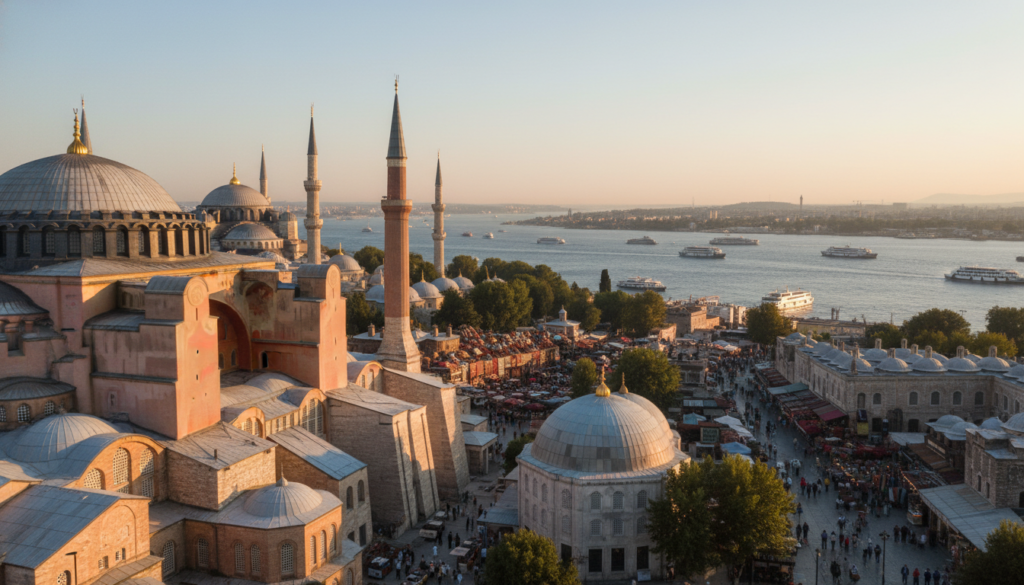
Hagia Sophia: Istanbul’s Icon of Layered History
Stepping into Hagia Sophia is like walking through a living timeline of empires. Built in 537 by Emperor Justinian I, this building has been a cathedral, then a mosque after 1453, a museum in 1935, and returned to mosque status in 2020.
The interior shows that history at a glance: medieval Christian mosaics sit near vast Islamic calligraphy. You can see how different faiths and rulers left marks without erasing what came before.
Practical note: as of 2025, foreign tourists often pay about €25 to enter. Rules can change, and worship areas may be off-limits during services. Expect lines and high demand; arrive early to avoid crowds.
Be respectful—this is a living religious site. Dress modestly and keep noise low. I recommend pairing a visit with the Blue Mosque, the Hippodrome, or the Basilica Cistern to make the most of the neighborhood without backtracking.
| Built | Key uses | Entry (2025) |
|---|---|---|
| 537 CE | Cathedral → Mosque → Museum → Mosque | ≈ €25 for foreign visitors |
| Architectural note | Christian mosaics & Islamic calligraphy | Visitor access may vary during prayers |
“A living timeline where domes and mosaics tell centuries of stories.”
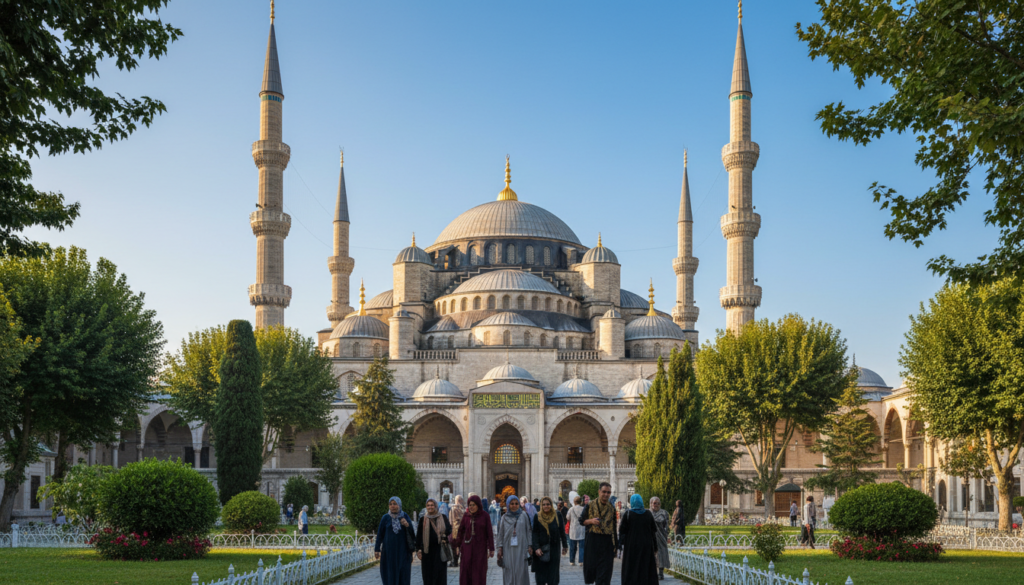
Blue Mosque: A Working Mosque With a Wow-Factor Interior
From the outside the mosque feels monumental, but stepping inside will steal your breath. The Sultanahmet Mosque is a working place of worship with free entry for visitors.
The interior is where the İznik tiles and cascading domes make their case. Light filters through dozens of windows and turns the tilework soft and almost audible.
Practical note: this mosque closes to tourists around the five daily prayer times. Shoes off, modest clothing, and quiet voices are expected—no sightseeing during prayers.
- What to look for: the six minarets, tile patterns, and how the space is built for worship first.
- When to go: early morning for fewer crowds; expect ongoing renovation work at times.
- Combine a tour: pair this stop with Hagia Sophia across the way for two distinct emotional vibes.
“A living, breathing mosque—beautiful to see, and humbling to experience.”
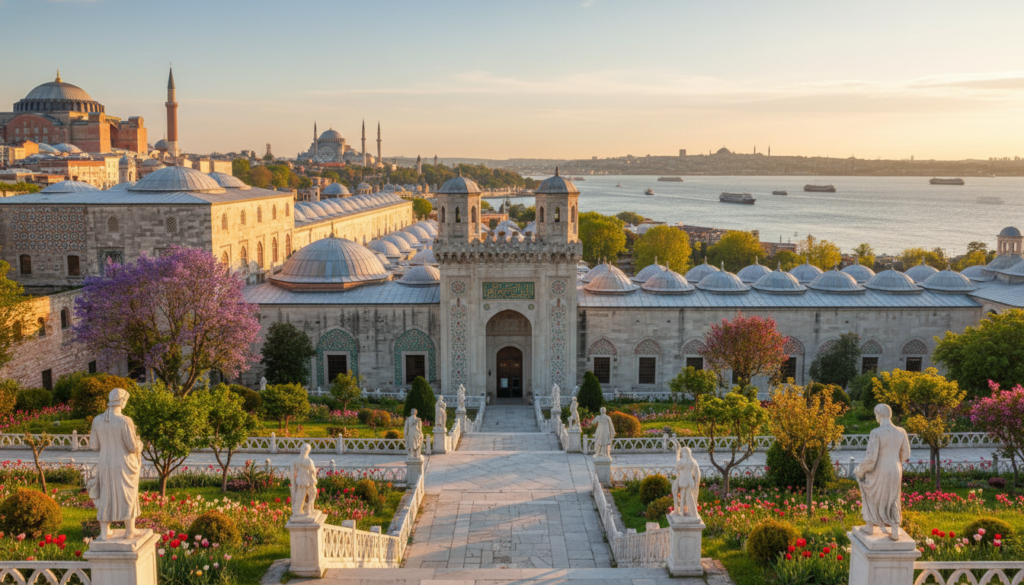
Sultanahmet Square and the Hippodrome: Where Empires Put on a Show
Walk the long spine of the old Hippodrome and you can almost hear crowd cheers from two millennia ago. This open place was the city’s stadium district—where chariot races, politics, and spectacle met.
The square is more than a plaza: it maps the same narrow track and amphitheater that once held emperors’ pageants. Stand at one end and picture the horses rounding the course; that mental image makes the ruins feel alive.
You can still trace that past through a few key monuments. Each one has its own story and art to notice.
- Obelisk of Theodosius (originally from Thutmose III, brought in 357 A.D.)
- Serpent Column — symbol of ancient victory and ritual
- Walled Obelisk and the German Fountain — later imperial markers
I use Sultanahmet Square as a meeting place and a breath-break between major sites. It’s outdoors, free, and compact—an easy win for first-time visitors and tourists who want a quick, rich dose of history.
Early morning gives the best light for photos; late afternoon carries the local rhythm and softer crowds.
Topkapi Palace: Inside the Ottoman Empire’s Power Center
Topkapi Palace unfolds across courtyards, halls, and small buildings—think of it as a complex, not a single monument. I recommend giving yourself plenty of time so you don’t rush past the treasury, the prayer rooms, or the famed harem.
This place was the administrative brain of the Ottoman Empire for centuries. What you see is less about one grand ballroom and more about how an empire ran: treasuries, private chambers, and layered service areas that kept power moving day to day.
Practical tips: go early, expect lines, and decide if a guided tour helps you. As of 2025 some tickets come as a combined option (Palace + Harem + Hagia Irene ≈ 2000 lira). Note: the complex is closed on Tuesdays—don’t plan this visit that day.
- Vibe: more restrained and Eastern than later, showy palaces.
- Pair it: stroll through nearby Gülhane Park afterward to rest without leaving the area.
| Closed | Combined Ticket | Recommended Time |
|---|---|---|
| Tuesday | ≈ 2000 lira (2025) | 2–3 hours |
“Treat Topkapi as a cluster of sites—each courtyard has a story worth pausing for.”
Basilica Cistern: The Underground Wonder Built for Water
What reads as a simple water cistern on paper becomes a cinematic, echoing chamber in person. Walk down and the air cools; light pools on rows of columns that vanish into shadow. It’s one of those places that sounds dull and then completely surprises you.
The atmosphere matters: dim lights, the soft drip of water, and wooden walkways that nudge you to slow down. Give yourself time—this is not a quick tick-off stop. Let the quiet sink in and listen to how the space changes your pace.
The things to watch for are specific. Look for the two famous Medusa heads tucked at the base of columns. They’re offset and oddly playful; you don’t want to miss them while framing photos.
- When to go: midday heat or wet weather—it’s cool and sheltered.
- Cost note: prices have fluctuated; check current fees before you go (recent listings showed around 1300 lira).
- Crowd strategy: consider pre-booking or a skip-the-line option during peak season.
“A surprising, almost cinematic refuge beneath the city—best savored slowly.”
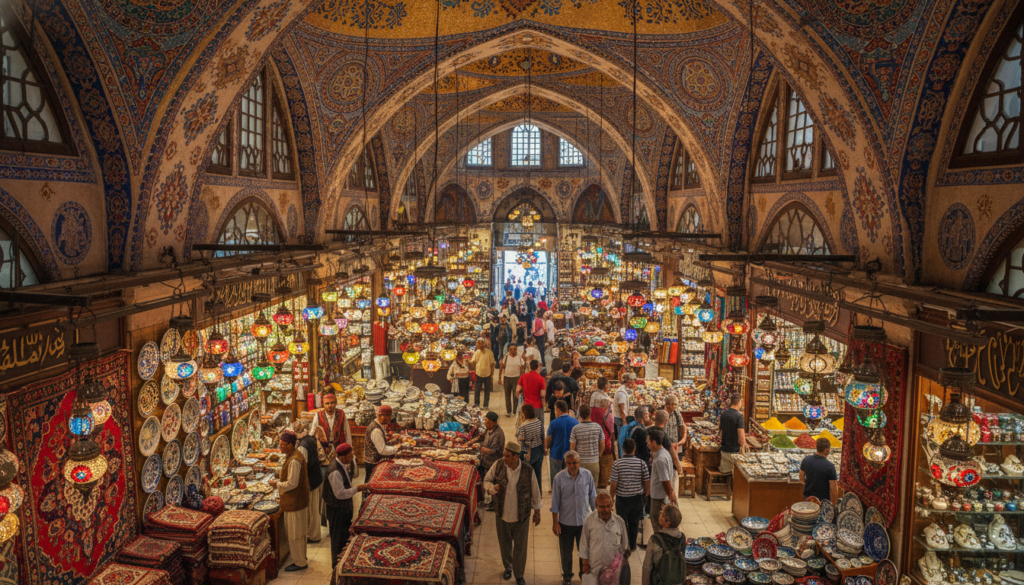
Grand Bazaar: A City Within a City (Even If You Don’t Shop)
The Grand Bazaar feels less like a market and more like a compact neighborhood you can roam for hours. Covered lanes fold into a maze of tiny courtyards, shops, and small mosques. You’ll hear bargaining, clink of tea glasses, and the murmur of locals and tourists moving together.
Step in for cultural immersion first; shopping comes second. The place is vivid—bursts of color, shelves of ceramics, and narrow streets that surprise around every corner. It’s also one of the best bad-weather plans: covered, cool, and full of life.
Shopping note: prices can skew higher for visitors. Haggling is normal—keep it friendly, smile, and only negotiate if you might buy. Low-risk buys include small textiles, boxed sweets, or simple ceramics; carpets and jewelry need more research.
Practical tip: wander without a goal, pause at a cafe, and let the bazaar’s rhythm do the work. You’ll leave with a sense of the city even if you bring home nothing but a memory.
“Even without spending, the Grand Bazaar teaches you the city’s pace and taste.”
Spice Bazaar: Colors, Aromas, and the Best Edible Souvenirs
The Spice Bazaar hits you before you see it—through scent and color, not signage. Known as Mısır Çarşısı, this covered market is where the city announces itself: spice, tea, dried fruit, and coffee.
For foodies, it’s a short, intense stop that rewards curious snacking. I like it as a smarter souvenir place: spices and lokum are light to pack and easy to share back home.
What to look for: saffron, sumac, pul biber, Turkish tea blends, and assorted lokum. Sample before you buy—that way you know what you’ll actually eat later.
Quick quality tip: shop where turnover looks high and jars are bright, not dusty. That usually means fresher spices and nuts trusted by locals.
Pair this visit after the Grand Bazaar if you want variety without repeating the same maze. It’s smaller, faster, and very snack-oriented—perfect for a late-afternoon wander or a quick stop between meals near nearby restaurants.
| Feature | What to buy | Why it works |
|---|---|---|
| Spices | Saffron, sumac, pul biber | Easy to pack; authentic flavors |
| Sweets | Lokum varieties, dried fruit | Shareable gifts for tourist friends |
| Tea & Coffee | Black tea blends, Turkish coffee | Good turnover; fresh roast options |
“You can taste a city by its markets; here the flavors do most of the talking.”
Galata Tower: Classic Skyline Views From a Medieval Landmark
The medieval stone of the Galata Tower offers a very different skyline moment than any glass observation deck. Built by the Genoese in 1348, the tower still reads as history you can touch.
I like it for first-timers because the payoff is immediate: step up and the whole city unfolds—roofs, the Bosphorus, and distant domes. That wide view gives you context fast; it helps you plan the rest of your day.
Expect crowds. Lines build mid-morning to early evening, so aim for early sunlight or a later visit for softer light and fewer people. The climb feels intimate—tight stairways and stone passageways—so it’s a different experience than modern decks.
- Hours & price: sources show roughly 8:30 a.m.–10 p.m. and about €30; verify current details before you go.
- Neighborhood: you’re on the european side and steps from lively streets, cafes, and small museums—don’t treat the tower as a standalone stop.
| Built | Why go | Best time |
|---|---|---|
| 1348 (Genoese) | Panoramic skyline views and medieval atmosphere | Early morning or late evening |
| Role | Historic lookout, occasional museum exhibits | Check hours; busy midday |
“A skyline moment that rewards a slow climb and a little patience.”
İstiklal Street and Taksim Square: Modern Istanbul in Full Volume
Istiklal Street hums like the city’s volume knob turned up—music, neon shopfronts, and a constant current of people. I like to start near the top and walk downhill so it feels like a relaxed stroll, not a workout.
The nostalgic red tram is charming, but it’s often crowded. Riding is fun for a short stretch; when it’s packed, walking can be faster and more rewarding. Daytime is best for architecture and people-watching.
At night the place changes: restaurants and bars pull a different crowd, and the whole avenue becomes louder and more playful. If you hate crowds, visit early for quiet light and empty sidewalks.
When you need a breather, duck into a side-street café to blend with locals and recharge. Taksim Square serves as a transit hub—useful for moving across the european side, but don’t expect it to be the most charming place you’ll see.
- Quick tips: start uphill, walk down; take the tram short distances only; split daytime sights and nightlife visits.
- Escape route: side streets and cafés offer calm without leaving the main flow.
| Feature | Best time | Why it matters |
|---|---|---|
| Istiklal Street energy | Night for nightlife; day for architecture | Shows modern city life and nightlife culture |
| Red tram | Off-peak or short rides | Nostalgia, but often crowded and slow |
| Taksim Square | Any time for transit | Major hub connecting the european side and transit lines |
“Istiklal feels alive; plan your time so you get both the sights and the moments between them.”
Dolmabahçe Palace: Peak Ottoman Opulence on the Bosphorus
Set on the Bosphorus, Dolmabahçe Palace is a late-Ottoman experiment in scale, sparkle, and European taste. I see it as the moment the empire leaned toward Western style and decided to make that choice loud and visible.
The interior rewards slow walking: gilded moldings, enormous crystal chandeliers (one was a gift from Queen Victoria), and vast ceremonial rooms that feel staged for statecraft. Take time to look up and along the walls; the details are why you stay longer than you planned.
Practical note: tickets are often sold in packages and recent ranges put combined options around 2000–2500 lira depending on included areas. Closure days vary by source—often Monday—so confirm hours before you go.
This palace works best paired with an outdoor moment. After a guided tour or museum stroll, step out along the waterfront. A Bosphorus walk or a short ferry ride gives the site context and stops the day from being all indoor opulence.
| Why visit | What to expect | Timing tip |
|---|---|---|
| European-style late-Ottoman design | Gilding, chandeliers, ceremonial halls | Allow 1.5–2.5 hours; confirm ticket package |
| Waterfront setting | Great photo spots and ferry links | Pair with a Bosphorus walk or short cruise |
| Cost | One of the pricier palaces to visit | Best for those who enjoy décor-heavy museums |
“Treat Dolmabahçe as a full sensory visit: look closely, then step outside and let the Bosphorus settle the glow.”
Ride the Ferry or Take a Bosphorus Cruise: The Essential Istanbul Experience
A trip on the water shows you the city’s shape far better than any map. A short ferry or a longer cruise folds neighborhoods, palaces, and mosques into a single, moving view.
I’ll keep it simple: the commuter ferry is budget-friendly and local. A crossing—Eminönü to Kadıköy—runs about 38.11 lira and takes ~20 minutes. Move fast for upper-deck seats if you want the classic simit-and-seagulls moment.
The alternative is a structured Bosphorus tour. These often include commentary, dinner, or evening entertainment and cost roughly €30–€40. They are tidy and scenic but less spontaneous.
Practical playbook: arrive a little early, aim for the upper deck, and bring a light layer—it gets windy on the water even on warm days.
- What you’ll see: waterfront palaces, minarets, and dense neighborhoods climbing hills.
- Why it matters: the ride helps you understand the city’s scale and rhythm.
- Use it well: take a ferry as a midday reset between heavy museum time.
| Option | Cost | Best for |
|---|---|---|
| Commuter ferry (Eminönü–Kadıköy) | ≈ 38.11 lira | Quick, local, scenic upper-deck views |
| Bosphorus cruise (day or dinner) | ≈ €30–€40 | Structured sight-seeing with commentary or dinner |
| Practical tip | — | Bring layers; go early for seats and light |
“If you do one non-negotiable thing, let it be getting out on the water.”
The Asian Side: Kadıköy, Moda, and a More Local Istanbul
Crossing the Bosphorus by ferry feels like stepping into a calmer, more ordinary chapter of the city. I recommend the asian side as a second chapter on longer trips—it’s cheaper to base yourself here and it shows daily life rather than staged sightseeing.
Start in Kadıköy and wander markets, bakeries, and lively streets. Drift toward Moda when you want quieter cafes and coastal air. The change of pace is immediate: fewer tour groups, more locals, and neighborhood places that reward slow wandering.
Food note: pick any small restaurant off the main drag and you’re likely to eat well. Menus feel honest rather than written for visitors, and that matters if you want a real meal over a staged one.
- Ferry over from Eminönü for an easy, scenic crossing.
- Let the day unfold—don’t over-schedule the side; the point is to roam.
- Enjoy simple pleasures: coffee, a seaside promenade, and the quieter rhythm.
“The other continent is literally a short ride away—feel the shift and savor it.”
| Area | Vibe | Why go |
|---|---|---|
| Kadıköy | Lively markets, bars | Everyday city life |
| Moda | Calmer cafés, coastline | Relaxed strolls and views |
| Practical | Cheaper stays | Great base for longer trips |
Panoramic Mosques and Golden Horn Views: Süleymaniye and Beyond
From Süleymaniye’s terrace the city spills toward the Golden Horn like a layered map. Step into the courtyard, breathe, and watch domes slide toward the water. The scale is calming compared with the busier historic core.
Süleymaniye is both a spiritual place and a practical viewpoint. Entry is free outside prayer times; dress modestly and plan your visit around worship hours so you can linger without interruption.
Start at the courtyard, then climb to the terrace. The payoff is clear: broad views that help you read the Golden Horn’s shape and why neighborhoods cluster the way they do.
If you want quieter mosques, walk toward Zeyrek Camii afterward. It’s less crowded and offers a more local pace while keeping those same harbor sightlines.
- Why go: beauty, breathing room, and geography that reveals how the city grew.
- Practical: free outside prayers; respect dress and silence.
| Site | Entry | Best for |
|---|---|---|
| Süleymaniye Mosque | Free (outside prayer) | Terrace panoramas over the Golden Horn |
| Zeyrek Camii | Free | Quiet views and local atmosphere |
| Why it matters | — | Helps you understand the city’s geography and layered history |
“Some of the best views are the ones where you can actually hear yourself think.”
Beyond the Tourist Core: Fortresses, Walls, and Underrated Museums
When you want depth over photos, head for the city’s defensive rings and tucked-away museums that reward slow attention.
Theodosian Walls are the clearest proof that Constantinople defended itself for centuries. Walk a surviving stretch and you’ll see why those walls shaped the city’s growth and its story.
Yedikule (Fortress of the Seven Towers) is a climb-and-imagine kind of place. It feels rugged and real; you can picture sieges and sea control better than you can from a guidebook.
Chora / Kariye houses Byzantine mosaics that rival larger museums for richness, though access can shift if parts serve worship. Expect fees around €20 at times; check before you go.
The Bosphorus fortresses—Rumelihisarı and Anadoluhisarı—are dramatic markers of strait control. Rumelihisarı may be closed for restoration some seasons, so verify current status if you plan a visit or a short tour by ferry.
- These sites take more transit effort—bus, taxi, or a longer ferry—so save them for extra days.
- Pick one deep-cut per day and let it feel like exploration, not an endurance test.
| Site | Why go | Practical tip |
|---|---|---|
| Theodosian Walls | See defensive engineering across centuries | Wear good shoes; parts are uneven |
| Yedikule | Fortress feel and city views | Best mid-morning to avoid heat |
| Chora / Kariye | Byzantine mosaics rival bigger museums | Check opening and prayer access; possible €20 fee |
| Rumelihisarı / Anadoluhisarı | Bosphorus control points and photo ops | Confirm restorations; see from a cruise if closed |
“These less-visited sites turn a postcard city into a place with layers—take your time and let the history settle.”
Conclusion
A short, well-paced visit can feel complete even though you can never truly finish a city like this. Spend focused days visiting the Hagia Sophia, the Blue Mosque, Topkapi Palace, and the Basilica Cistern, then let markets such as the Grand Bazaar and quiet viewpoints do the rest.
I recommend slowing for tea, a ferry deck moment, and a sunset near Galata Tower—those pauses turn a checklist into memory. Plan around prayer windows, closure days, and busy times so your days flow smoother.
Save this list, build a flexible itinerary, and give yourself permission to return. A first trip can cover the essentials, but the world here always offers another part to explore—so go, breathe, and come back.
FAQ
Q: What are the absolute must-see sights on a short visit?
A: For a first-time visit I recommend Hagia Sophia, the Blue Mosque, Topkapı Palace, and the Basilica Cistern—all are close in Sultanahmet and give you a fast, layered sense of the city’s Byzantine and Ottoman history. Add a Bosphorus ferry ride or a stop at the Galata Tower for skyline views if you have time.
Q: How much time should I set aside to explore Sultanahmet well?
A: Plan at least one full day to see the main landmarks there comfortably. Two days lets you move at a relaxed pace, visit a museum like Topkapı thoroughly, and enjoy breaks at nearby cafés; three days is ideal if you want to include a Bosphorus cruise or the Grand Bazaar without rushing.
Q: When is the best time of year and day to visit the key sites?
A: Spring (April–June) and fall (September–October) offer mild weather and thinner crowds. For major monuments, arrive early—right when sites open—or late afternoon to avoid peak tour groups and to catch golden-hour light over the Golden Horn or Bosphorus.
Q: Are there combined tickets or passes that save time and money?
A: Yes. The Museum Pass Istanbul can save you money if you plan to visit multiple museums and palaces over several days. For single sites, booking timed-entry tickets online for places like Topkapı or Hagia Sophia reduces queue time.
Q: Can I visit mosques like the Blue Mosque during prayer times?
A: Mosques remain active places of worship. Non-worshipping visitors are welcome outside of the five daily prayer times; arrivals should check local prayer schedules, dress modestly, and remove shoes when entering prayer areas.
Q: How do I get between the European and Asian sides and is it worth it?
A: Ferries run frequently across the Bosphorus and are an affordable, scenic option; they connect Karaköy, Eminönü, and Beşiktaş on the European side with Kadıköy and Üsküdar on the Asian shore. I think a short visit to Kadıköy or Moda gives you a more local, relaxed contrast to the historic core and is absolutely worth it.
Q: Is the Grand Bazaar only for shopping, or is there more to see?
A: The Grand Bazaar is a living historical district—yes, it’s a shopper’s paradise, but it’s also an atmospheric maze of architecture, centuries-old caravanserai passages, and artisans. Even without buying, wandering its lanes and stopping for tea reveals a lot about local craft traditions and daily life.
Q: Are guided tours necessary, or can I explore these sites on my own?
A: Guided tours add rich context—stories about the Ottoman court at Topkapı or the Byzantine engineering of the Basilica Cistern that you might miss alone. But you can still have a satisfying visit independently if you prepare a short reading list or download audio guides for key sites.
Q: What should I know about safety, tipping, and common tourist scams?
A: Istanbul is generally safe for travelers; use normal street-smart precautions. Tipping is customary in restaurants (around 10%), and for guides or drivers a small extra amount is appreciated. Watch out for overly persistent touts near major sites—firmly decline and move on. Always agree on taxi fares or use the meter/ride apps.
Q: How can I experience authentic local food without falling into tourist traps?
A: Head to neighborhoods like Kadıköy or Karaköy for markets and midrange eateries where locals eat; try çorba (soup), mezze plates, and fish restaurants by the Bosphorus. Ask shopkeepers or your guesthouse host for their favorite spots—local recommendations beat guidebook lists for authenticity.
Q: Which lesser-known museums or sites are worth visiting beyond the core highlights?
A: The Museum of Turkish and Islamic Arts, the Rahmi M. Koç Museum, and the Istanbul Archaeology Museums offer quieter, insightful experiences. For history lovers, sections of the city walls and Rumeli Fortress provide atmosphere and fewer crowds than central landmarks.
Q: Is it easy to get around on public transport, and what should I buy for fares?
A: Public transport is efficient—trams, metros, ferries, and buses cover most places. Pick up an Istanbulkart (reloadable transit card) at kiosks; it works across modes and saves money compared with single tickets.
Q: Can I visit religious or historic sites if I have mobility limitations?
A: Many major museums and newer parts of palaces offer ramps or elevators, but some historic sites and older buildings have uneven floors and steps. Check accessibility info before you go, and consider guided services or contacting sites in advance to arrange assistance.
Q: What nearby day trips complement a stay focused on the historic core?
A: Take a short trip to the Princes’ Islands for car-free streets and seaside cafés, or visit the modern neighborhoods of Beyoğlu and Galata for art galleries and independent shops. A longer day can take you to the ancient walls or the quieter museums dotted across the European shore.