
Can one short trip truly capture a city that bridges two continents?
You arrive with limited days and a long list of must-sees. Istanbul spans centuries, from Roman and Byzantine ruins to Ottoman palaces. That scale means planning matters if you want to use your time well.
This guide is aimed at your first time here. It focuses on the most time-efficient landmarks and a few under-the-radar stops. You’ll learn how to pair sights by neighborhood so you avoid backtracking across the Bosphorus.
Expect clear notes on timing, what is free versus ticketed, and what to book ahead. You’ll also get straightforward tips to match your goals—deep history, iconic photos, lively shopping streets, or a quick ferry ride that shows the waterfront.
Key Takeaways
- Plan by neighborhood to save travel time across the city.
- Prioritize a mix of landmark highlights and a few hidden gems.
- Know which sites need tickets and which are free.
- Book high-demand entries ahead for peak-season trips.
- Choose clusters: Sultanahmet, Beyoğlu/Taksim, and Bosphorus waterfront.
How to Use This Guide to Istanbul’s Main Attractions
Decide your base before you book: it shapes how you spend each day. This guide will help you pick lodging and stack visits so you waste less time traveling between places.
Pick Your Base: Sultanahmet vs Taksim/Beyoğlu vs the Asian Side
Stay in Sultanahmet for quiet, historic walks and easy access to the core main attractions.
Choose Taksim/Beyoğlu for nightlife, restaurants, and modern streets on the european side.
Opt for the asian side if you want local pace, lower prices, and a longer-stay vibe.
Build Your Days by Neighborhood to Cut Transit Time
Group sites by neighborhood to save time, especially during peak hours. A simple two-hub plan works well: Sultanahmet for history days and Beyoğlu/Golden Horn for views and modern streets.
- Start big-ticket sites early, then spend afternoons wandering markets and squares.
- Use short walks or a single transit ride to link clustered places.
What’s Free vs Ticketed: Mosques, Bazaars, and Museums
Most working mosques, public squares, and bazaars are free. Major palaces, cisterns, and national museums usually need tickets.
The Museum Pass covers five days and helps only if you plan several paid entries. Otherwise buy individual tickets and book peak slots in advance.
“Book the highest-demand entry early, then fill the rest of your day with free streets and markets.”
Tourist attractions in istanbul You Should Prioritize on a First Trip
Focus on a few headline sites on day one to avoid rushing through everything.
Start mornings with the major icons. Hagia Sophia and Topkapi draw long lines, so arrive early to save time and energy.
Use afternoons for bazaars, scenic walks, and neighborhood food stops. That rhythm balances busy entries with relaxed wandering.
Plan for crowds: aim for weekday visits and the first opening hour to beat the worst queues. Midday and weekends get far busier.
Mosque basics: working mosques close to visitors during prayer windows (roughly 45 minutes before and 30 minutes after prayer). Fridays can be more restrictive at midday.
Dress modestly, keep quiet, and avoid flash photography. Carry a simple scarf so you can enter a mosque without scrambling.
“You’re visiting living religious sites and high-demand landmarks, so timing and respect both matter.”
| Priority | Best Time | Quick Note |
|---|---|---|
| Hagia Sophia / Topkapi | First hour after opening | Buy tickets ahead when possible |
| Blue Mosque | Mid-morning (outside prayer times) | Have scarf ready for women |
| Grand Bazaar / Spice Market | Late afternoon | Good for food and smaller things istanbul shoppers like |
| Scenic walks | Sunset or early evening | Relaxing end to a packed day |
Hagia Sophia Mosque: Istanbul’s Icon of Layered History
This landmark compresses nearly two millennia of regional change into one building.
What you’re seeing: Built in 537 by Emperor Justinian I, the Hagia Sophia began as a Byzantine cathedral, became an Ottoman mosque after 1453, and was later a museum before reconversion to an active mosque.
What to look at
Look for Christian mosaics near giant Islamic calligraphy panels. That contrast tells the layered history at a glance.
Visitor access today
Non-Muslim visitors and tourists are limited to upper and second-floor viewing areas while main prayer spaces remain reserved. Respectful dress and quiet voices are required. Plan around prayer hours to avoid closed sections.
Ways to skip lines
Go early or buy a VIP pass, Istanbul Welcome Card, or combo tickets that bundle Topkapi Palace and the Basilica Cistern. A short, nearby museum-style audio/video experience takes about 20 minutes if you want the history fast.
“Arrive before opening, use a city pass if you plan multiple paid sites, and expect some areas to be worship-only.”
Blue Mosque (Sultan Ahmet Mosque): What to Expect During Your Visit
The Blue Mosque greets you with six minarets, a vast prayer hall, and clear rules to follow.
Why it stands out: The domes and stacked arches create a dramatic interior designed to inspire. That sight is paired with active worship, so you’ll share the space with local people during many parts of the day.
Timing your visit around daily prayers
The mosque closes to visitors for each of its six daily prayers—usually about 45 minutes before and 30 minutes after prayer time. Aim for the gaps between these windows and avoid Friday midday when communal worship peaks.
What to wear and how to behave
At the door you take shoes off and step onto the carpeted prayer area. Dress modestly; women should cover hair. Keep voices low and avoid walking through active worship areas.
Packing tip: Keep a light scarf and a pair of socks in your day bag so you’re always prepared for the entrance rules.
- Free entry makes this a high-impact stop next to other Sultanahmet sites.
- Take discreet photos; no flash and don’t block pathways.
- Move clockwise along visitor routes and give worshippers space.
“Plan around prayer hours, pack a scarf, and let the architecture do the talking.”
Sultanahmet Square and the Hippodrome: Obelisks, Fountains, and Photo Spots
Sultanahmet Square serves as a compact hub where several ancient monuments sit within a short walk.
Why it matters for your route: this flat, open area groups key places so you can move between sites without transit. That makes it the easiest walk-between zone for first-time sightseeing logistics.
The long plaza sits where the Roman and Byzantine Hippodrome once hosted chariot races. Today the layout preserves that sense of a public course, helping you understand the city’s layered history.
Egyptian Obelisk and Roman-era legacy
The Egyptian Obelisk of Thutmose III dates to the 1400s BC and was moved to Constantinople in 357 AD. It is a tangible link to ancient Egypt and Roman Constantinople and a striking part of the square’s story.
German Fountain and the quick monument loop
The ornate German Fountain and several smaller markers form a tight, photo-friendly circuit you can complete in 15–30 minutes. No tickets, no queues—just easy photos and short stops.
- No entrance fees here—perfect to pair with Hagia Sophia and the Blue Mosque.
- Use the square as your meeting point or the start of a walking route across the old quarter.
A short loop around Sultanahmet Square gives you a dense slice of the city’s layered past.
Topkapi Palace: Inside the Ottoman Empire’s Seat of Power
Topkapi unfolds as a series of courtyards, each revealing how the Ottoman court lived and governed.
What Topkapi is: This is not one grand room but a sprawling complex that served as the main palace for roughly 400 years of the ottoman empire. The site houses national treasures, sacred relics, and a living snapshot of court life.
What to see in the complex and courtyards
Prioritize the central courtyards, viewpoint terraces, and the main museum holdings. These areas show ceremony, daily service, and the displays that draw most visitors.
Harem access and ticket notes
The Harem often requires a separate ticket or a combined pass. Standard tickets cover the main route; combined or VIP options include Harem access and shorter queues at the entrance.
Practical planning
Expect this palace stop to take half a day if you explore fully. It is commonly closed on Tuesday, so check hours before you go. Arrive at opening and use pre-purchased passes to reduce time spent waiting in lines.
Pair a focused Topkapi visit with a relaxed walk through Gülhane Park just outside the exit.
Basilica Cistern: Istanbul’s Most Cinematic Underground Spot
The basilica cistern is a 6th-century reservoir built under Justinian that feels more like a staged set than a typical museum room.
Why visit: it’s the most atmospheric, cinematic underground place on the Sultanahmet circuit and a perfect mid-day pause.
What to look for: the cavern holds 336 columns and two famed Medusa-head bases. These carved stones are the highlights you should stop at and photograph slowly.
Cool relief and crowd strategy
The cistern stays naturally cool, so it’s an ideal place to escape summer heat and busy seasons. The low light and damp air create a slow, photo-friendly walk, so plan camera settings for low-light shots.
“Go early or reserve a timed entrance to keep your schedule running smoothly.”
- Go at opening or book timed/advance admission when available.
- Pair this stop with Hagia Sophia and the Blue Mosque for a short, efficient loop.
- Expect dim paths—move slowly and enjoy the columns that line every route.
| Feature | Why it matters | Practical tip |
|---|---|---|
| 336 columns | Gives the cistern its cinematic, forest-like look | Allow 30–45 minutes for a relaxed visit |
| Medusa heads | Iconic bases to photograph and study | Find them low to the ground—watch your step |
| Cool interior | Great escape from midday heat | Visit midday for a comfortable break |
| Entrance & hours | Regular daytime hours; can get crowded | Buy tickets ahead to save time |
Grand Bazaar and Spice Bazaar: Shopping Streets, Souvenirs, and Turkish Delight
Two covered markets sit side by side, each offering a different kind of street-level discovery.
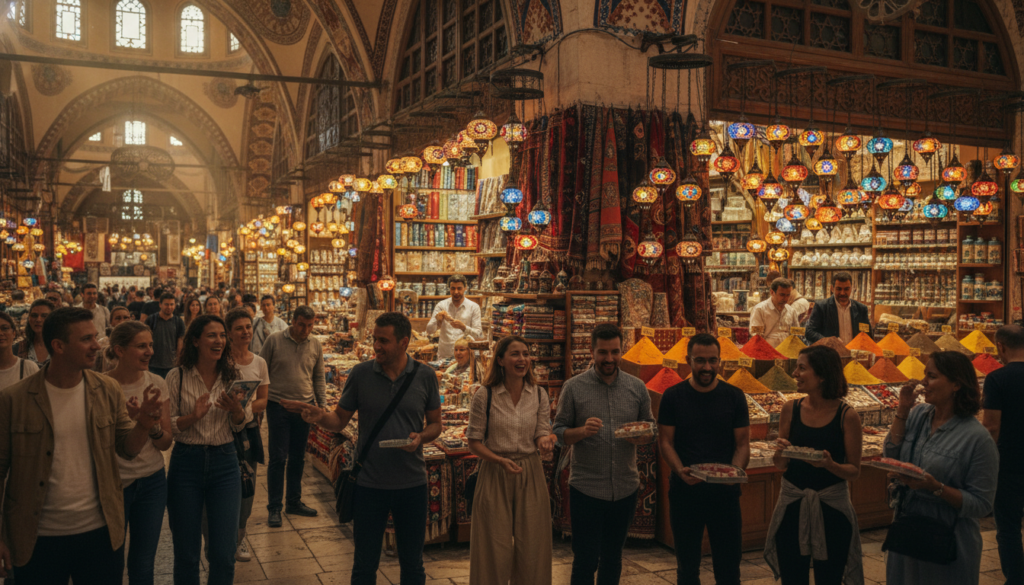
The Grand Bazaar is a vast indoor maze of shops where haggling is expected and the pace feels lively. Go with a short buy list, compare three or four stalls, and start your offer below the first price. Ask for a final price and walk—vendors often call you back with better terms.
Smart buys at the Spice Bazaar and Grand Bazaar
The Spice Bazaar shines for edible souvenirs. Pick sealed spice blends, tea tins, and boxed turkish delight that travel well. At the Grand Bazaar, aim for durable leather, brassware, and small textiles rather than fragile glass.
Spotting inflated pricing
- Opening offers are often 2–4x the normal price—expect negotiation.
- Pressure sales and staged scarcity are common—step away to test persistence.
- Pay attention to packaging and ask if export receipts are available.
Quick bites and people-watching
When you need a break, grab a simit or a small pastry at a nearby street stall. Enjoy the architecture and the people—this place is as much social theater as it is shopping. Even if you buy nothing, the streets here teach you a lot about local life and food.
“Treat the bazaars as both market and cultural stop; go with a list, haggle politely, and savor the flavors.”
Galata Tower and the Golden Horn Views: Your Best Observation Deck Moments
Perched above winding lanes, the Galata Tower offers one of the city’s clearest panoramic payoffs.
Why it earns a spot: The galata tower, built by the Genoese in 1348, is a compact route to wide skylines. From the observation deck you get a sweeping view over rooftops, water, and bridges.
Best time for light and fewer crowds
Go early for short lines or just before sunset for warmer light. The observation deck fills fast at peak hours, so book a slot if available.
Pairing it with a Golden Horn walk
After the tower, follow the slope toward the golden horn waterfront. A short walk along the bridges yields strong cityscape photos and relaxed café stops.
“Prioritize golden-hour angles and bring patience for lines.”
- Plan for lines at peak time; arrive early to save minutes.
- Favor sunset for the best view and fewer mid-day haze issues.
- Wander nearby streets afterward for cafés and dessert stops.
Decide if it’s worth it: must-do for skyline photos, optional if you avoid heights or queues.
İstiklal Street and Taksim Square: Modern Istanbul on Foot
İstiklal Caddesi compresses a wide range of city scenes into a single pedestrian spine.
Walk the main block to see cafés, shops, and lively people. This is a top place to feel local rhythms and quick cultural shifts.
What to do along the main corridor (and what to skip when packed)
Plan one or two anchor stops—a café, a bookstore, or a gallery—to avoid wandering aimlessly when the crowd surges. If it gets dense, slip into side lanes for calmer streets and small boutiques.
Riding the Tünel and spotting the nostalgic tram
The Tünel is a short, historic funicular that saves your legs on the hill. The vintage tram runs the length of the avenue; it’s scenic but often full, so see it, don’t plan your schedule around it.
Flower Passage (Çiçek Pasajı) for restaurants and architecture
Stop at the Flower Passage for classic architecture and sit-down restaurants when you need a break. The arcade is a reliable place for good food and less crowded seating.
- Set expectations: İstiklal is busy most evenings and weekends.
- When crowded: use side streets and set a clear meet-up point.
- Safety note: keep valuables secure; the people flow can move fast.
“Pick a couple of fixed stops and let the side alleys reveal quieter corners.”
Bosphorus Experiences: Ferries, Cruises, and Waterfront Neighborhoods
Seeing the city from water reshapes how you understand its neighborhoods and skyline.
The strait defines the city’s shape and pace. A short ferry or a longer cruise gives you iconic views and a clear sense of how the european side and asian side face each other.
Take the commuter ferry like a local
Board a commuter ferry from Eminönü to Kadıköy for about 20 minutes. The reported 2025 fare is ~38.11 lira, though prices may change.
Move quickly to upper-deck seating for wind and unobstructed view. Treat this crossing as a simple, scenic ride rather than only transport.
When a Bosphorus cruise is worth it for your trip
A full Bosphorus cruise is worth it if you want wide skyline photos, waterfront fortresses, and a relaxed reset from walking. Choose a timed cruise for sunset light and calmer water.
Ortaköy and the bridge postcard view
Ortaköy Mosque sits by the bridge and makes a classic postcard place for sunset shots. This spot is crowded but rewarding for bridge-framed photos.
Maiden’s Tower: shore vs island
From the shoreline the Maiden’s Tower is a striking landmark and perfect for layered skyline shots. Visiting by boat changes the feel—you get closer angles, a small island visit, and a different perspective on the same place.
“Board early, pick an upper deck, and let the water show you parts of the city you can’t reach by foot.”
Dolmabahçe Palace: Europe-Style Opulence on the Water
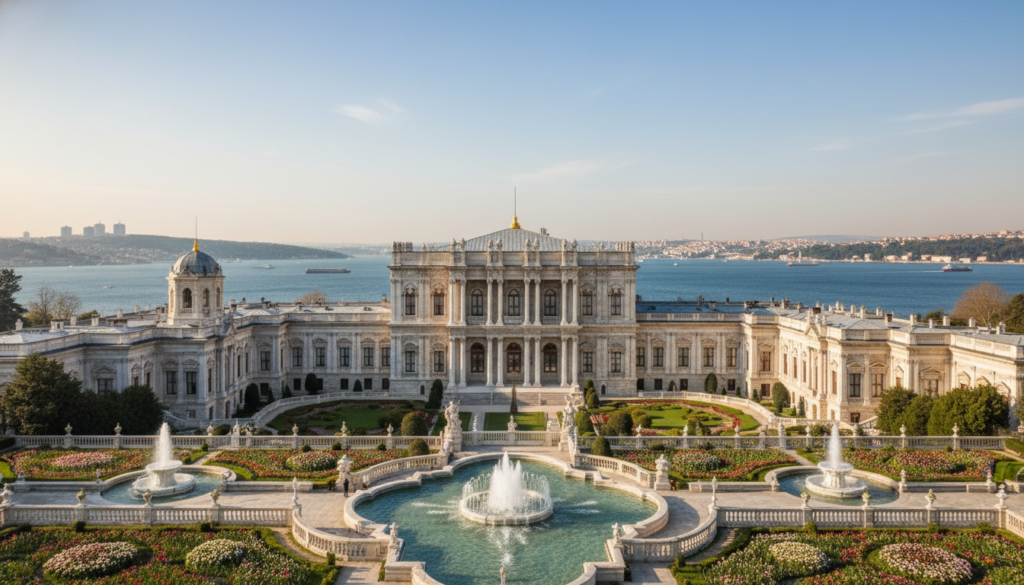
If Topkapi Palace feels rooted in older court life, dolmabahçe palace offers a different late‑Ottoman show: European design, grand state rooms, and a strong waterfront presence.
Why it contrasts with Topkapi Palace
Dolmabahçe Palace was built in the 19th century as a modern, European‑styled seat of power. Where Topkapi Palace spreads through courtyards, Dolmabahçe stacks formal salons, crystal chandeliers, and carved woodwork.
What you typically see
You will tour major interior rooms, formal state sections, and the gardens that lead to the Bosphorus. A small museum area displays imperial objects and decorative arts.
Visiting notes and timing
Entry is controlled by a timed system, so the entrance often requires a ticketed slot. Check visiting hours before you go and arrive early to avoid lines. Peak season fills quickly.
“This palace rewards anyone who loves interiors, design, and seaside drama.”
Decide if it fits your route: choose Dolmabahçe Palace when you want ornate interiors and a memorable waterfront view to contrast with your Topkapi Palace visit.
Walls, Fortresses, and Big-View History Stops
These massive ramparts and coastal towers give a clear sense of how the city guarded its waterways.
Why these places matter: they reveal the defensive scale of Constantinople and explain the strategic story that shaped this part of the city over many years.
The Theodosian Walls sit well outside the main square. Reaching them usually requires a bus or an Uber. Plan this as a half-day visit rather than a quick add-on.
Theodosian Walls: how to visit this off-the-main-route landmark
Walk sections of the walls, read the plaques, and imagine the scale that kept the city safe. Wear sturdy shoes and expect uneven ground.
Rumelihisarı and Anadoluhisarı: best seen by boat
For the cleanest photos and the best perspective, view these two forts from the water. Rumelihisarı sits on the European side; Anadoluhisarı anchors the Asian side. A Bosphorus crossing or short cruise frames both clearly.
Yedikule (Fortress of the Seven Towers): climbing and viewpoints
Yedikule anchors the wall system and is the best place to climb for a broad sea view. You can walk the ramparts, look toward the old sea routes, and feel why this place was vital for trade and defense.
- Practical note: allow extra travel time and treat these sites as a focused history stop.
- Itinerary logic: add this section after you cover Sultanahmet icons if you want deeper, less-crowded history.
- Safety/access: check openings before you go—restoration can change access—and wear good shoes.
| Site | Best Way to See | Suggested Time |
|---|---|---|
| Theodosian Walls | Walk sections by guided route or self-guided bus stop | Half-day |
| Rumelihisarı | From a Bosphorus boat for full exterior view | 1–2 hours (boat + photos) |
| Anadoluhisarı | From the water on the Asian side for clean lines | 1 hour (photo stop) |
| Yedikule | Climb ramparts and explore the fortress interior | 1–2 hours |
“These fortifications show how coastal defense shaped both the skyline and the city’s fate.”
Museums and Under-the-Radar History Spots Worth Your Time
After the headline sites, quieter museums offer deep context and fewer crowds. These places act as an “upgrade layer” to the main route and reward slow walking and close reading.
Istanbul Archaeological Museum: standout artifacts and how long to budget
Plan 2–3 hours for this multi-building collection. The displays include the Sidon sarcophagi and ancient objects that broaden your view beyond Ottoman-era rooms. Allow extra time if you like to read labels and study the case notes.
Saint Savior in Chora: Byzantine mosaics without the biggest crowds
Chora is a detour worth the walk. Its mosaics and frescoes rank among the world’s best for Byzantine art. Visitor access is generally during set hours (often ~9am–5/6pm), and some prayer-related closures can apply, so check before you go.
Museum of the Great Palace Mosaics: an easy add-on near Sultanahmet
This compact site fits neatly into a Sultanahmet loop. It’s a quick, high-value stop to see palace-era mosaic panels without a long visit.
Military History Museum: Janissary orchestra timing and highlights
The military collection is more than uniforms. If you can time your visit for a Janissary band performance, you get a live moment that brings history to life. Confirm performance times and entrance rules before you plan.
“These lesser-known museums add depth and calm to a busy sightseeing schedule.”
Parks, Islands, and Scenic Breaks from the Busy Streets
When the streets start to feel relentless, plan a green pause to reset your energy. Sightseeing here is walking-heavy, so build pauses into your route to stay fresh and enjoy each place you visit.
Gülhane Park: the easiest green escape near Topkapi
Gülhane Park sits adjacent to Topkapi Palace and is the most convenient spot for a short rest. Walk under trees, sip a coffee, and let the gardens slow your pace between museum visits.
Princes’ Islands (Adalar): a full-day nature break
Treat the Princes’ Islands as a true day escape. Factor ferry time, a relaxed lunch, and slow cycling or a horse-carriage ride. The islands give a different side of the city and a welcome contrast to busy streets.
Pierre Loti Hill: Golden Horn panoramas on a slower afternoon
Pierre Loti Hill is an ideal afternoon exhale. Take the cable car or walk up for sweeping Golden Horn view and quieter photo spots. It’s a good choice when you want wide vistas without the largest crowds.
“Put parks and islands after a museum-heavy day to balance energy and reclaim time for slower moments.”
Where to Eat Near the Attractions: Restaurants, Street Food, and Views
Treat meals as part of your plan, not an afterthought. Build one longer sit-down meal into each day and keep other bites flexible so you can adapt to lines, closures, and sudden delays.
Terrace dining with a view: For a relaxed evening, book Balkon Restaurant & Bar. It’s a solid place to sit, rest your legs, and enjoy a panorama that rewards a full meal rather than a rushed plate.
Where to try market snacks and simit
Carry small cash for simit, roasted chestnuts, and market samples. These street staples tide you over between major stops and let you eat without losing sightseeing time.
Buying Turkish delight and smart snack shopping
When you want get good turkish delight, compare a few stalls, ask for sealed packaging, and buy from well-reviewed sellers. Choose travel-friendly boxes to avoid crushed sweets on the move.
Planning meals around museum hours and walking days
Check museum hours and mosque prayer windows before you sit down. Use shorter, portable snacks during hours when sites are open, and save a longer meal for predictable downtime.
“Plan food like a support system: one long meal, quick bites, and a flexible mindset.”
Conclusion
Finish with a simple plan: see Byzantium, explore the Ottoman palaces, and walk a modern neighborhood for balance.
Group sights by neighborhood, start early each day, and protect your schedule from long entrance lines. Book the few timed tickets you need, especially for Topkapi Palace and Galata Tower, and lock a ferry or short cruise for a wide view of the city.
Respect every mosque as an active house of worship—plan around prayer hours and follow modesty rules. Pick your base, map your days, and pre-book the busiest entries so your first visit feels complete.
Next step: choose where to stay, set a rough daily route, and save a short list for your next trip—there are always more streets, museums, and palaces to return for.
FAQ
What are the must-see landmarks for a first visit?
Focus on Hagia Sophia, the Blue Mosque (Sultan Ahmet), Topkapi Palace, and the Basilica Cistern. These sites sit close together in Sultanahmet, letting you cover major history and architecture in a single day if you start early.
How should you pick a base neighborhood—Sultanahmet, Taksim/Beyoğlu, or the Asian side?
Choose Sultanahmet for classic sights and short museum walks. Pick Taksim/Beyoğlu for nightlife, İstiklal Street, and easy tram or funicular links. Stay on the Asian side (Kadıköy or Üsküdar) for a more local feel and convenient ferries to the European shore.
When is the best time of day to visit popular sites to avoid crowds?
Arrive at major sites right at opening or late afternoon before closing. Weekdays are quieter than weekends. For rooftops and the Galata Tower, go at golden hour for light and views—expect more people at sunset.
Are mosques free to enter and what should you wear?
Most mosques are free for visitors, but dress modestly: cover shoulders and knees; women should bring a scarf for head coverage. Avoid entering during the five daily prayer times; signs usually note closure windows.
How can you skip lines at Hagia Sophia, Topkapi Palace, or museums?
Buy timed tickets online, use a museum pass (Istanbul Museum Pass) for multiple entries, or join a guided tour that includes priority entry. Combo tickets and official apps can also save time.
What should you not miss inside the Basilica Cistern?
Look for the Medusa head column bases and the atmospheric lighting along the raised walkways. The cistern is cool and calm—an excellent break during hot or crowded days.
How do you get from Europe to the Asian side and when should you take the ferry?
Use the regular commuter ferries from Eminönü or Karaköy to Kadıköy and Üsküdar—an inexpensive, scenic commute. Take a daytime ferry for views; evening crossings give you illuminated skyline photos.
What’s the best strategy for shopping at the Grand Bazaar and Spice Bazaar?
At the Grand Bazaar, browse first, then negotiate—start lower than the asking price and be polite. At the Spice Bazaar, sample teas, lokum (Turkish delight), and spices before buying; buy sealed, labeled products for travel ease.
How much time should you plan for Topkapi Palace and the Harem?
Allocate at least three hours for the palace complex and another 45–90 minutes for the Harem, which often requires a separate ticket and draws lines during peak season.
When is Dolmabahçe Palace worth a visit compared to Topkapi?
Visit Dolmabahçe if you want grand European-style interiors, crystal chandeliers, and seaside gardens. Topkapi shows more imperial daily life and Ottoman artifacts—seeing both offers a fuller picture of history.
How can you combine Galata Tower with a Golden Horn walk for photos?
Visit Galata Tower for city panoramas, then walk or tram toward the Galata Bridge and down the Golden Horn waterfront at sunset for layered skyline shots and quieter viewpoints.
What are smart meal planning tips near major sites?
Eat earlier or later than peak lunch hours to avoid queues; try simit or street snacks between museums. Reserve terrace restaurants if you want views, and check museum hours so meals don’t conflict with timed entries.
Are there practical notes about hours, weekly closures, and prayer times?
Yes—many museums close one weekday (often Monday or Tuesday) and some sites adjust hours seasonally. Mosques close briefly for prayers. Check official sites or local listings the day before you go.
What’s the easiest green escape near the main sites when you need a break?
Gülhane Park, adjacent to Topkapi Palace, offers shady paths and benches. For a longer retreat, plan a half‑day trip to the Princes’ Islands (Adalar) for car‑free streets and seaside cafes.
Which viewpoints give the best panorama of the Bosphorus and city?
Pierre Loti Hill overlooks the Golden Horn for a quieter panorama; Ortaköy by the Bosphorus Bridge and the Galata Tower area provide iconic postcard scenes. A Bosphorus ferry ride adds moving perspectives.