
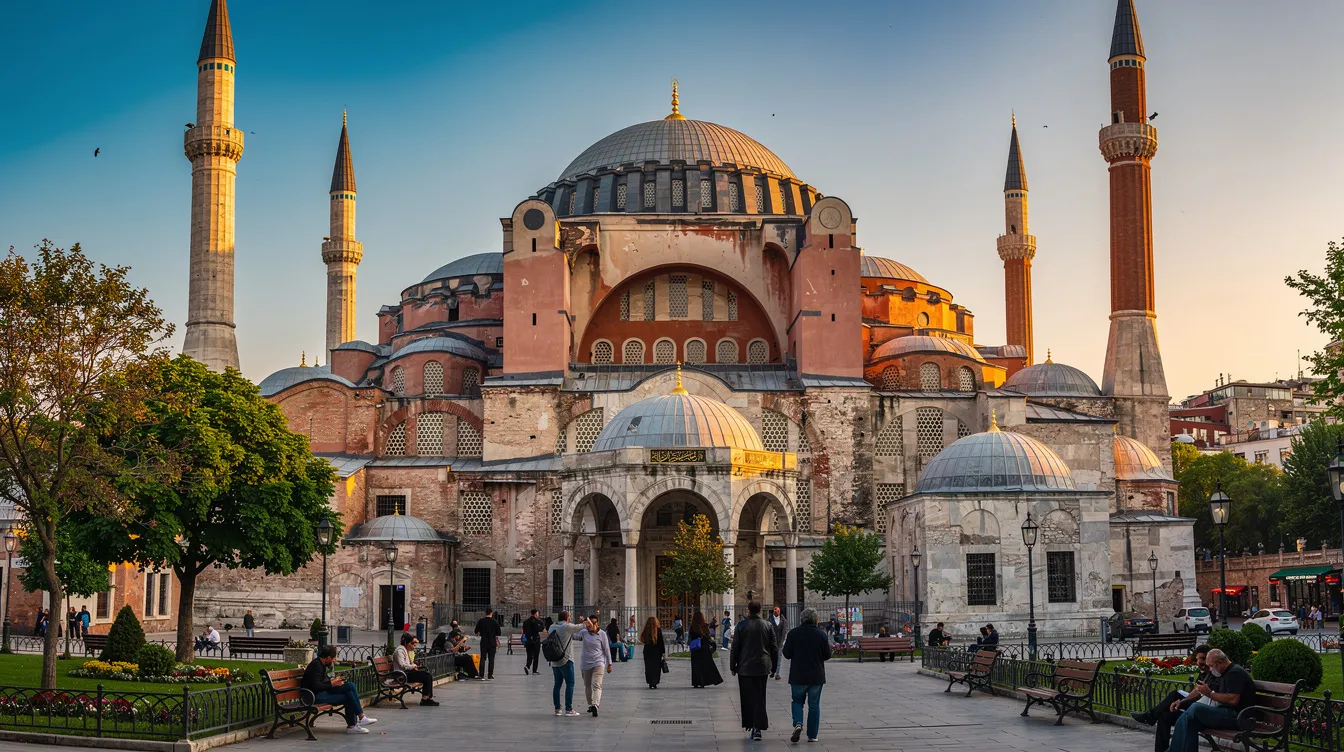
Hagia Sophia (Ayasofya), located in Istanbul’s historic Sultanahmet district, is one of the world’s most iconic landmarks. Originally constructed as the Hagia Sophia church—a cathedral—in 537 AD under Byzantine Emperor Justinian I, it served as the principal church of the Byzantine Empire for nearly a millennium. After the Ottoman conquest of Constantinople in 1453, Sultan Mehmed II converted Hagia Sophia into a mosque, marking its transition from a Christian cathedral to an Islamic place of worship. Hagia Sophia has undergone several transformations throughout its history: from church to mosque, to museum in 1935, and reverted to an active mosque in 2020, reflecting Turkey’s changing political and cultural landscape. Hagia Sophia considered a symbol of Istanbul’s multicultural history and architectural brilliance, features an immense dome, shimmering mosaics, and a blend of Byzantine and Ottoman influences. Recognized as a UNESCO World Heritage Site since 1985, Hagia Sophia holds deep significance for both Christianity and Islam and continues to function as an active mosque, hosting regular prayers and religious ceremonies alongside its role as a cultural and historical monument.
Visitors can choose from various ticket options, including guided tours and combo passes, to enrich their experience. This guide helps tourists prepare for a rewarding visit to this architectural masterpiece with nearly 1,500 years of history.
Visitor Information
Location
- Address: Sultanahmet, Ayasofya Meydanı No: 1, Fatih, Istanbul, Turkey. Hagia Sophia is located in the Sultan Ahmet area of Istanbul.
- At the heart of Istanbul’s Old City, it faces the Blue Mosque and sits close to Topkapı Palace, Basilica Cistern, and Hippodrome Square.
- The surrounding Sultanahmet district is filled with boutique hotels, cafes, and artisan shops, making it a perfect area to explore on foot before or after your visit. Spending time here allows travelers to immerse themselves in the atmosphere of Istanbul’s historic core. For those looking to see more of the city, the iconic Galata Tower is also nearby, offering panoramic views of Istanbul and standing as another must-see landmark.
- It is easy to reach Hagia Sophia from various parts of Istanbul, with convenient public transportation and clear directions available for visitors.
How to Get There
- Tram: Use the T1 Tram Line to Sultanahmet stop; Hagia Sophia is a 5-minute walk. The tram is the most efficient way to reach the Old City.
- Bus/Shuttle: City buses and airport shuttles stop nearby. Hop-on hop-off buses also include Hagia Sophia on their routes, making it convenient for tourists exploring multiple sites.
- On Foot: If you are staying in Sultanahmet, most key attractions are within walking distance. The walk itself is scenic and filled with street vendors and local flavors.
- Taxi/Ride Apps: Taxis and ride-hailing services like Uber or BiTaksi are widely available but expect heavy traffic during peak times. Be aware of pedestrian-only zones where cars are not allowed.
Opening Hours
- Open daily from 09:00 to 19:30.
- Friday restrictions: Closed to tourists during midday prayers (12:30–14:30).
- Prayer times: Some sections close five times daily during Islamic prayers. The call to prayer adds to the spiritual atmosphere.
- Best times to visit: Early morning right at opening or late afternoon for smaller crowds and better light for photography. During sunrise or sunset, the building glows beautifully in golden tones.
Entrance Fee & Tickets
- Foreign visitors: €25 (Euro), with the exchange rate applied according to management policies at the ticket booth.
- Entrance is free for children under 8, provided they are accompanied by an adult and present a valid passport or ID card.
- Tickets grant access to the upper gallery, the best vantage point for mosaics and architecture.
- Ticket options: Tickets can be purchased at the ticket booth located across from the Sultan Ahmed III Fountain, or online. Various ticket options are available, including Hagia Sophia skip and Sophia skip the line tickets, which offer seamless, fast-entry access, help avoid queues, and enhance the visitor experience.
- Museum Pass Istanbul does not apply to Hagia Sophia.
Visitor Tips
- Dress code: Visitors must dress modestly when entering Hagia Sophia. Cover shoulders and knees; women may need a headscarf. Scarves are sometimes available at the entrance.
- The ground floor is strictly reserved for Muslim worshippers; non-Muslim visitors are only allowed access to the second-floor gallery.
- Arrive early or late in the day to avoid queues.
- Avoid weekends, holidays, and peak summer months if possible.
- Photography allowed, but no flash or tripods. Respect worshippers by keeping cameras discreet.
- Bring an audio guide app or book a tour for deeper insights.
- Visit in the off-season (November–March) for a calmer experience. Cooler weather makes walking tours more enjoyable.
- Carry water and sunscreen in summer, as the wait can be long and hot.
Architecture and Design
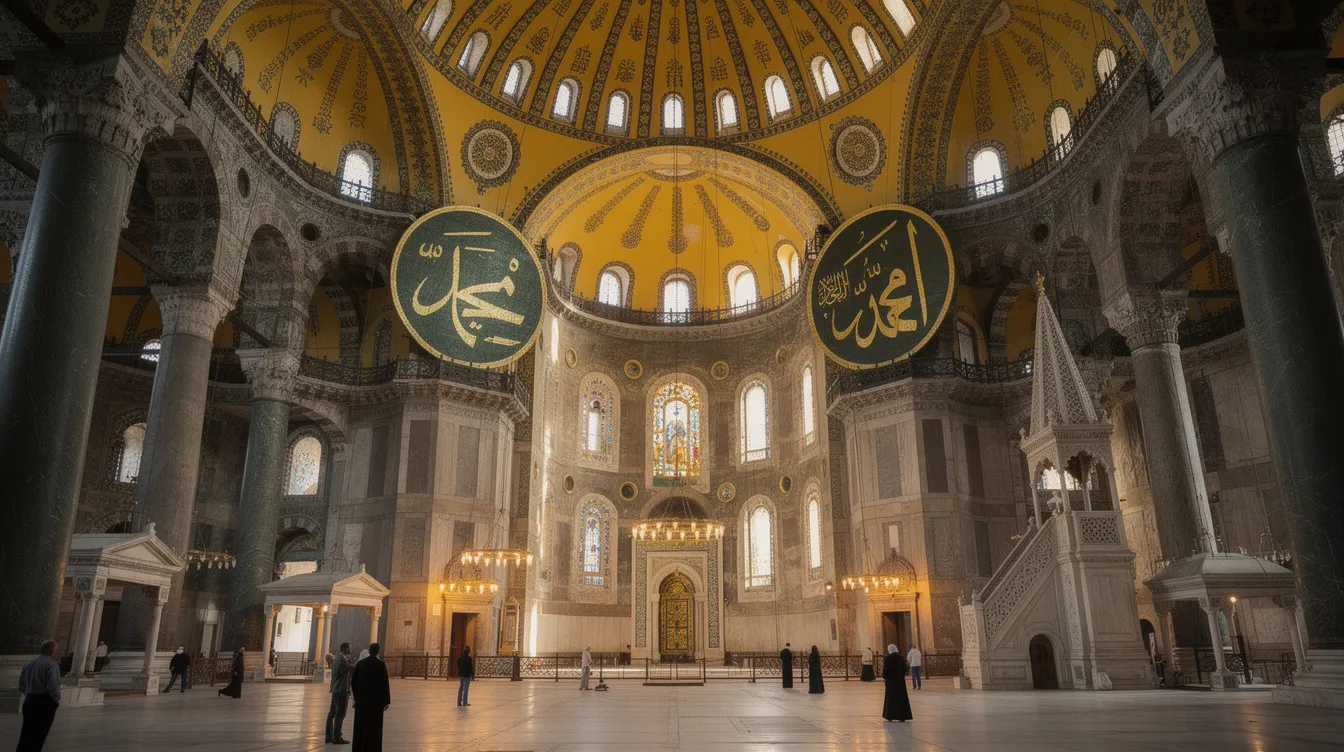
Hagia Sophia stands as a breathtaking testament to the fusion of Byzantine and Ottoman influences, making it one of the world’s most iconic architectural marvels. Hagia Sophia’s architecture is renowned for its innovative design, seamlessly blending Byzantine and Ottoman elements into an engineering masterpiece. The building’s grand central dome, standing 55.6 meters tall with a diameter of approximately 32 meters, was a revolutionary feat of engineering in its time. Due to its innovative construction techniques, the dome appears to float above the structure, supported by massive marble columns and pendentives, creating a sense of awe and spaciousness that has inspired architects for centuries.
Inside, visitors are greeted by a dazzling array of intricate mosaics, many dating back to the Byzantine era. Among the most celebrated are the shimmering depictions of the Virgin Mary and Jesus Christ, which adorn the upper galleries and apse. These mosaics, crafted from thousands of tiny terracotta and glass tiles, reflect the spiritual devotion and artistic mastery of the Byzantine Empire.
When Hagia Sophia was converted into an imperial mosque, the Ottoman Empire played a pivotal role in its transformation. The Ottoman sultans introduced new architectural features, adding monumental medallions inscribed with elegant Islamic calligraphy that now hang from the arches, bearing the names of Allah, the Prophet Muhammad, and the first caliphs. The mihrab and minbar, essential elements of Islamic worship, blend seamlessly with the original Christian and Byzantine architecture, creating a unique harmony of styles.
The building’s design also incorporates a variety of architectural elements, from the marble columns sourced across the ancient world to the ornate doors and decorative stonework. This rich history is best appreciated by joining a Hagia Sophia tour or using skip-the-line tickets, which allow you to bypass the ticket line and spend more time exploring the details of this UNESCO World Heritage Site. Whether you’re an architecture enthusiast or a casual visitor, Hagia Sophia’s architecture offers a journey through centuries of religious devotion, artistic innovation, and cultural exchange.
Exhibitions and Highlights
While Hagia Sophia functions as a mosque today, its upper galleries—preserved during the Hagia Sophia museum period—showcase some of the most breathtaking Byzantine and Ottoman artistry, making it a testament to the site’s layered history as a church, mosque, and museum, and a showcase of Christian and Islamic art that reflects the fusion of two great artistic traditions:
- The Great Dome: A 32-meter marvel supported by pendentives, once considered a miracle of engineering and still one of the most impressive domes in the world.
- Byzantine Mosaics: Stunning depictions of Christ Pantocrator, the Virgin and Child, and emperors like Constantine IX and Empress Zoe. Their golden backgrounds shimmer in the natural light, and they are crafted from gold, silver, glass, colorful stones, and terracotta mosaics, many dating back to the 6th century and depicting religious figures and scenes.
- Runic Inscriptions: Viking graffiti carved by the Varangian Guard, proof of the building’s international history and role as a crossroads of cultures.
- Ottoman Calligraphy: Enormous circular medallions inscribed with the names of Allah, Muhammad, and the caliphs. These pieces highlight Islamic art and spiritual devotion, and are among the Ottoman architectural elements—such as minarets and calligraphic roundels—added during the Ottoman period.
- Architectural Design: The structure uniquely combines three traditional basilical plans with a central dome plan, resulting in three naves, one apse, and two narthexes.
- Columns: Hagia Sophia is adorned with 104 columns—40 in the lower gallery and 64 in the upper gallery—many of which were sourced from ancient cities such as Ephesus and Egypt.
- Architectural Materials: Rare marbles, porphyry columns, and green stone sourced from across the Byzantine Empire, creating a mosaic of global craftsmanship.
Hagia Sophia History & Experience Museum
Located nearby, this museum enhances the visit with:
- Multimedia presentations recreating ceremonies and historic moments.
- Artifacts and manuscripts related to Hagia Sophia’s changing roles.
- Thematic zones covering its life as a cathedral, mosque, and museum.
- Audiovisual experiences that transport you back to Byzantine Constantinople and Ottoman Istanbul.
- An educational journey that complements the spiritual and historical atmosphere of the monument itself.
History and Significance
Byzantine Era
- Built between 532–537 AD under Emperor Justinian I by architects Anthemius of Tralles and Isidore of Miletus.
- Served nearly 1,000 years as the world’s largest cathedral and spiritual center of Eastern Orthodox Christianity.
- Inspired countless churches and mosques around the world, including the Blue Mosque across the square.
Crusader Period
- In 1204, during the Fourth Crusade, Hagia Sophia was looted and briefly converted into a Roman Catholic cathedral.
- Precious relics and mosaics were taken to Europe, some of which remain in museums today.
- Restored as an Orthodox cathedral in 1261 after Byzantine rule was reestablished, but much of its former wealth was lost forever.
Ottoman Period
- After 1453, Sultan Mehmed II transformed Hagia Sophia into a mosque.
- Minarets, a mihrab, and minbar were added, blending Islamic elements with Byzantine structure.
- Christian mosaics were covered but preserved beneath plaster for centuries, ensuring their survival.
- Major restorations by the Fossati brothers in the 19th century reinforced the dome, repaired structural weaknesses, and uncovered mosaics.
Republic of Turkey
- In 1935, Mustafa Kemal Atatürk converted Hagia Sophia into a museum, opening it to the world as a cultural site.
- For decades, it symbolized Turkey’s commitment to secular heritage and became one of its most visited landmarks.
Today
- In 2020, Hagia Sophia’s status reverted to a mosque while remaining open to tourists.
- Recognized as part of Istanbul’s UNESCO World Heritage Sites, protected for its universal cultural significance.
- Ongoing restorations (including dome work in 2025) aim to protect it against earthquakes and preserve its splendor for future generations.
Guided Tours
Exploring Hagia Sophia with a guided tour is one of the best ways to unlock the secrets and stories hidden within its ancient walls. Knowledgeable guides bring the rich history of this UNESCO World Heritage Site to life, sharing fascinating insights about its construction, the vision of Byzantine Emperor Justinian, and the transformation from a grand church to an Ottoman mosque. A typical Hagia Sophia tour takes you through the awe-inspiring main chamber, the upper gallery with its panoramic views and intricate mosaics, and the impressive exterior, where the building’s stunning architecture can be fully appreciated.
Many guided tours also include visits to nearby treasures such as the Blue Mosque, Topkapi Palace, and the Basilica Cistern, allowing you to experience the full grandeur of Istanbul’s historic Sultanahmet district. These comprehensive tours provide context on the interplay between Byzantine and Ottoman influences, highlight the artistry of Islamic calligraphy and Christian mosaics, and reveal the significance of each site in the city’s rich tapestry. By choosing a guided tour, you not only skip the line and maximize your time but also gain a deeper appreciation for the architectural marvels and cultural heritage that make Hagia Sophia and its neighbors unforgettable. Whether you’re a history enthusiast or a curious traveler, a guided tour ensures your visit is both educational and inspiring.
Events and Workshops
- Religious Ceremonies: Visitors can witness Friday prayers or Ramadan Tarawih prayers, highlighting Hagia Sophia’s living role in Islamic life.
- Caferağa Medrese (nearby): Offers workshops in traditional Turkish arts such as ceramics, calligraphy, and ebru (marbling). A perfect complement to Hagia Sophia’s artistry.
- Special Exhibitions: The Hagia Sophia History Museum organizes temporary shows on Byzantine and Ottoman culture, providing deeper insights into its past.
- Guided Tours: Many local guides offer combined experiences with the Blue Mosque, Basilica Cistern, and Topkapı Palace.
- Restoration Talks: Occasionally, parts of the site feature educational panels or demonstrations about conservation efforts, allowing visitors to learn about preservation techniques.
Visitor Reviews
Positive Experiences
- Tourists describe a sense of awe beneath the dome’s vastness.
- The History & Experience Museum receives praise for immersive storytelling.
- Guided tours enrich visits with context about both Byzantine and Ottoman eras.
- The upper gallery offers stunning photo opportunities and a more peaceful experience compared to the main floor.
- Many visitors remark that Hagia Sophia feels like walking through layers of history, with Christianity and Islam interwoven in one sacred space.
Common Complaints
- Long queues, especially in summer months, can test patience.
- Restricted access: non-Muslims cannot enter the ground-floor prayer hall.
- Entrance fee (€25) is seen as expensive compared to its previous free access.
- Some mosaics and areas are hidden due to ongoing restoration work.
- The restrictions on speaking loudly or using tour group microphones inside can limit guided experiences.
Practical Travel Tips
- Allocate at least 2 hours to explore Hagia Sophia fully, more if you plan to visit the museum.
- Combine your visit with a Turkish breakfast in Sultanahmet or dinner at a rooftop restaurant nearby overlooking the domes and minarets.
- Relax in the gardens of Sultanahmet Square between sites; it’s a great spot for photos and people-watching.
- Consider booking a combo tour that includes Hagia Sophia, Basilica Cistern, and Topkapı Palace for a comprehensive experience.
- Bring water and comfortable shoes, as you’ll likely spend the whole day exploring the Old City.
- Show respect in prayer areas by keeping quiet and observing local customs. Dress codes are enforced, especially during prayer times.
- Browse souvenir shops nearby for handmade ceramics, Turkish lamps, and calligraphy art inspired by Hagia Sophia.
- Use offline maps or a tourist guide app since internet connectivity inside can be weak.
Nearby Attractions
- Blue Mosque (Sultan Ahmed Mosque): Just steps away from Hagia Sophia, this mosque dazzles with six minarets and stunning blue Iznik tiles, showcasing Ottoman architectural grandeur. Its proximity allows visitors to compare Byzantine and Ottoman elements defining Istanbul’s skyline.
- Topkapi Palace: A short stroll from Hagia Sophia, this opulent residence of Ottoman sultans for over four centuries features lavish courtyards, priceless treasures, and offers insight into the intrigues of the Ottoman court. Its architecture and collections complement Hagia Sophia’s religious and artistic history.
- Basilica Cistern: An atmospheric underground reservoir built during the Byzantine period, famous for its mysterious Medusa heads and forest of marble columns. It provides a cool, tranquil escape and a glimpse into ancient city engineering.
- Grand Bazaar: One of the world’s oldest and largest covered markets, located a short walk away. It’s ideal for shopping Turkish delight, carpets, ceramics, and souvenirs. The bustling atmosphere and labyrinthine alleys make it a destination on its own.
- Bosphorus Cruises: Departing from nearby docks, these cruises offer panoramic views of Istanbul’s stunning architecture, from ancient temples to modern palaces.
Combo Tours and Cruises
To truly experience the best of Istanbul’s rich history and architectural wonders, consider booking a combo tour that includes Hagia Sophia alongside other legendary sites. Many guided tours offer seamless itineraries that take you from the awe-inspiring Hagia Sophia to the magnificent Blue Mosque, the opulent Topkapi Palace, and the mysterious Basilica Cistern—all in one day. With skip-the-line access, you can maximize your time, bypassing the ticket lines and diving straight into the heart of Istanbul’s most celebrated landmarks.
For a different perspective, a Bosphorus cruise is an unforgettable way to see the city’s skyline, with panoramic views of Hagia Sophia, Topkapi Palace, and other historic treasures lining the shores. These cruises often include expert commentary, providing fascinating insights into the city’s past as you glide along the Bosphorus Strait. Whether you’re a history enthusiast, an architecture lover, or simply eager to soak in the sights, combo tours and cruises offer a convenient and enriching way to explore Istanbul’s iconic attractions. With options for every interest and schedule, you can tailor your Hagia Sophia tour to create a truly memorable Istanbul adventure.
Frequently Asked Questions (FAQs)
Do I need a ticket to enter Hagia Sophia?
Yes, all visitors must purchase a ticket to enter Hagia Sophia. Tickets can be bought at the ticket booth near the entrance or online in advance to skip the ticket line.
Can I wear jeans to the Blue Mosque?
Yes, you can wear jeans to the Blue Mosque. However, modest dress is required for both men and women, meaning shoulders and knees should be covered. Women may need to wear a headscarf when entering.
How to buy Galatasaray tickets as a foreigner?
Galatasaray tickets can typically be purchased online through the official club website or authorized ticket vendors. It is recommended to buy tickets in advance, especially for popular matches, to secure your seat.
Do Hagia Sophia tickets sell out?
Hagia Sophia tickets rarely sell out but can have long queues during peak tourist seasons. Purchasing skip-the-line tickets online is recommended for a smoother experience.
Why Book Online?
Booking your Hagia Sophia tickets online is the smartest way to ensure a smooth and enjoyable visit to this world-renowned site. By securing your tickets in advance, you can skip the long lines at the ticket booth and head straight to the entrance, saving valuable time—especially during peak travel seasons. Online tickets often come with skip-the-line privileges, allowing you to make the most of your day without the stress of waiting.
In addition to single-entry tickets, many online platforms offer combo tickets that include access to other must-see attractions like Topkapi Palace and the Basilica Cistern. These bundled options not only provide excellent value but also streamline your sightseeing experience, letting you explore Istanbul’s rich history with ease. Planning ahead with online tickets means you can customize your itinerary, take advantage of guided tours, and even add on a Bosphorus cruise for a comprehensive city adventure.
Whether you’re a first-time visitor or a seasoned traveler, booking your Hagia Sophia tickets online ensures you won’t miss out on any of the highlights. Enjoy the convenience, flexibility, and peace of mind that comes with having your Sophia tickets ready before you arrive—so you can focus on discovering the wonders of Istanbul.
Conclusion
Hagia Sophia is not just an architectural wonder but a living monument that reflects the layered history of Istanbul — from Byzantine grandeur to Ottoman devotion and modern-day significance. It represents the meeting point of civilizations, religions, and cultures. Whether you are visiting for its artistry, history, or spiritual presence, Hagia Sophia remains an unmissable highlight of Istanbul. A journey through its halls offers not only breathtaking beauty but also a glimpse into humanity’s shared cultural heritage. Taking the time to learn its stories ensures that your visit will be more than just sightseeing — it will be a journey into the heart of world history.
Travel Tip: Start your day at Hagia Sophia, then continue to the Blue Mosque, Topkapı Palace, and Basilica Cistern for a complete Sultanahmet itinerary. Don’t forget to pause at a local café for Turkish tea and soak in the view of one of the most historic squares in the world.